





The Building Act
Building Act 1984 is the primary, enabling legislation under which secondary legislation such as the building regulations are made. It empowers the Secretary of State (for England and Wales) to make regulations for the purpose of:
Securing the health, safety, welfare and convenience of persons in or about buildings and of others who may be affected by buildings or matters connected with buildings.
- Furthering the conservation of fuel and power.
- Preventing waste, undue consumption, misuse or contamination of water.
For the purposes of the Act, 'building' means “any permanent or temporary building, and, unless the context otherwise requires, it includes any other structure or erection of whatever kind or nature (whether permanent or temporary)[…] (including) a vehicle, vessel, hovercraft, aircraft or other movable object of any kind in such circumstances as may be prescribed (being circumstances that in the opinion of the Secretary of State justify treating it for those purposes as a building)."
The Building Act 1984 empowers and obliges local authorities to enforce the building regulations in their areas. These powers include a right of entry into buildings and powers of prosecution and enforcement in relation to non-compliant building work, dangerous structures and demolitions. The "building regulations" made under this Act prescribe notification procedures that must be followed when starting, carrying out and completing building work and set out minimum requirements for specific aspects of building design and construction.
The Building Act also sets the legal status of the "approved documents", which provide general guidance on how specific aspects of building design and construction can comply with the building regulations. Nearly all "approved documents" permit alternative design solutions.
In addition, the Building Act creates the role of 'approved inspector' - who may act in place of the local authority building control service. The Building Regulations require that a projects compliance with the building regulations is independently verified. Historically this verification could only be given by local authorities, however, it can now also be provided by a UK state authorised "approved inspector". Note: Most authorised AI's are corporate bodies. The Building Act also sets out procedures for notifications, inspections, determinations, relaxations, exemptions and appeals.
The Building Act has been amended many times since it was originally enacted by Parliament. Currently (2016) the Building Regulations issued in 2010 (as amended) are the valid rules.
The Government website has all the approved documents available for free download.
[edit] Related articles on Designing Buildings
- Approved documents.
- Approved inspector.
- Building control bodies.
- Building regulations.
- Building Regulations exemptions
- Competent person schemes.
- Dangerous buildings.
- Licensing.
- Planning permission.
- Republic of Ireland updates to planning and development.
[edit] External references
Featured articles
Check out some of the best features and news from Designing Buildings as well as key stories from around the web.
Building Safety Act implementation in Wales

CIAT to host industry panel on 26 June.
New and updated CLC building safety guidance.
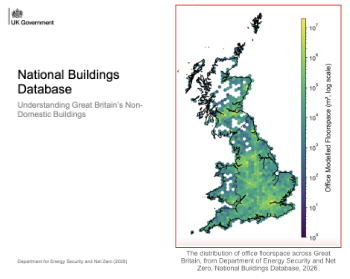
New UK National Buildings Database.
Building Safety Wiki Interviews

Chief executive of the British Woodworking Federation.
Planning condition discharge in England and Wales

A brief explanation from a building compliance expert, with further links.
Overheating guidance and tools for building designers

Guidance for dealing with element of building fabric control that have increasing importance.
Shading for housing, a design guide

From the Good Homes Alliance and British Blind and Shutter Association.
UK Standard Skills Classification (SSC)

A shared framework for describing skills needs.
Social media ban consultation comes to close

CIOB urges UK Government to consider social media’s role in careers guidance in ban debate.
The latest of eight Skills England apprenticeship units

The addition of battery manufacturing welcomed by ECA with a warning about the risks of fast-tracked apprenticeship units.
Building Control Independent Panel final report
A precis of a key report led by Dame Hackitt with full recommendations and link to the government response.