





Supplier assessment
Supplier assessment, also known as supplier evaluation, is the process of assessing potential and existing suppliers. In the construction industry, ‘supplier’ is a very general term which refers to organisations contracted as part of the delivery of a built asset.
The aim of supplier assessment is to ensure that the needs of the client organisation are met and, in the case of current suppliers, to examine and measure performance in terms of whether improvements or efficiencies can be made. It forms an essential part of strategic sourcing of suppliers and supplier management, as well as helping to maintain competitiveness.
A model known as the ‘Carter 10Cs model’ is a widely-recognised method of assessing suppliers. The ‘Cs’, which are examined in terms of whether the supplier is sufficiently able to provide them, are as follows:
- Capacity.
- Competency.
- Consistency.
- Control of process.
- Commitment to quality.
- Cash.
- Competitive cost.
- Culture.
- Clean/ethical.
- Communication efficiency.
Supplier assessment may be carried out using a supplier assessment form which is a questionnaire filled in by suppliers.
The typical categories that may appear on a supplier assessment form include:
- Supplier information: Names, addresses, etc.
- Contracts management system: Projected turnover, issued share capital, combined value of orders, etc.
- Quality management system: Training programmes, inspections process, product handling, etc.
- Standards/certifications: Current approvals and so on.
- Health and safety: Accredited programmes, policies and procedures, etc.
- Security: Procedures and processes, etc.
The advantages of using a supplier assessment process are that it can help mitigate against poor performance or failures on the part of suppliers; ensure high standards of product and service; and can serve as a form of motivation for suppliers to improve.
Some of the challenges for the client include allocating adequate time and other resources to effectively establish and maintain an assessment system. In addition, there is the challenge of providing suppliers with performance feedback so that continuous improvement can be achieved.
Other forms of supplier assessment include:
- Selection criteria, against which prospective suppliers can be assessed.
- Pre-qualification questionnaires - used during procurement processes to enable the client to produce a short list of suppliers that are likely to be most appropriate for their particular project.
- Tender evaluations - a process of assessment undertaken during procurement processes to identify a preferred tenderer.
- Due diligence - assessment of the capability and financial status of a prospective supplier before appointing them.
[edit] Related articles on Designing Buildings Wiki
Featured articles and news

We're expanding our collaborative mission by launching DB Intelligence, an exclusive market research advisory panel. Built environment professionals can now get paid to share their expertise on industry trends, products and services.
Panel members receive direct financial incentives for participating in research projects like short surveys, 1-2-1 interviews and focus groups. Register today to shape the future of the construction sector.
Social media ban consultation comes to close

CIOB urges UK Government to consider social media’s role in careers guidance in ban debate.
The latest of eight Skills England apprenticeship units

The addition of battery manufacturing welcomed by ECA with a warning about the risks of fast-tracked apprenticeship units.
Building Control Independent Panel final report
A precis of a key report led by Dame Hackitt with full recommendations and link to the government response.
Guide to ISO 19650 for Architecture Firms (2026)
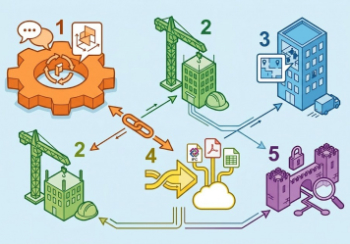
A user gives their low down.

A UK training and membership provider for mould remediation professionals.
Building Safety recap April, 2026
A short and longer run-through of the month, with links to further information and sources.

CIAT May 2026 briefing.

Independent NSI and BAFE study exploring how organisations are changing the way they buy fire safety services.

From medieval scribes to modern word art.

ECA welcomes crackdown on late payment and push for clean energy, whilst CIOB seek fixed cladding removal timeframes.
Cyber Security in the Built Environment
Protecting projects, data, and digital assets: A CIOB Academy TIS.
Managing competence in the built environment
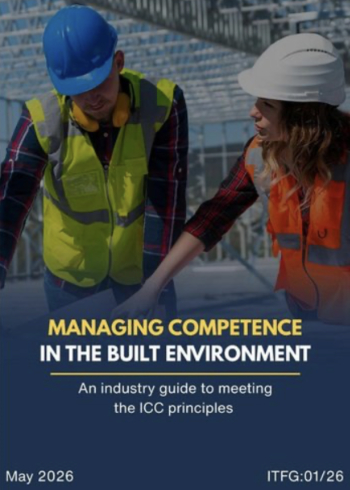
ITFG publishes new industry guide on how to meet the ICC principles.
The UK's campaign to reduce noise pollution: Mythbusting, articles and topic guides.