





Scale rule

Scale rules are used to measure distances on scale drawings and physical models.
The term scale describes the relationship between a depiction of a building, object, area of land etc compared to its actual size. Scale us usually expressed as a ratio of one unit of the represented scale compared to the actual full size dimension. So full scale is 1:1, whereas a scale on fifth of the actual size is 1:5. For more information see: Scale.
Scale drawings are used to illustrate items that it is not useful or convenient to draw at their actual size. This may be because drawing the item at full size would be unmanageable, or would not easily fit on a single sheet of paper (such as a building). For more information see: Scale drawing.
Whilst a conventional ruler allows measurement of full scale (1:1) dimensions, a scale rule also allows measurement of drawings that are not at full scale without the need for any conversion.
Scale rules typically measure full scale dimensions up to 300mm. They are generally either flat (actually a flat oval shape), similar to a conventional ruler, with 8 different scales along their four edges (2 on each edge), or a three pronged star shape (generally referred to as triangular) with 12 different scales along their 6 edges.
The scales on a four edged flat scale rule are generally: 1:1, 1:100, 1:20, 1:200, 1:5, 1:50, 1:1250 and 1:2500
The scales on a 6 edged triangular scale rule are generally: 1:1, 1:10, 1:2, 1:20, 1:5, 1:50, 1:100, 1:200, 1:500, 1:1000, 1:1250 and 1:2500. However, they may only have 6 scales, one on each edge: 1:20, 1:25, 1:50, 1:75, 1:100 and 1:125.
Scale rules can be made of plastic, wood or metal.
Scale rules should only be used for measuring. They should not be used for drawing or cutting straight lines as this can damage their edges, making accurate measurement difficult.
[edit] Related articles on Designing Buildings
- Blueprint.
- Drawing board.
- Manual drafting techniques.
- Model.
- North American Paper Sizes
- Parallel motion.
- Paper sizes.
- Perspective.
- Projections.
- Scale drawing.
- Scale.
- Symbols on architectural drawings.
- T-square.
- Technical drawing.
- Technical drawing pen sizes.
- Techniques for drawing buildings.
- Types of drawing.
Featured articles
Check out some of the best features and news from Designing Buildings as well as key stories from around the web.
New and updated CLC building safety guidance.
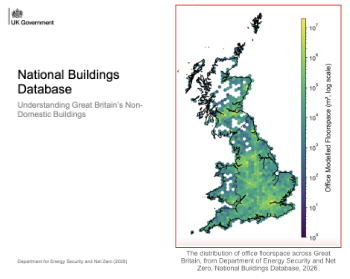
New UK National Buildings Database.
Building Safety Wiki Interviews

Chief executive of the British Woodworking Federation.
Planning condition discharge in England and Wales

A brief explanation from a building compliance expert, with further links.
Overheating guidance and tools for building designers

Guidance for dealing with element of building fabric control that have increasing importance.
Shading for housing, a design guide

From the Good Homes Alliance and British Blind and Shutter Association.
UK Standard Skills Classification (SSC)

A shared framework for describing skills needs.
Social media ban consultation comes to close

CIOB urges UK Government to consider social media’s role in careers guidance in ban debate.
The latest of eight Skills England apprenticeship units

The addition of battery manufacturing welcomed by ECA with a warning about the risks of fast-tracked apprenticeship units.
Building Control Independent Panel final report
A precis of a key report led by Dame Hackitt with full recommendations and link to the government response.
Building Safety recap April, 2026
A short and longer run-through of the month, with links to further information and sources.