





Renewable Technologies, a BSRIA illustrated guide
|
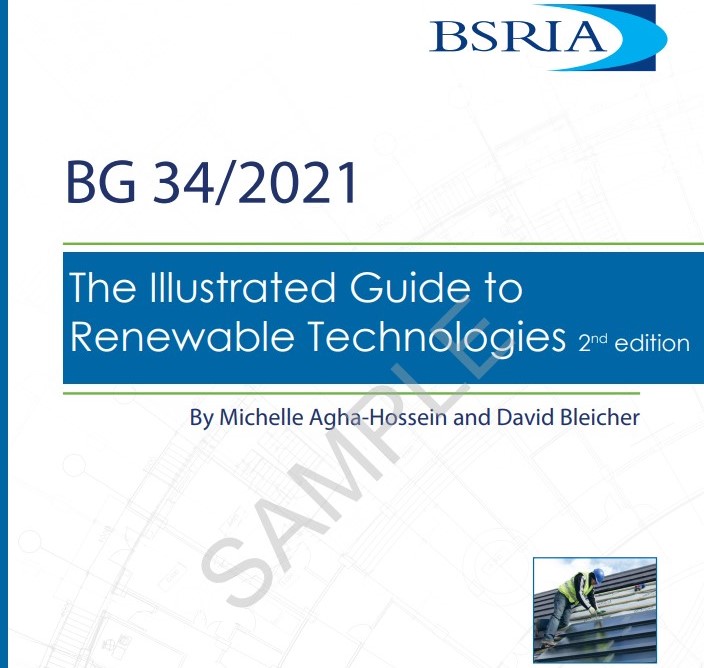
In January 2022, BSRIA announced the publication of The Illustrated Guide to Renewable Technologies (BG 34/2021). The guide is intended to benefit construction professionals who do not need to be experts on the topic but need to communicate with those who are.
It introduces the following renewable energy sources, along with an explanation of the different system types for each energy source, where to use them in buildings, and application considerations:
The publication also considers other technologies, such as solar cooling, wind power, and allied technologies such as absorption cooling, fuel cells, energy storage systems and district heating and cooling. The guide also looks at grid-scale renewable energy technologies such as wind farms, solar farms and hydroelectricity.
With the ever increasing focus on the reduction in energy consumption and CO2 production necessary to meet the target of net zero carbon by 2050, it has become attractive for businesses to consider more deeply the use of renewable sources of energy.
Renewable energy technologies are subject to a variety of legislation concerning their design and installation. There are also incentives which encourage them to be adopted, such as the Climate Change Act 2008, the Renewable Heat Incentive, Feed-in Tariffs, the Future Homes Standard and the Microgeneration Certification Scheme. Not to mention that Building Regulations require new buildings, and certain works to existing buildings, to achieve certain levels of energy efficiency.
As the world moves towards an increasingly present sense of environmental responsibility, publications like the BSRIA Illustrated Guide to Renewable Technologies can help built environment engineers remain at the vanguard of this movement. The guide is part of BSRIA’s “Illustrated Guide to…” series which includes:
- BG 31/2017 The Illustrated Guide to Mechanical Building Services.
- BG 32/2014 Illustrated Guide to Electrical Building Services.
- BG 33/2014 Illustrated Guide to Hot and Cold Water Services.
This article originally appeared on the BSRIA website. It was published in January 2022.
--BSRIA
[edit] Related articles on Designing Buildings
Featured articles
Check out some of the best features and news from Designing Buildings as well as key stories from around the web.

CIOB celebrates positive Ofsted report.

The Building Safety Regulator announces a call for evidence.

Government approach could undermine delivery and regeneration.
World's first mass timber data centre.

The overlooked environmental aspect of data centre development.
Introduction to radon awareness

New technical information sheet published by CIOB.

Updated supplier guide can help electrical contractors engage with NHP.

CIAT confirm the winners of the 2026 architectural technology awards.

Government launches a one stop shop for flood preparedness.

Sir Edwin Lutyens: Britain's greatest architect? Book review.

CIOB publishes free template to help assess and manage risks.
ECA's reflections on Party Conference season

Burnham wants to be confident of winning before asking for a fresh mandate.
New Chief Construction and Scientific Adviser

Sergio Cavalaro, Professor of Infrastructure Systems at Loughborough University.