





Polypropylene (PP) weaving
Polypropylene (PP) woven products, in particular bags are widely used for packaging purposes in various industries such as agriculture, construction, food processing, and more. They are known for their durability, strength, and versatility, which make them the preferred choice for both lightweight and heavy-duty applications. The manufacturing process of PP woven bags involves several steps to ensure that the bags are of high quality and meet the specific needs of the end-user. Let’s dive into the process of how PP woven bags are manufactured, and why they’re a go-to packaging solution.
Contents |
[edit] Step 1: Raw Material Selection
The production of PP woven bags starts with the selection of polypropylene resin, a thermoplastic polymer. Polypropylene is chosen due to its excellent tensile strength, chemical resistance, and flexibility. The resin is initially in pellet form, which is then processed into yarn or threads. This step is crucial as the quality of the polypropylene yarn directly affects the strength and durability of the finished bag.
[edit] Step 2: Extrusion and Weaving Process
Once the polypropylene resin is melted and extruded, it forms thin films. These films are then cut into strips and woven into fabric using a weaving machine. The weaving process typically involves two sets of yarns: the warp yarns (running lengthwise) and the weft yarns (running widthwise). The quality of the fabric depends on the weaving technique, which can vary based on the intended use of the PP woven bags.
During this phase, some bags are reinforced with additional threads to increase their tensile strength. The strength of these woven fabrics is essential for supporting heavy loads and ensuring the bags perform well under stress. A jumbo bag manufacturer, for example, will use a different weaving pattern compared to a manufacturer creating smaller PP woven bags, as jumbo bags are designed to carry much larger quantities of materials.
[edit] Step 3: Fabric Treatment
After weaving, the fabric is subjected to various treatments to improve its properties. Common treatments include UV stabilization to protect the bag from degradation due to sunlight exposure, and coating to enhance water resistance. This step ensures that the PP woven bags are suited for both indoor and outdoor use, depending on the customer’s requirements.
[edit] Step 4: Cutting and Shaping
After the fabric has been treated and dried, it is cut into the required dimensions for the final product. Depending on the specific application, the woven fabric may be cut into smaller pieces to create bags of different sizes. Larger, industrial-sized bags are typically created by joining multiple panels of fabric together. This is the point where a jumbo bag manufacturer would create large bags designed to hold bulk products such as grains, cement, and fertilizers.
[edit] Step 5: Sewing and Bag Formation
The cut fabric pieces are then sewn together to form the basic structure of the bag. At this stage, handles, drawstrings, or other fastening mechanisms are added, depending on the design of the bag. The sewing process must be precise to ensure that the bag’s seams are strong and that it can hold the intended weight without breaking or tearing. For heavy-duty bags, reinforced stitching may be used to ensure that the bags can withstand high stress.
[edit] Step 6: Printing and Branding
Once the PP woven bags are sewn into their final shape, they may be printed with the required branding, logos, or product information. Printing is often done using screen printing or flexographic printing methods, which allow for high-quality, durable designs on the bags. This step is important for companies looking to enhance brand visibility and provide essential product details on the packaging.
[edit] Step 7: Quality Control
Before the PP woven bags are packaged and shipped to customers, they go through a stringent quality control process. This involves inspecting the bags for defects such as weak seams, improper stitching, or misprints. Only those that pass the quality checks move on to the final stage. Quality control ensures that each bag meets the specific requirements for strength, durability, and appearance.
[edit] Step 8: Packaging and Shipping
The last step in the process is packaging and shipping. The finished PP woven bags are folded and bundled in stacks, ready to be shipped to clients. Depending on the order, the bags may be shipped as individual units or in bulk, either to distributors or directly to businesses that will use them for packaging goods.
[edit] Conclusion
The manufacturing of PP woven bags is a detailed process that requires precision and attention to detail at every step. Whether it’s a small bag for retail or a jumbo bag for industrial use, ensuring high-quality materials and proper construction is key to the success of the final product. Gujarat Dyestuff Industries Pvt. Ltd., a leading jumbo bag manufacturer, is known for its commitment to producing premium quality PP woven bags that meet the diverse needs of customers across industries.
If you’re looking for high-quality, durable, and reliable PP woven bags for your business, contact Gujarat Dyestuff Industries Pvt. Ltd. today. Let us provide you with the packaging solutions that will help your business thrive!
Featured articles and news

We're expanding our collaborative mission by launching DB Intelligence, an exclusive market research advisory panel. Built environment professionals can now get paid to share their expertise on industry trends, products and services.
Panel members receive direct financial incentives for participating in research projects like short surveys, 1-2-1 interviews and focus groups. Register today to shape the future of the construction sector.
Planning condition discharge in England and Wales
A brief exoplanation from a building compliance expert, with further links.
Overheating guidance and tools for building designers

Guidance for dealing with element of building fabric control that have increasing importance.
Shading for housing, a design guide

From the Good Homes Alliance and British Blind and Shutter Association.
UK Standard Skills Classification (SSC)

A shared framework for describing skills needs.
Social media ban consultation comes to close

CIOB urges UK Government to consider social media’s role in careers guidance in ban debate.
The latest of eight Skills England apprenticeship units
The addition of battery manufacturing welcomed by ECA with a warning about the risks of fast-tracked apprenticeship units.
Building Control Independent Panel final report
A precis of a key report led by Dame Hackitt with full recommendations and link to the government response.
Building Safety recap April, 2026
A short and longer run-through of the month, with links to further information and sources.

CIAT May 2026 briefing.
From medieval scribes to modern word art.
ECA welcomes crackdown on late payment and push for clean energy, whilst CIOB seek fixed cladding removal timeframes.
Cyber Security in the Built Environment
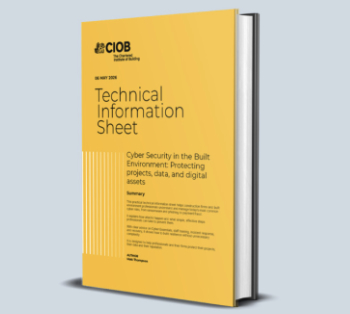
Protecting projects, data, and digital assets: A CIOB Academy TIS.
Managing competence in the built environment
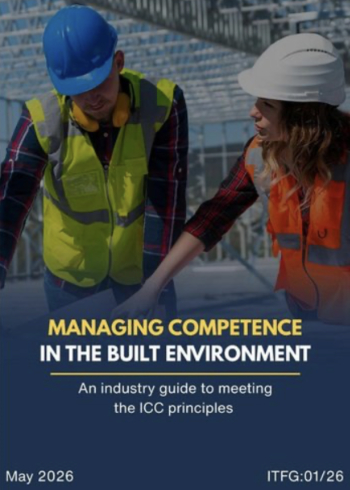
ITFG publishes new industry guide on how to meet the ICC principles.
The UK's campaign to reduce noise pollution: Mythbusting, articles and topic guides.