





Orthogonal plan
The term 'orthogonal' refers to objects that, in Euclidean geometry, are related by perpendicularity. The etymology of the term is the Greek ‘ortho’ meaning ‘right’, and ‘gon’ meaning ‘angled’.
Orthogonal projection is a drawing technique used to represent three-dimensional objects as a series of two-dimensional 'flat' drawings in which there is no perspective.
Orthographic projection is a type of 'parallel' projection in which the four orthogonal views of an object are shown. The orthographic projection commonly used in the UK is called first angle projection.
Buildings are commonly depicted orthogonally by a series of elevations and plans.

The orthographic projection commonly used in the UK is called first angle projection.

The term 'orthogonal plan' may also refer to a type of urban design layout that consists of mostly square street blocks with straight streets intersecting at right angles. This forms a grid pattern, commonly referred to as a ‘grid plan’ or ‘gridiron’.

Orthogonal plans for urban design date back to antiquity, and contributed to the building of some the earliest planned cities. The layout is commonly credited to the 5th-century Greek philosopher Hippodamus, who championed this method of urban planning in his Hippodamian Plan. However, archaeologists have cast doubt on his true claim having found evidence of such plans (more accurately referred to as Milesian layouts) in ancient Egypt.
The regular orthogonal plans of the ancient Greek and Hellenic societies influenced the ancient Romans, who established design principles that are often followed to this day; particularly the work of the engineer Vitruvius.
In a modern context, grid plan urbanism has come to be closely associated with America and recently-redesigned cities such as Barcelona (outside of its historic core).
Although orthogonal plans can help with orientation and enable directness of route due to frequent intersections, the infrastructure cost associated with regular grid patterns is often higher than for patterns with discontinuous streets.
[edit] Related articles on Designing Buildings
Featured articles and news
The future workforce: culture change and skill

Under the spotlight at UK Construction Week London.
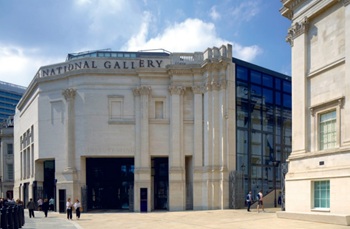
A landmark moment for postmodern heritage.
A safe energy transition – ECA launches a new Charter

Practical policy actions to speed up low carbon adoption while maintaining installation safety and competency.
Frank Duffy: Researcher and Practitioner
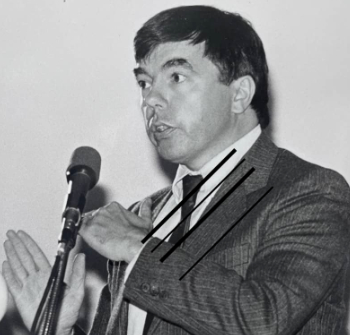
Reflections on achievements and relevance to the wider research and practice communities.
The 2026 Compliance Landscape: Fire doors

Why 'Business as Usual' is a Liability.
Cutting construction carbon footprint by caring for soil

Is construction neglecting one of the planet’s most powerful carbon stores and one of our greatest natural climate allies.
ARCHITECTURE: How's it progressing?
Archiblogger posing questions of a historical and contextual nature.
The roofscape of Hampstead Garden Suburb
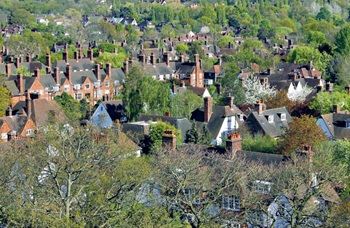
Residents, architects and roofers need to understand detailing.
Homes, landlords. tenants and the new housing standards

What will it all mean?
The Architectural Technology podcast: Where it's AT

Catch-up on the latest episodes.
Edmundson Apprentice of the Year award 2026

Entries now open for this Electrical Contractors' Association award.

Traditional blue-grey slate from one of the oldest and largest UK slate quarries down in Cornwall.
There are plenty of sources with the potential to be redeveloped.
Change of use legislation breaths new life into buildings

A run down on Class MA of the General Permitted Development Order.
Solar generation in the historic environment

Success requires understanding each site in detail.