





Maximum and minimum workplace temperatures

Temperatures in the workplace are governed by the Workplace (Health, Safety and Welfare) Regulations 1992, which oblige employers to provide a ‘reasonable’ temperature in the workplace.
The Workplace (Health, Safety and Welfare) Regulations 1992 Approved Code of Practice suggests a minimum temperature of 16°C, or 13°C if work involves severe physical effort. However, these are only guidelines, and the there is no recommended maximum temperature at all.
This is because the personal experience of temperature is a very complex one that cannot sensibly be reduced to a single figure. Instead it depends on the interaction of a number of factors such as:
- Air temperature.
- Air velocity.
- Radiant temperature.
- Relative humidity.
- Clothing.
- Metabolic heat.
- Wellbeing and health.
See Thermal comfort for more information.
Despite this, a number of attempts have been made to provide simple guidance for maximum workplace temperatures.
The Health and Safety Executive (HSE) have previously defined thermal comfort in the workplace, as '…roughly between 13°C and 30°C, with acceptable temperatures for more strenuous work activities concentrated towards the bottom end of the range, and more sedentary activities towards the higher end.'
In 2006, The Chartered Institute of Building Services Engineers (CIBSE) defined overheating as conditions when the comfortable internal temperature threshold of 28°C is surpassed for more than 1% of occupied (working) hours or where 25°C is surpassed for 5% of occupied (working) hours. Ref https://www.cibse.org/getattachment/Networks/Regions/South-Wales/South-Wales-Past-Presentations/TM52-The-limits-of-thermal-comfort-Cardiff.pdf.aspx
CIBSE have also defined 35°C as the internal temperature above which there is a significant danger of heat stress. However, they suggest that temperatures of more than 28°C for long periods will result in increased dissatisfaction and reduced productivity. Ref https://www.cibse.org/knowledge/knowledge-items/detail?id=a0q20000006obXh
In 2006, the Trades Union Congress (TUC) stated that it believed a maximum temperature of 30ºC should be set, or 27ºC for those doing strenuous work.
In July 2019, the Labour party proposed the same maximum workplace temperature of 30ºC, or 27ºC for those doing strenuous work. They tasked a proposed Royal Commission on Health and Safety at Work with bringing forward proposals along these lines.
[edit] Related articles on Designing Buildings
- BREEAM Thermal comfort.
- Cold stress.
- Construction work in hot weather.
- Excess cold.
- Healthy excursions outside the thermal comfort zone.
- Heat stress.
- Home Quality Mark high temperature reporting tool.
- Non-freezing cold injury NFCI.
- Operative temperature.
- Overheating.
- Preventing overheating.
- Temperature.
- Thermal comfort.
- Thermal comfort and wellbeing.
- Thermal pleasure in the built environment.
- Thermal indices.
Featured articles
Check out some of the best features and news from Designing Buildings as well as key stories from around the web.
Bridging the gap between clients and contractors

Concerns remain around contractor quality, capability, and delivery.
Construction Management, 10 June.
Heat pumps beat boilers in new home tests.
Building Safety Act implementation in Wales

CIAT to host industry panel on 26 June.

New and updated CLC building safety guidance.
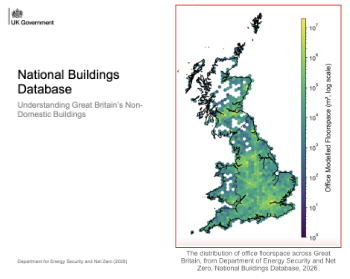
New UK National Buildings Database.
Building Safety Wiki Interviews

Chief executive of the British Woodworking Federation.
Planning condition discharge in England and Wales

A brief explanation from a building compliance expert, with further links.
Overheating guidance and tools for building designers

Guidance for dealing with element of building fabric control that have increasing importance.
Shading for housing, a design guide

From the Good Homes Alliance and British Blind and Shutter Association.
UK Standard Skills Classification (SSC)

A shared framework for describing skills needs.
Social media ban consultation comes to close

CIOB urges UK Government to consider social media’s role in careers guidance in ban debate.