





London Power Tunnels

Contents |
[edit] Introduction
The London Power Tunnels project is a National Grid infrastructure investment in London’s electricity transmission system. The project is the first significant renovation of the city’s power grid since the 1960s. The total cost is estimated at £1bn and is expected to take 18 years.
Much of London’s electricity infrastructure is already delivered through a network of underground cables. However, the majority of this network is just below the surface of the road, which means maintenance (and any significant replacement) takes place above ground - causing significant disruption to the city’s traffic. The construction of new tunnels requiring a significant amount of excavation under Tube lines, canals and rivers provides an alternative.
[edit] Section One
The first phase of the project, known as LPT1, began in February 2011 and was completed in 2018.
This phase concentrated on constructing a 30km network of underground tunnels from Hackney to Willesdon from east to west, and from Kensal Green to Wimbledon in the south. The works required the installation of the longest single-length power cables in an underground utility tunnel in the country.
The tunnels carry 192km of 400kV cable and 30km of 132kV cable. This created 10 new transmission circuits which are able to support 20% of London’s electricity demand.
To support National Grid’s sustainability initiatives, the organisation recycled 99% of the materials excavated during this phase of the project.
[edit] Section Two
Referred to as London Power Tunnels (LPT2), the second phase of the project began in March 2020. This will carry a network of cable tunnels from Wimbledon to Crayford. It is projected that LPT2 will be fully operational by 2026.
The majority of LPT2 tunnels will be approximately 30m deep. This is roughly equivalent to the height of a 10 storey building. This second phase will result in a new network of cable tunnels approximately 32.5km in length.
[edit] Related articles on Designing Buildings
Featured articles and news
Costs and insolvencies mount for SMEs, despite growth

Construction sector under insolvency and wage bill pressure in part linked to National Insurance, says report.
The place for vitrified clay pipes in modern infrastructure
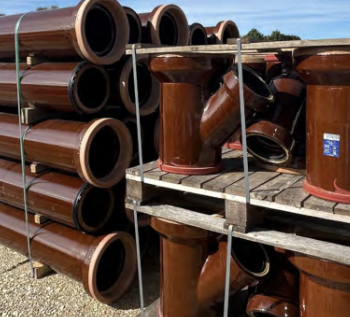
Why vitrified clay pipes are reclaiming their role in built projects.

Research by construction PR consultancy LMC published.
Roles and responsibilities of domestic clients

ACA Safety in Construction guide for domestic clients.
Fire door compliance in UK commercial buildings

Architect and manufacturer gives their low down.
Plumbing and heating for sustainability in new properties

Technical Engineer runs through changes in regulations, innovations in materials, and product systems.
Awareness of the Carbon Border Adjustment Mechanism
What CBAM is and what to do about it.
The new towns and strategic environmental assessments

12 locations of the New Towns Taskforce reduced to 7 within the new towns draft programme and open consultation.

Buildings that changed the future of architecture. Book review.
The Sustainability Pathfinder© Handbook
Built environment agency launches free Pathfinder© tool to help businesses progress sustainability strategies.

Government outcome to the late payment consultation, ECA reacts.
IHBC 2025 Gus Astley Student Award winners

Work on the role of hewing in UK historic conservation a win for Jack Parker of Oxford Brookes University.
Future Homes Building Standards and plug-in solar
Parts F and L amendments, the availability of solar panels and industry responses.
How later living housing can help solve the housing crisis

Unlocking homes, unlocking lives.
Preparing safety case reports for HRBs under the BSA

A new practical guide to preparing structural inputs for safety cases and safety case reports published by IStructE.
Male construction workers and prostate cancer

CIOB and Prostate Cancer UK encourage awareness of prostate cancer risks, and what to do about it.