





Legal indemnity insurance
Contents |
[edit] Introduction
Legal indemnity insurance is available to a purchaser where there is a legal defect that cannot easily be resolved during the purchase of a commercial or residential property. This includes for example a lack of planning permission or missing building certificates. It is often used as a quick solution to the problem and can be cheaper than correcting the defect.
Unlike conventional insurance policies, the premium for legal indemnity insurance is only paid once and the policy usually transfers to successors in title and lasts for the life of the property.
The price of the indemnity insurance premium is generally calculated based on the value of the property rather than the level of the risk. However, if the purchase price of a property increases, a premium would typically be paid by the insured when they come to sell to increase the limit of cover.
The Council of Mortgage Lenders Handbook provides guidance for conveyancers acting on behalf of lenders in residential conveyancing transactions and provides guidance on the use of indemnity insurance policies.
[edit] Common risks covered
The majority of defects can be covered by legal indemnity insurance, but some of the more common types of policy are discussed below.
[edit] Lack of rights (absence of easement indemnity insurance)
Where a part of a property is accessed over private land but there is no legal right to do so, or where the property is serviced by services (cables, drains etc) which are private or cross private land, it is possible to take out easement indemnity insurance. When supported by a statutory declaration it is a requirement that the right has been exercised unchallenged for at least 12 months.
If a declaration is not available, it must have been exercised for at least 5 years. The policy will provide compensation for any financial losses suffered in the event that the use of the right is challenged. This includes legal costs in defending the challenge and loss of value to the property in the event that the challenge is successful.
[edit] Lack of planning permission/building regulations approval
It is possible to obtain insurance where a property has been built, altered or extended without planning permission or building regulations approval. Usually it is only possible to obtain insurance for works that were undertaken at least 12 months ago (or four years for construction of a new property).
[edit] Flying freehold
If part of one property overhangs a neighbouring property, it is known as a flying freehold. The details of the policy cover will depend on the exact nature of the flying freehold.
[edit] Related articles on Designing Buildings Wiki.
- 3D animation for insurance risk analysis.
- Bondsman
- Building Users' Insurance Against Latent Defects.
- Collateral warranties.
- Commercial landlord and building insurance.
- Contract works insurance.
- Contractors' all-risk insurance.
- Decennial liability.
- Directors and officers insurance.
- Employer's liability insurance.
- Flood insurance.
- Indemnity clauses in design and construction contracts.
- Indemnity to principals.
- Insurance.
- Integrated project insurance.
- Latent defects insurance.
- Making sure your builder has appropriate insurance.
- Professional Indemnity Insurance.
- Public liability insurance.
- Residual value insurance.
- Single project professional indemnity insurance
[edit] External references
Featured articles
Check out some of the best features and news from Designing Buildings as well as key stories from around the web.
Bridging the gap between clients and contractors

Concerns remain around contractor quality, capability, and delivery.
Construction Management, 10 June.
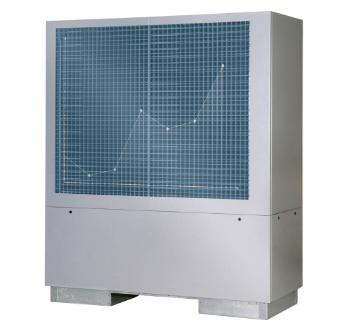
Heat pumps beat boilers in new home tests.
Building Safety Act implementation in Wales

CIAT to host industry panel on 26 June.

New and updated CLC building safety guidance.
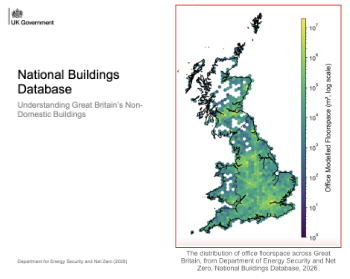
New UK National Buildings Database.
Building Safety Wiki Interviews

Chief executive of the British Woodworking Federation.
Planning condition discharge in England and Wales

A brief explanation from a building compliance expert, with further links.
Overheating guidance and tools for building designers

Guidance for dealing with element of building fabric control that have increasing importance.
Shading for housing, a design guide

From the Good Homes Alliance and British Blind and Shutter Association.
UK Standard Skills Classification (SSC)

A shared framework for describing skills needs.
Social media ban consultation comes to close

CIOB urges UK Government to consider social media’s role in careers guidance in ban debate.