





Leasehold enfranchisement
The term ‘leasehold’ in property law describes a lease from the freeholder of a property that enables the leaseholder to use the property for a specified period subject to conditions set out in the lease in return for the payment of rent. At the end of the lease the premises revert to the freeholder. Leaseholders are sometimes also referred to as ‘tenants’.
A leasehold is in contrast to:
- A ‘freehold’ in which the freeholder owns the ‘title absolute’ of the property, that is, the land and any immovable structures attached to it, outright in perpetuity. Freeholders may also be referred to as 'landlords' or 'lessors'.
- A ‘commonhold’, which is a form of property ownership for multi-occupancy properties that enables the collective ownership of the freehold of property as an alternative to long leaseholds.
Leaseholders are entitled to know the name and address of their freeholder.
A leaseholder may be able to purchase the freehold of a property. This process is known as ‘leasehold enfranchisement’. This can be either by agreement with the freeholder, or for houses or flats, can be by right. This right is permitted under certain circumstances by the Leasehold Reform Housing and Urban Development Act 1993 (as amended by the Commonhold and Leasehold Reform Act 2002).
A leaseholder may be able to purchase a freehold by right if they have owned the lease to a house for at least two years, or if they own a flat, they may be able to buy it collectively with other leaseholders (collective enfranchisement).
The process is a complex one, with a number of conditions and exceptions. It is described in detail by the Leasehold Advisory Service:
- Collective Enfranchisement - Getting Started.
- Houses, Qualification and valuation for enfranchisement.
Given the complexity, it may be wise for the parties to seek professional advice. This complexity can be seen in the cases of Day and Another v Hosebay Limited and Howard de Walden Estates Limited v Lexgorge Limited.
Notes:
- Leaseholders of flats and houses may also have the right to extend their lease, but this can be expensive.
- Leaseholders of flats will also normally have the right of first refusal (RFR) if the freeholder decides to sell the freehold.
- Leases can also be converted into a commonhold, but this requires the agreement of the leaseholders, landlord and any lenders, which may be difficult to achieve.
[edit] Related articles on Designing Buildings
- Betterment.
- Break clauses in leases.
- Commonhold.
- Copyhold.
- Day and Another v Hosebay Limited and Howard de Walden Estates Limited v Lexgorge Limited. 2012.
- Dilapidations.
- Freehold.
- Lease Negotiations - Tenants Checklist.
- Licence to alter.
- Quantified demand.
- Redevelopment lease renewals.
- Rent-free period.
- Rent in administration.
- Rent review.
- Reversion.
- Sample retail lease.
- Schedule of dilapidations.
- Scott schedule.
- Supersession.
[edit] External references
Featured articles and news

We're expanding our collaborative mission by launching DB Intelligence, an exclusive market research advisory panel. Built environment professionals can now get paid to share their expertise on industry trends, products and services.
Panel members receive direct financial incentives for participating in research projects like short surveys, 1-2-1 interviews and focus groups. Register today to shape the future of the construction sector.
Building Control Independent Panel final report
A precis of a key report led by Dame Hackitt with full recommendations and link to the government response.
Guide to ISO 19650 for Architecture Firms (2026)
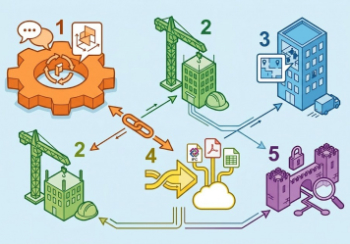
A user gives their low down.

A UK training and membership provider for mould remediation professionals.
Building Safety recap April, 2026
A short and longer run-through of the month, with links to further information and sources.
CIAT May 2026 briefing.

Independent NSI and BAFE study exploring how organisations are changing the way they buy fire safety services.

From medieval scribes to modern word art.

ECA welcomes crackdown on late payment and push for clean energy, whilst CIOB seek fixed cladding removal timeframes.
Cyber Security in the Built Environment
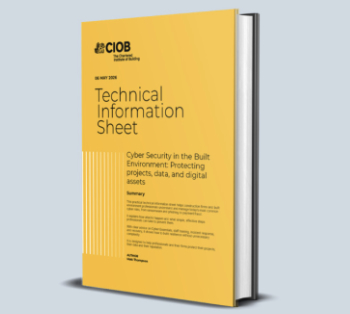
Protecting projects, data, and digital assets: A CIOB Academy TIS.
Managing competence in the built environment

ITFG publishes new industry guide on how to meet the ICC principles.
The UK's campaign to reduce noise pollution: Mythbusting, articles and topic guides.