






Key regulations for loft conversions
Building Regulations are of key importance to any construction work that takes place within your home. Building regulations protect the homeowner and general public by ensuring that buildings are safe, efficient and healthy places to live in.
There are an extensive list of regulations concerning methods of construction and the materials used. These are considered whilst initially assessing design proposals and then during construction by a building inspector who carries out regular checks, to ensure compliance.
This article provides a selection of the most Frequently Asked Questions based on current legislation (which can change from time to time).
What are Building Regulations?
- Building regulations are statutory instruments that seek to ensure that the policies set out in the relevant legislation are carried out. Building regulations approval is required for most building work in the UK.
Are Building Regulations needed for a loft conversion?
- A loft conversion is major construction project, and so it should be built in accordance with current Building Regulations. Approval can be sought through your Local Council Building Control department or through Local Approved Inspectors.
- Loft conversions are classed as habitable rooms and add value to your property. Without the Building Regulations approval you will not be able to sell your property as having an additional room.
What changes are required to a two storey house to convert the loft?
- A conversion in a two storey house will result in the need to protect the stairway by providing fire resistant doors and partitions in accordance with regulation B1 Section 2: Means of escape.
- Where there is an open plan arrangement at ground level it may be necessary to provide a new partition to enclose the escape route.
Can home owners keep their existing doors?
- It is necessary to change the doors to fire doors. In some rare cases, if the doors are inspected and are seen as of historical or architectural merit then it may be possible to retain existing doors.
- Retaining exiting doors is only allowed if they are upgraded to an acceptable standard if agreed by the building inspector, usually by a form of paint coating.
Are homeowners allowed to have glazed doors?
- Glass doors are only allowed if the glazing is to a fire resistant standard that complies with Building Regulations.
Are smoke alarms needed when converting the loft?
- Smoke alarms are to be fitted in the house when a loft is being converted.
- This is for the detection of fire to give early warning to the people within the house. This is to be in accordance with Building Regulation B1 Section 1: Fire detection and fire alarm systems.
Can homeowners just have smoke alarms instead of changing the existing doors?
- Unfortunately this is not acceptable as these relate to different sections of the Building Regulations. Smoke alarms are concerned with fire detection (B1 Section 1) and fire doors are concerned with means of escape (B1 Section 1).
Are sprinkler systems required when converting a loft in a three storey property?
- Converting a loft to make a four storey property requires the installation of a sprinkler system to be fitted in accordance with BS 9251:2005 and relates to B1 Section 2 Means of escape 2.7.b
[edit] Find out more
[edit] Related articles on Designing Buildings Wiki
Featured articles
Check out some of the best features and news from Designing Buildings as well as key stories from around the web.

Your views needed - a strategy for the professions, trades and occupations.

Confronting competency, codes, capacity and costs.

The hidden risk in modern construction supply chains.
Construction Management, 10 June

24 months to 14: CITB launches accelerated apprenticeships.
Bridging the gap between clients and contractors

Concerns remain around contractor quality, capability, and delivery.
Construction Management, 10 June.
Heat pumps beat boilers in new home tests.
Building Safety Act implementation in Wales

CIAT to host industry panel on 26 June.

New and updated CLC building safety guidance.
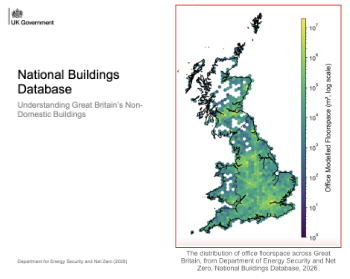
New UK National Buildings Database.
Building Safety Wiki Interviews

Chief executive of the British Woodworking Federation.
Planning condition discharge in England and Wales

A brief explanation from a building compliance expert, with further links.