





Impact sound
Sound is transmitted in buildings by both air-borne sound and structure-borne sound.
Impact sound (or impact noise) is a form of structure-borne sound that occurs when an object impacts on another, resulting in the generation and transmission of sound. The structural vibration caused by the impact results in sound being radiated from an adjacent vibrating surface. NB structure-borne sound may also be generated by vibrating sources rather than impact sources.
A typical example of an impact sound is footsteps on a floor resulting in sound being transmitted through the floor construction and heard in the space below. Impact sound can travel through solid structures and through cavities.
Impact sound can be a form of noise nuisance, particularly in dwellings, and can contribute to health problems, such as:
- Tension or anxiety.
- Decreased performance.
- Reduced productivity.
- Eardrum damage or hearing difficulties.
- Increased blood pressure or stress levels.
- Psychological damage.
The occurrence of impact sound is dependent on a range of factors, including:
- The force of impact.
- The characteristics of the surface that is impacted upon.
- The characteristics of the structure through which the vibration transmits.
- The characteristics of the radiating surface.
Impact sound can be prevented or reduced by:
- Carpets and pads – soft carpets and thick pad cushions can be particularly effective at reducing middle to high level frequencies, although they are less effective at isolating low frequency sound. It is important to consider whether carpets or pads might be removed in the future.
- Resilient underlay – can have a similar effect to carpets and pads. Generally, they are made from recycled rubber, rigid fibreglass, foam or other such materials. They absorb, or isolate impact energy and can be effective in minimising impact sound at middle to high level frequencies. If the underlay has significant mass, it may also provide sound insulation from air-borne sound.
- Resilient mounts – hanging resilient mounts, sound clips or spring ceiling hangers can reduce the transmission of impact sound.
- Soundproofing compounds – applying sound proofing layers can be effective in reducing impact sound. Typically the compound is applied between two rigid materials, such as subflooring. The compound dissipates the vibrations caused by sound waves as they move through the structure, and can reduce sound at all frequencies.
- A suspended ceiling system or raised floors can be used to improve impact sound insulation.
Building Regulations Approved Document E - 'Resistance to the passage of sound' sets minimum standards for impact sound insulation. It defines impact sound as: "Sound resulting from direct impact on a building element." It defines impact sound insulation as: "Sound insulation which reduces impact sound transmission from direct impacts such as footsteps on a building element."
Impact sound transmission is typically measured in-situ with a tapping machine which uses steel-faced hammers to strike a test surface and generate sound in an adjacent space which can be recorded or monitored. This is useful only in giving an indication of the likely level of impact sound as it does not accurately represent the variety of impacts that might be experienced in practice.
[edit] Related articles on Designing Buildings
- Airborne sound.
- Ash deafening.
- Audio frequency.
- British standards.
- Building acoustics.
- Building Bulletin 93: acoustic design of schools.
- Building regulations.
- Flanking sound.
- Noise nuisance.
- Part E compliance.
- Reverberation time.
- Room acoustics.
- Sound absorption.
- Sound frequency.
- Sound insulation.
- Sound insulation testing.
- Sound reduction index (SRI).
- Sound v noise.
- Structure-borne sound.
- Underlay.
Featured articles and news

We're expanding our collaborative mission by launching DB Intelligence, an exclusive market research advisory panel. Built environment professionals can now get paid to share their expertise on industry trends, products and services.
Panel members receive direct financial incentives for participating in research projects like short surveys, 1-2-1 interviews and focus groups. Register today to shape the future of the construction sector.
Overheating guidance and tools for building designers

Guidance for dealing with element of building fabric control that have increasing importance.
Shading for housing, a design guide

From the Good Homes Alliance and British Blind and Shutter Association.
UK Standard Skills Classification (SSC)

A shared framework for describing skills needs.
Social media ban consultation comes to close

CIOB urges UK Government to consider social media’s role in careers guidance in ban debate.
The latest of eight Skills England apprenticeship units

The addition of battery manufacturing welcomed by ECA with a warning about the risks of fast-tracked apprenticeship units.
Building Control Independent Panel final report
A precis of a key report led by Dame Hackitt with full recommendations and link to the government response.
Guide to ISO 19650 for Architecture Firms (2026)
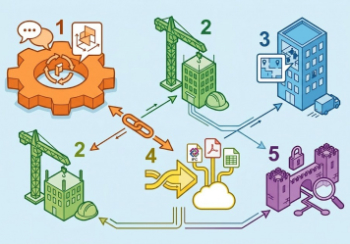
A user gives their low down.

A UK training and membership provider for mould remediation professionals.
Building Safety recap April, 2026
A short and longer run-through of the month, with links to further information and sources.

CIAT May 2026 briefing.

Independent NSI and BAFE study exploring how organisations are changing the way they buy fire safety services.

From medieval scribes to modern word art.

ECA welcomes crackdown on late payment and push for clean energy, whilst CIOB seek fixed cladding removal timeframes.
Cyber Security in the Built Environment
Protecting projects, data, and digital assets: A CIOB Academy TIS.
Managing competence in the built environment
ITFG publishes new industry guide on how to meet the ICC principles.
The UK's campaign to reduce noise pollution: Mythbusting, articles and topic guides.