





Housing zones
On 13 August 2014, the Department for Communities and Local Government, HM Treasury and the Homes and Communities Agency announced government plans to create 30 housing zones on brownfield sites in England as part of their continuing efforts to increase the supply of new housing.
A prospectus was published setting out details of the funding and bidding process to create housing zones outside of London (a separate London housing zones prospectus was published by the Mayor of London for bids from London boroughs). The housing zones programme aims to unlock brownfield land that might be used to develop housing schemes through a combination of:
- Long-term investment funding.
- Local development orders to simplify the planning process.
- Local authority leadership.
- Support from central government and the Advisory Team for Large Applications (ATLAS).
Local authorities who submit successful proposals will have access to £200 million of recoverable investment funding and cheaper borrowing at the Public Works Loan Board’s project rate for capital infrastructure expenditure.
The prospectus states that, ‘Schemes on (brownfield) land could be ready to go but are being held back by the high upfront capital that is needed. This is where the availability of investment funding can unlock development.... The introduction of Housing Zones is a chance to break down some of the barriers that are holding back development. Housing Zones are an opportunity for local authorities to set out a vision for the transformation of large brownfield sites locally, and through the support government is offering, take the lead in realising that vision in partnership with private sector developers.’
Eric Pickles MP, Secretary of State for Communities and Local Government, said, ‘We want Housing Zones to be areas where we can speed up and simplify the process of house building on brownfield land through locally led partnerships. London has already made a start with their prospectus, and the Mayor of London has described it as ‘turbo-charging house building.’ I want to see the same response to this challenge around England, whilst protecting our valued countryside. There is enough brownfield land to deliver up to 200,000 new homes across the country. We need to seize this opportunity.’
Expressions of interest had to be submitted to the Homes and Communities Agency by noon 3 October 2014.
On 20 February 2015, Chancellor George Osborne confirmed that nine new london housing zones would be established in Greenwich, Bexley, Barking and Dagenham, Wandsworth, Harrow, Hounslow, Lewisham, Ealing and Haringey. It is expected that this will accelerate the construction of up to 30,000 new homes, of which around a third will be affordable housing. Ref Gov.uk Plans to help deliver over 400,000 homes for London set out by Chancellor.
In March 2015, the Chancellor's Statement announced twenty areas had been selected as the first Housing Zones, with government plans to work with a further 8 councils – helping to deliver up to 45,000 new homes on brownfield land. Ref Gov.uk, Hundreds of thousands of homes and jobs will be delivered through a package of measures announced in today’s Budget 18 March 2015.
In June 2015, the Mayor of London announced four new housing zones in Havering, Enfield, Redbridge and Tower Hamlets. Ref [[w/index.php?title=W/index.php%3Ftitle%3DW/index.php%3Ftitle%3DW/index.php%3Ftitle%3DW/index.php%3Ftitle%3DMayor_of_London_announces_four_more_Housing_Zones_to_fast-track_12,000_new_homes_25_June_2015%26action%3Dedit%26redlink%3D1%26action%3Dedit%26redlink%3D1%26action%3Dedit%26redlink%3D1%26action%3Dedit%26redlink%3D1&action=edit&redlink=1|London.go.uk]] 25 June 2015, and in July 2015, Brent, Westminster and Sutton were added to the list.
In October 2015, housing zones in Lambeth and Merton were added, and mayor Boris Johnson pledged to add 10 more by May 2016.
[edit] Find out more
[edit] Related articles on Designing Buildings Wiki
Featured articles and news
Costs and insolvencies mount for SMEs, despite growth

Construction sector under insolvency and wage bill pressure in part linked to National Insurance, says report.
The place for vitrified clay pipes in modern infrastructure

Why vitrified clay pipes are reclaiming their role in built projects.

Research by construction PR consultancy LMC published.
Roles and responsibilities of domestic clients

ACA Safety in Construction guide for domestic clients.
Fire door compliance in UK commercial buildings

Architect and manufacturer gives their low down.
Plumbing and heating for sustainability in new properties

Technical Engineer runs through changes in regulations, innovations in materials, and product systems.
Awareness of the Carbon Border Adjustment Mechanism
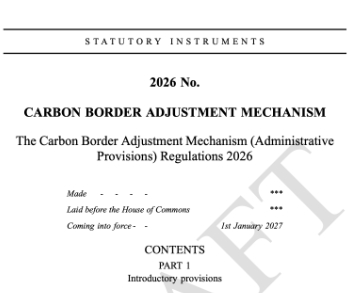
What CBAM is and what to do about it.
The new towns and strategic environmental assessments
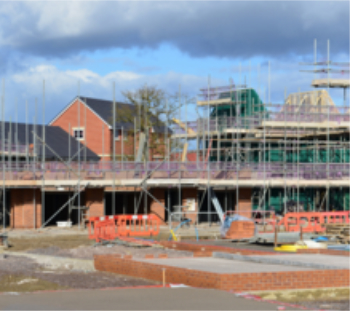
12 locations of the New Towns Taskforce reduced to 7 within the new towns draft programme and open consultation.

Buildings that changed the future of architecture. Book review.
The Sustainability Pathfinder© Handbook
Built environment agency launches free Pathfinder© tool to help businesses progress sustainability strategies.

Government outcome to the late payment consultation, ECA reacts.
IHBC 2025 Gus Astley Student Award winners

Work on the role of hewing in UK historic conservation a win for Jack Parker of Oxford Brookes University.
Future Homes Building Standards and plug-in solar

Parts F and L amendments, the availability of solar panels and industry responses.
How later living housing can help solve the housing crisis
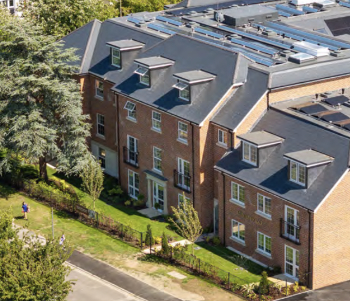
Unlocking homes, unlocking lives.
Preparing safety case reports for HRBs under the BSA

A new practical guide to preparing structural inputs for safety cases and safety case reports published by IStructE.
Male construction workers and prostate cancer

CIOB and Prostate Cancer UK encourage awareness of prostate cancer risks, and what to do about it.