





Historic England carbon literacy training courses


Contents |
[edit] Heritage Carbon Literacy course
Historic England is looking to deliver Carbon Literacy Training courses across the heritage sector to support organisations on their journeys to Net Zero.
Historic England is looking to roll out Carbon Literacy Training across the heritage sector to support organisations on their journeys to Net Zero. In order to do so, we would like to work with heritage sector support and representative organisations, bodies and networks, to promote, administer and coordinate the roll out of this training.
Carbon Literacy is a key way for organisations to gain an awareness of the causes and impacts of climate change and an understanding of carbon emissions. It provides a great foundation for individuals, teams and organisations to begin to take steps towards reducing their carbon emissions and become more environmentally sustainable.
Historic England has created a Heritage Carbon Literacy course, accredited by the Carbon Literacy Trust. This is based on the Museum Carbon Literacy course that is currently being delivered to museums across the country. Historic England is developing a pool or Framework of Heritage Carbon Literacy trainers that will be made available to heritage support and representative organisations to run the training courses to the sector. These trainers will be funded separately by Historic England and allocated to the different membership organisations.
[edit] Planning for Net Zero now
The Government’s Net Zero Strategy: ‘Build Back Greener’ sets out policies and proposals for decarbonising all sectors of the UK economy to meet our Net Zero target by 2050. Although, the 2050 deadline may seem a long way away for many organisations, there is an enormous amount to be done by then, and it is essential that heritage organisations begin to plan for Net Zero now.
Recent sector consultation by Historic England (Sector to Net Zero project) has shown that the majority of heritage organisations – in particular Small and Medium Sized Enterprises (SMEs) – are at the beginning of their journeys towards Net Zero.
[edit] Consultation results
The consultation has shown that heritage organisations need support on the preparatory phase of the journey towards Net Zero, which includes having a better understanding of the principal issues and questions, such as:
- what are the impacts of climate change on heritage
- what are the main carbon emissions
- how can we measure these
- how do we create policies and plans to reduce these
- what measures can be implemented to reduce emissions
Historic England’s Sector to Net Zero recommendations and delivery plan sets out various ways to support the sector in preparing itself to reduce its carbon emissions. One of these is to deliver Carbon Literacy Training to heritage organisations to start off the process and to support behaviour change within organisations.
[edit] Carbon Literacy Trust and previous courses
Carbon Literacy is defined by the Carbon Literacy Trust as ‘An awareness of the carbon costs and impacts of everyday activities and the ability and motivation to reduce emissions, on an individual, community and organisational basis.’ It has been delivered across the UK… to the civil service, NHS, local authorities etc.
Historic England has created a Heritage Carbon Literacy course which is built on the successful Museum Carbon Literacy course (LINK) created by the Roots and Branches project. This course is currently being delivered to museums across the country. The heritage course provides a more tailored offering with case studies and examples associated more directly with the heritage sector. A number of these have been collected from heritage organisations which are moving forwards with their decarbonisation plans.
[edit] Call for proposal and further information
Read more in the Call for Proposals PDF
For more background see the HE website and the Carbon Literacy Project website
This article appears on the IHBC news and blog site as "HE rolling out ‘Carbon Literacy Training’ courses to sector", dated September 8, 2023
--Institute of Historic Building Conservation
[edit] Related articles on Designing Buildings
- Black carbon.
- Blue carbon.
- Biogenic carbon.
- Biologic carbon sequestration.
- Carbon capture.
- Carbon cycle.
- Carbon dioxide.
- Carbon emissions.
- Carbon sequestration.
- Conservation Professional Practice Principles.
- Decision support for energy improvements.
- Embodied energy in construction
- Geologic carbon sequestration.
- New energy retrofit concept: 'renovation trains' for mass housing.
- Renovation v refurbishment v retrofit.
- Retrofit coordinator.
- Retrofit, refurbishment and the growth of connected HVAC technology.
- The Each Home Counts report and traditional buildings.
- The New Tenement: residences in the inner city since 1970.
- Retrofit measures for historic buildings and cities.
- Upcycling.
IHBC NewsBlog
IHBC sponsors Gardens Trust event 23-4 Sept 2026
.jpeg)
'Learning from the Past, Shaping the Future’ takes place in Milton Keynes
Renovations to Frank Lloyd Wright's Fallingwater complete
.jpg)
World Heritage Preserved project opens house for tours again
Shakespeare Birthplace Trust places Hall's Croft on HAR Register
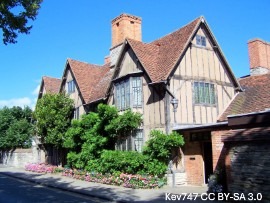
Stratford-upon-Avon home of Shakespeare's daughter is 'At Risk'
Lady Grange’s House repaired on St Kilda
.jpg)
National Trust for Scotland repairs stone cleit with link to famous island resident
Griff Rhys Jones on BBC Radio 4 Today programme
,_Green_Lane,_Derby.jpg)
The Victorian Society’s President unveiled its latest Top Ten Endangered Buildings 2026.
Need a MATE? Book your place now.
IHBC offers free webinars on applying for IHBC accreditation (Full & Associate).
UK Stained Glass Repository finds windows new homes
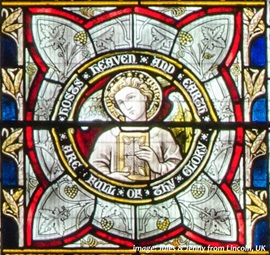
How are stained glass windows are rescued, stored and repurposed?
APPGEBE report sets high aims for quality
'Government must not sacrifice quality in drive to build 1.5m homes'
New measures protect Historic Shipwrecks from heritage crime

Underwater cultural heritage benefits from new HE guidance
How could the City of London skyline look in 6 years' time?

Visualisation shows approved planning applications as completed buildings
National Trust for Scotland calls for VAT cuts
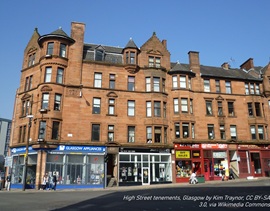
Heritage neglect is encouraged by current policies
IHBC's 'Context' Issue 186 features Industrial Heritage
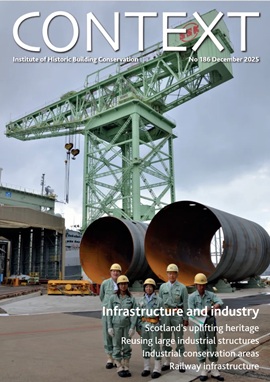
IHBC's members' journal reports on the challenges of conserving infrastructure
Book now for IHBC Annual School 2026
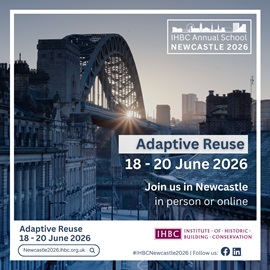
IHBC Annual School is taking place 18-20 June 2026 in Newcastle
RICHeS Research Infrastructure offers ‘Full Access Fund Call’
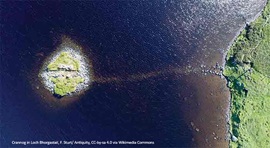
RICHeS offers a ‘Help’ webinar on 11 March
Latest IHBC Issue of Context features Roofing
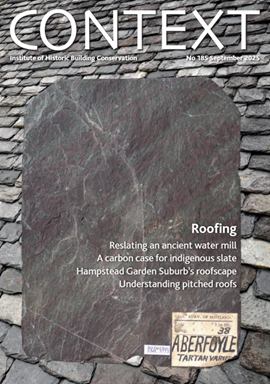
Articles range from slate to pitched roofs, and carbon impact to solar generation to roofscapes
Three reasons not to demolish Edinburgh’s Argyle House

Should 'Edinburgh's ugliest building' be saved?
IHBC’s 2025 Parliamentary Briefing...from Crafts in Crisis to Rubbish Retrofit
IHBC launches research-led ‘5 Commitments to Help Heritage Skills in Conservation’
How RDSAP 10.2 impacts EPC assessments in traditional buildings

Energy performance certificates (EPCs) tell us how energy efficient our buildings are, but the way these certificates are generated has changed.