





Herringbone strut

Herringbone struts are a form of cross bracing typically found between floor joists. Bracing between parallel rows of joists helps them to stay in place and prevents them from twisting.
Herringbone struts can be made of timber or pre-galvanised mild steel. They are sometimes used as an alternative to solid block bridging (or noggins/dwangs), particularly for long-span domestic floors. They are generally installed at the centre of a span when floor joists exceed 2.5 m. Spans exceeding 4.5 m may require two rows spaced at 1/3 and 2/3 span.
Timber herringbone strutting should be at least 38 x 38 mm timber and can only be used where the spacing between the joists is less than three times the depth of the joist.
They may be the preferred option if there is a lot of pipework or cabling to accommodate between joists, as they reduce the amount of drilling that would be required through solid noggings, which would weaken the floor.
A common problem in older dwellings is that floors feel ‘springy’. This can, in part, be because the herringbone struts have been removed in order to run services. Their re-introduction, or the reintroduction of regular noggings can help reduce the problem as the floor is encouraged to behave more as a 'slab' rather than a series of individual joists.
Alternatively, and perhaps more reliably, the floor can be strengthened, by 'sistering' steel, timber or ply reinforcing joists to the side of the existing joists, although, perversely, the installation of reinforcement can be made more difficult by the presence of herringbone struts or noggings.
[edit] Related articles on Designing Buildings
Featured articles and news
The future workforce: culture change and skill

Under the spotlight at UK Construction Week London.

A landmark moment for postmodern heritage.
A safe energy transition – ECA launches a new Charter

Practical policy actions to speed up low carbon adoption while maintaining installation safety and competency.
Frank Duffy: Researcher and Practitioner

Reflections on achievements and relevance to the wider research and practice communities.
The 2026 Compliance Landscape: Fire doors

Why 'Business as Usual' is a Liability.
Cutting construction carbon footprint by caring for soil
Is construction neglecting one of the planet’s most powerful carbon stores and one of our greatest natural climate allies.
ARCHITECTURE: How's it progressing?
Archiblogger posing questions of a historical and contextual nature.
The roofscape of Hampstead Garden Suburb
Residents, architects and roofers need to understand detailing.
Homes, landlords. tenants and the new housing standards

What will it all mean?
The Architectural Technology podcast: Where it's AT

Catch-up on the latest episodes.
Edmundson Apprentice of the Year award 2026

Entries now open for this Electrical Contractors' Association award.
Traditional blue-grey slate from one of the oldest and largest UK slate quarries down in Cornwall.

There are plenty of sources with the potential to be redeveloped.
Change of use legislation breaths new life into buildings

A run down on Class MA of the General Permitted Development Order.
Solar generation in the historic environment
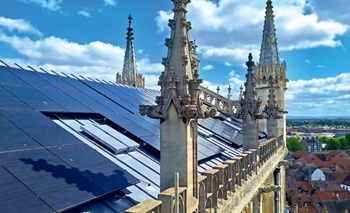
Success requires understanding each site in detail.