




Heritage, ageing and wellbeing
Wellbeing benefits of the historic environment include helping older adults age-in-place, remaining in their homes and communities rather than transitioning into residential care.

|
| English Heritage’s 15th-century Gainsborough Old Hall in Lincolnshire, saved from demolition in the 1940s by a friends’ group, is a symbol of local heritage, community and pride. (Photo: Tilman, Wikimedia). |
The built environment plays a powerful role in wellbeing, and place-making strategies are increasingly developed to ensure that planners are aligning places with the needs and values of local residents. Within this, the historic environment plays a valuable role in boosting local pride, identity and wellbeing. Historic places are widely considered to be more attractive than newer buildings, to reflect a sense of longevity, and to promote the character and distinctiveness of local places. By embodying this sense of continuity and distinctiveness, historic places may appeal to community members and foster a sense of belonging and connection.
Over the last decade, a number of programmes have been developed to harness the restorative powers of engaging with the historic environment. These include the Ministry of Defence’s Operation Nightingale and the Restoration Trust’s Human Henge. Through promoting skills development, social connection and resilience, these projects leverage cultural heritage to create meaningful experiences for participants, and address health and wellbeing disparities.
The historic environment offers diverse individual and communal wellbeing benefits for older adults. It can help them age-in-place, remaining in their homes and communities rather than transitioning into residential care. Ageing-in-place depends on social infrastructure that can allow older adults to access civic and community support. Historic places make up a critical part of a place’s social infrastructure.
Many historic places, such as churches and libraries, function as third spaces: places where community members come together without financial barriers. Third spaces are crucial for community engagement and cohesion, providing safe and accessible places to maintain connections to society, in addition to mental and physical activeness. Museums have recognised their power to bring community members together through hosting community gatherings such as coffee mornings, craft activities and reminiscence sessions. Historic third spaces also bring together older and younger people to share knowledge and experiences, and improve bonding between generations. This helps older adults to remain valued members of society and dispels ageist stereotypes.
The historic environment also supports ageing-in-place through enabling older people to participate in voluntary work and lifelong learning. Volunteering can help older adults maintain meaningful roles in society and connections to the community, and they may gain new skills and knowledge.
This article originally appeared in the Institute of Historic Building Conservation’s (IHBC’s) Context 183, published in March 2025. It was written by Jessica Bowden, a PhD student with Heriot-Watt University.
--Institute of Historic Building Conservation
Related articles on Designing Buildings Conservation.
- Conservation area.
- Conservation.
- Crooked House, Himley.
- Healing through heritage.
- Heritage.
- Historic environment.
- IHBC articles.
- IHBC Stress Awareness Month; Heritage Staff wellbeing at work survey.
- Institute of Historic Building Conservation.
- Listed buildings.
- Operation Nightingale.
- Mental health.
- The economics of heritage and wellbeing.
- Wellbeing and heritage: making a difference.
- Wellbeing.
- Workplace wellbeing in the heritage sector.
IHBC NewsBlog
IHBC sponsors Gardens Trust event 23-4 Sept 2026
.jpeg)
'Learning from the Past, Shaping the Future’ takes place in Milton Keynes
Renovations to Frank Lloyd Wright's Fallingwater complete
.jpg)
World Heritage Preserved project opens house for tours again
Shakespeare Birthplace Trust places Hall's Croft on HAR Register
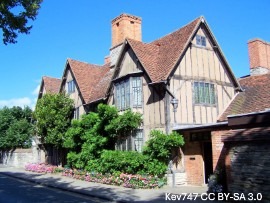
Stratford-upon-Avon home of Shakespeare's daughter is 'At Risk'
Lady Grange’s House repaired on St Kilda
.jpg)
National Trust for Scotland repairs stone cleit with link to famous island resident
Griff Rhys Jones on BBC Radio 4 Today programme
,_Green_Lane,_Derby.jpg)
The Victorian Society’s President unveiled its latest Top Ten Endangered Buildings 2026.
Need a MATE? Book your place now.
IHBC offers free webinars on applying for IHBC accreditation (Full & Associate).
UK Stained Glass Repository finds windows new homes
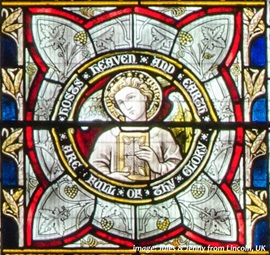
How are stained glass windows are rescued, stored and repurposed?
APPGEBE report sets high aims for quality
'Government must not sacrifice quality in drive to build 1.5m homes'
New measures protect Historic Shipwrecks from heritage crime

Underwater cultural heritage benefits from new HE guidance
How could the City of London skyline look in 6 years' time?

Visualisation shows approved planning applications as completed buildings
National Trust for Scotland calls for VAT cuts
Heritage neglect is encouraged by current policies
IHBC's 'Context' Issue 186 features Industrial Heritage
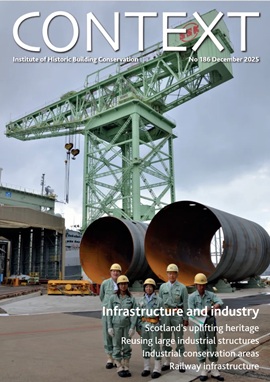
IHBC's members' journal reports on the challenges of conserving infrastructure
Book now for IHBC Annual School 2026
IHBC Annual School is taking place 18-20 June 2026 in Newcastle
RICHeS Research Infrastructure offers ‘Full Access Fund Call’
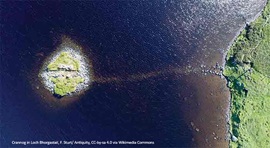
RICHeS offers a ‘Help’ webinar on 11 March
Latest IHBC Issue of Context features Roofing
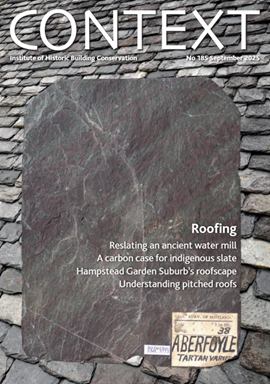
Articles range from slate to pitched roofs, and carbon impact to solar generation to roofscapes
Three reasons not to demolish Edinburgh’s Argyle House

Should 'Edinburgh's ugliest building' be saved?
IHBC’s 2025 Parliamentary Briefing...from Crafts in Crisis to Rubbish Retrofit
IHBC launches research-led ‘5 Commitments to Help Heritage Skills in Conservation’
How RDSAP 10.2 impacts EPC assessments in traditional buildings

Energy performance certificates (EPCs) tell us how energy efficient our buildings are, but the way these certificates are generated has changed.