





Futurist architecture

Futurist architecture emerged in the early-20th century in Italy. It was motivated by anti-historicism and characterised by long horizontal lines and streamlined forms suggesting speed, dynamism, movement and urgency.
Architects became involved in the artistic movement known as ‘futurism’ which was founded by the poet Filippo Tommaso Marinetti with his ‘Manifesto of Futurism’ (1909), along with other creatives such as writers, musicians, artists, and so on. They all were attracted to, and interested in, the new ‘cult of the machine age’ and the technological changes of the new century.
Utopian visions for futurist cities (see top image) were proposed by architects Mario Chiattone and Antonio Sant’Elia, which emphasised the use of new materials and industrial methods, as well as new developments such as elevators and structural steel components.
Futurist architecture came to be characterised by the notion of movement and flow, with sharp edges, strange angles, triangles, domes, and so on. In many respects, the more defined styles of Art Deco and Art Moderne adopted Futurist ideas of design and form, which were thought to be limitless in scope and scale.
Futurism went out of fashion following WWII, but emerged again in a reinterpreted form with the popularity of futuristic comic books and the arrival of the Space Age. This became known as ‘Googie’ architecture, which first appeared in Southern California during the late-1940s, influenced by the futurist designs of car culture, jet travel and the Atomic Age.
Towards the end of the 20th century/early-21st century, it also informed neo-futurism, which evolved out of high-tech architecture, developing many of the same themes and ideas. It is seen as a departure from the more sceptical and referential style of postmodernism, and more of an idealistic approach to the future.
[edit] Related articles on Designing Buildings Wiki
Featured articles
Check out some of the best features and news from Designing Buildings as well as key stories from around the web.
Bridging the gap between clients and contractors

Concerns remain around contractor quality, capability, and delivery.
Construction Management, 10 June.
Heat pumps beat boilers in new home tests.
Building Safety Act implementation in Wales

CIAT to host industry panel on 26 June.
New and updated CLC building safety guidance.
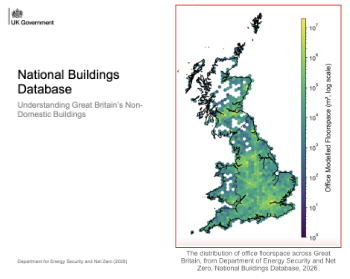
New UK National Buildings Database.
Building Safety Wiki Interviews

Chief executive of the British Woodworking Federation.
Planning condition discharge in England and Wales

A brief explanation from a building compliance expert, with further links.
Overheating guidance and tools for building designers

Guidance for dealing with element of building fabric control that have increasing importance.
Shading for housing, a design guide

From the Good Homes Alliance and British Blind and Shutter Association.
UK Standard Skills Classification (SSC)

A shared framework for describing skills needs.
Social media ban consultation comes to close

CIOB urges UK Government to consider social media’s role in careers guidance in ban debate.