






Energy, resilience and climate change knowledge campaign
In February 2017, the Institution of Civil Engineers (ICE) launched an Energy, Resilience and Climate Change knowledge campaign, a multi-year programme to focus the efforts of the learned society on the climate imperative.

The Accord de Paris, the UN sponsored international agreement on climate change, came into force in November 2016 - triggered when it was ratified by countries accounting for enough of the world’s emissions. It is important that the global, political commitment to tackling climate change is matched by engineers, and the challenge is immense.
There are both global imperatives, including the decarbonisation of electricity generation and transport, and also local tasks. In the UK in 2016, the ICE National Needs Assessment, a 30 year view of Britain’s infrastructure requirements, identified large increases in flood risk and greater exposure to high temperatures as key drivers of future demand.
It is vital that engineers share their experience and expertise. No one organisation will solve these problems but all can play a part.
ICE’s campaign curates relevant information and insight on the ICE website and the Institution is calling for contributions from across the built environment. Events are taking place across the UK and around the world, including a major 2 day conference in London in May on decarbonised energy and water resilience.
Over the coming years ICE wants to play an active role by using their international network to bring professionals together to work with industry and governments to tackle specific problems, such as how do we…
- create a decarbonised economy?
- provide water security for a growing population?
- make the environment, economy and society truly sustainable?
- use technology to improve city life and squeeze more from existing assets?
You can get involved by contacting ICE Knowledge and Events Marketing Manager Claire Miller at Claire.Miller@ice.org.uk or by visiting the website.
--The Institution of Civil Engineers
[edit] Find out more
[edit] Related articles on Designing Buildings Wiki
- Carbon plan.
- Climate Change Act.
- COP21 Paris 2015.
- Emission rates.
- Energy targets.
- Greenhouse gases.
- Happold lecture on climate change.
- Intergovernmental Panel on Climate Change IPCC.
- Kyoto Protocol.
- National Infrastructure Commission.
- National Infrastructure Plan.
- National Needs Assessment.
- Sustainability.
- The Institution of Civil Engineers.
- What has the UK done about carbon reduction since the Paris Agreement?
Featured articles and news
Costs and insolvencies mount for SMEs, despite growth

Construction sector under insolvency and wage bill pressure in part linked to National Insurance, says report.
The place for vitrified clay pipes in modern infrastructure
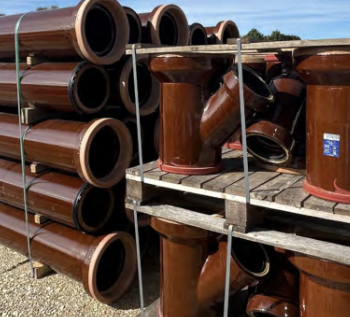
Why vitrified clay pipes are reclaiming their role in built projects.

Research by construction PR consultancy LMC published.
Roles and responsibilities of domestic clients

ACA Safety in Construction guide for domestic clients.
Fire door compliance in UK commercial buildings

Architect and manufacturer gives their low down.
Plumbing and heating for sustainability in new properties
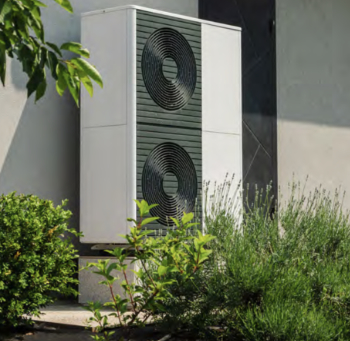
Technical Engineer runs through changes in regulations, innovations in materials, and product systems.
Awareness of the Carbon Border Adjustment Mechanism
What CBAM is and what to do about it.
The new towns and strategic environmental assessments
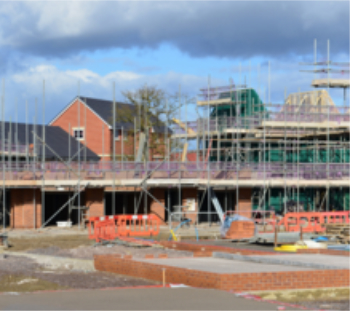
12 locations of the New Towns Taskforce reduced to 7 within the new towns draft programme and open consultation.
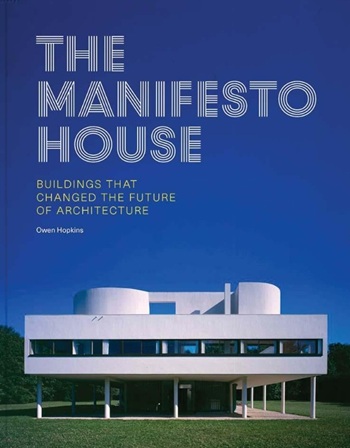
Buildings that changed the future of architecture. Book review.
The Sustainability Pathfinder© Handbook
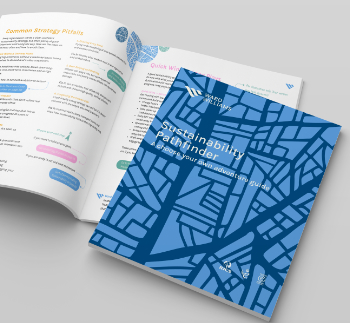
Built environment agency launches free Pathfinder© tool to help businesses progress sustainability strategies.
Government outcome to the late payment consultation, ECA reacts.
IHBC 2025 Gus Astley Student Award winners
Work on the role of hewing in UK historic conservation a win for Jack Parker of Oxford Brookes University.
Future Homes Building Standards and plug-in solar
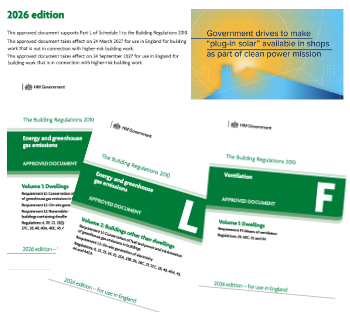
Parts F and L amendments, the availability of solar panels and industry responses.
How later living housing can help solve the housing crisis
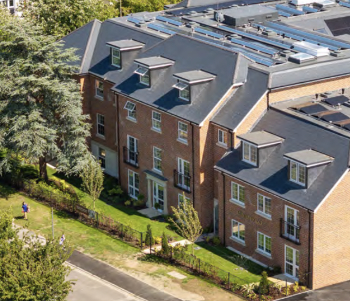
Unlocking homes, unlocking lives.
Preparing safety case reports for HRBs under the BSA
A new practical guide to preparing structural inputs for safety cases and safety case reports published by IStructE.
Male construction workers and prostate cancer

CIOB and Prostate Cancer UK encourage awareness of prostate cancer risks, and what to do about it.
Comments
Providing safe cycle lanes separated from motor traffic encourages people to travel in a sustainably and healthily. This has been shown with the few superhighway schemes in London which are very well used after only being in place a few years - clearly there was untapped demand.
Elsewhere improved links to transport hubs and increased cycle parking at stations are enabling more people to complete their commutes without using their cars.
Traffic reduction schemes in residential neighbourhoods to improve conditions for people walking and cycling can help reduce congestion caused by parents driving short distances for the school run - anyone who travels at school run time will know the congestion this causes.
It seems likely that these types of schemes will be part of the solution to our sustainability problem, and they also involve civil engineering. However the ICE seem to have a blind spot here. Although it ticks most of their boxes with regards to sustainability and cities it doesn't even get a mention on their website.