






Domestic micro-generation
At a domestic scale there are a number of technologies that can be used to generate electricity including solar photovoltaics (PV), wind generators, micro-CHP, fuel cells and so on. These fall into two broad categories:
- The first uses fossil fuels to produce electricity often at a building or community scale thereby eliminating transmission and distribution losses associated with the National Grid.
- The second uses renewable sources such as the wind and sun.
Since the introduction of the government's Feed-in Tariffs (FITs) in 2010, there has been a significant increase in micro-generation and this is expected to continue in the future.
In terms of the domestic sector, by far the most installations registered under the Government’s FIT scheme are solar PV and this will now be considered as an example.
Solar PV has grown rapidly across the world to a total capacity of over 70 GW and a total output of approximately 80 TWh per annum. In terms of global installed capacity, solar PV is now third behind hydro and wind generation.
The UK solar market is ranked 8th in the world [49] and currently PV is viewed by the Government as having the potential to make a significant contribution to low carbon electricity of the future.
Installed costs of PV have dropped by approximately 50 per cent between Summer 2011 and March 2012 [50] resulting in 1.4 GW of installed capacity in 2012 growing to 2.4 GW by the end of June 2013. Of this approximately 1.7 GW [51] was small scale, below 50 kW installations.
A typical domestic installation is between 1.5 and 4 kWp and each kWp will produce approximately 800 kWh over an average year depending on the particular situation. This is a meaningful figure compared to the average household consumption which is approximately 4000 kWh a year.
Micro-generation is a key part of the future electricity strategy but as it grows it raises a number of questions relating to the local distribution network supplying dwellings. For example, if the PV installations fitted to houses on the sunny side of a road are exporting much of their electricity, does this have any detrimental impact on the local distribution network or the sub-station transformer as a result of potentially unbalanced loads? Also, how might local micro-generation interact with new heating and transport demands and will hot spots or other strange effects occur?
At a national level there are also discussions surrounding the stability of the grid as renewable energy approaches 20% of the total supply and solutions to this may call for the installation of huge grid storage ‘batteries’ to restore balance to the system.
Whether at a national or local level there are clearly significant challenges to decarbonising the grid. If it can be achieved however, it potentially decarbonises much of domestic heating and transport and as a result reflects the key role electricity will take in a low carbon future.
This article was created by --BRE. It was taken from The future of electricity in domestic buildings, a review, by Andrew Williams, published in November 2014.
[edit] Related articles on Designing Buildings Wiki
- Allowable solutions.
- Battery energy storage systems with grid-connected solar photovoltaics BR 514.
- Battery storage.
- Carbon ratings for buildings.
- Changing patterns in domestic energy use FB 76.
- Electricity supply.
- Energy harvesting.
- Feed in tariff.
- Financing our future energy infrastructure.
- Green Deal.
- Kilowatt hour.
- Microgeneration.
- Micro-CHP.
- Private wire arrangement.
- Renewable energy.
- Renewable heat incentive.
- Smart Export Guarantee SEG.
- Switchgear.
- The future of electricity in domestic buildings.
- What can government do about district heating.
- Zero carbon homes.
- Zero carbon non domestic buildings.
[edit] External references
- [49] EPIA. Global Market Outlook for Photovoltaics Until 2016. Accessed 3 January 2014.
- [50] DECC. UK Renewable Energy Roadmap Update 2012.
- [51] DECC. UK Solar PV Strategy Part 1: roadmap to a brighter future.
Featured articles
Check out some of the best features and news from Designing Buildings as well as key stories from around the web.

The hidden risk in modern construction supply chains.
Construction Management, 10 June

24 months to 14: CITB launches accelerated apprenticeships.
Bridging the gap between clients and contractors

Concerns remain around contractor quality, capability, and delivery.
Construction Management, 10 June.
Heat pumps beat boilers in new home tests.
Building Safety Act implementation in Wales

CIAT to host industry panel on 26 June.
New and updated CLC building safety guidance.
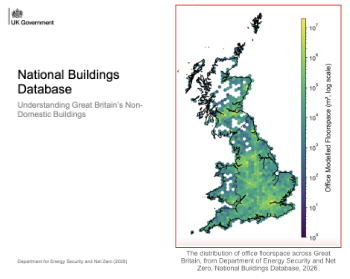
New UK National Buildings Database.
Building Safety Wiki Interviews

Chief executive of the British Woodworking Federation.
Planning condition discharge in England and Wales

A brief explanation from a building compliance expert, with further links.
Overheating guidance and tools for building designers

Guidance for dealing with element of building fabric control that have increasing importance.
Shading for housing, a design guide

From the Good Homes Alliance and British Blind and Shutter Association.