





De minimis in construction
De minimis is a legal term which is derived from a Latin expression referring to things that are too minimal or unimportant to be considered. It is taken from a longer phrase which translates as ‘the law does not concern itself with trifles’. What this means in practice is that generally the law does not encourage parties to pursue legal action for breaches of rules or agreements where the impact is minimal.
In a construction, the term 'de minimis' often arises in relation to practical completion.
Practical completion is often certified when there are de minimis (very minor) items 'not affecting beneficial occupancy' that remain incomplete and that can be put right without undue interference or disturbance to occupants, i.e. the client is able to take possession of the works and use them for their intended purpose. However, the legal basis for this is not clear, and unless the contract states otherwise, if the works are not complete, practical completion need not be certified.
For more information see: Practical completion.
In relation to party wall issues, ‘de minimis works’ are those that may be so minor that service of a notice under the Party Wall Act would be generally regarded as not necessary. The government’s explanatory booklet gives examples of ‘de minimis works’ as those unlikely to affect the structural strength or support functions of a party structure or cause damage to the neighbour’s side of it, such as re-plastering, shallow chasing for electrical wiring or inserting power sockets, and screws to support shelves, kitchen cupboards, and the like.
In contrast, in the context of money laundering, the Proceeds of Crime Act 2002 effectively created notifiable incidents arising in situations that many would not consider as falling within the definition of ‘money laundering’, and sets no de minimis limit. In other words, a deliberate under-declaration of one’s own tax liability, even of only a few pounds, could be considered a money laundering offence.
For more information, see Money laundering.
NB The glossary of statistical terms, published by the Organisation for Economic Co-operation and Development (OECD), defines de minimis creditors as: ‘Minor creditors that are exempted from debt restructuring to simplify implementation of the Paris Club restructuring agreements. Their claims are payable in full as they fall due. An exposure limit defining a minor creditor is specified in each Agreed Minute.’
[edit] Related articles on Designing Buildings
Featured articles
Check out some of the best features and news from Designing Buildings as well as key stories from around the web.
Construction Management, 10 June

24 months to 14: CITB launches accelerated apprenticeships.
Bridging the gap between clients and contractors

Concerns remain around contractor quality, capability, and delivery.
Construction Management, 10 June.
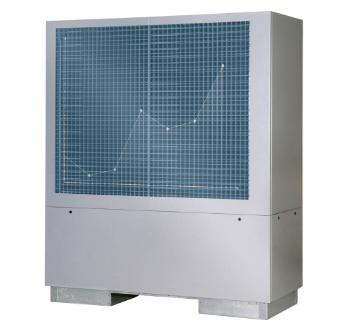
Heat pumps beat boilers in new home tests.
Building Safety Act implementation in Wales

CIAT to host industry panel on 26 June.
New and updated CLC building safety guidance.
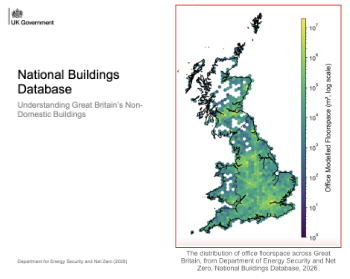
New UK National Buildings Database.
Building Safety Wiki Interviews

Chief executive of the British Woodworking Federation.
Planning condition discharge in England and Wales

A brief explanation from a building compliance expert, with further links.
Overheating guidance and tools for building designers

Guidance for dealing with element of building fabric control that have increasing importance.
Shading for housing, a design guide

From the Good Homes Alliance and British Blind and Shutter Association.
UK Standard Skills Classification (SSC)

A shared framework for describing skills needs.