





Creative industries
The UK Department for Culture, Media, and Sport (DCMS) has defined the creative industries as “those industries which have their origin in individual creativity, skill and talent and which have a potential for wealth and job creation through the generation and exploitation of intellectual property.” It has grouped the creative industries into the following sub-sectors:
- advertising and marketing.
- architecture.
- crafts.
- design and designer fashion.
- film, TV, radio and photography.
- museums, galleries and libraries.
- music, performing and visual arts.
- publishing.
- IT, software and computer services (includes video games).
in 2023, in terms of gross value added the creative industries contributed around £124 billion to the economy, around 5% of total UK economic output, with IT, software and computing services contributing 40% of creative industries output.
In January 2025 the government announced a £60 million boost for the creative industries “to turbocharge growth”. In May 2025 the Skills England Sector skills needs assessment was published following analysis and engagement with sectors on growth and skills offers for 10 priority sectors, which included the creative industries. They note that employing 2.4 million people in 2023, creative industries are major economic and cultural force, growing faster than the national economy.
The report also notes however that the UK creative industries face critical skills shortages, with 33% of vacancies caused by skills gaps, in soft, technical, and advanced IT skills, especially in professional roles. A sector where informal hiring and project-based work may be obscuring its true demand. The sector is prone to evolving as technology develops making "fusion" skills which blend creativity and tech increasingly important.
Barriers to entry to the sector include underused apprenticeships, and reliance on higher education which limit workforce diversity. Other challenges include poor job security, gender imbalance, and low training investment. Stakeholders have been calling for better upskilling in digital and green tech, lifelong learning, flexible training models, and stronger education-industry links to support sustainable talent development.
[edit] Related articles on Designing Buildings
- Architecture.
- AI in architecture: Combining human creativity and tech innovation now and in the future.
- Building information modelling BIM.
- Construction innovation.
- Creative.
- Design.
- Design methodology for building projects.
- Skills England publishes Sector skills needs assessments.
- The impact of digital on civil engineering.
- What is design?
Featured articles
Check out some of the best features and news from Designing Buildings as well as key stories from around the web.
Bridging the gap between clients and contractors

Concerns remain around contractor quality, capability, and delivery.
Construction Management, 10 June.

Heat pumps beat boilers in new home tests.
Building Safety Act implementation in Wales

CIAT to host industry panel on 26 June.
New and updated CLC building safety guidance.
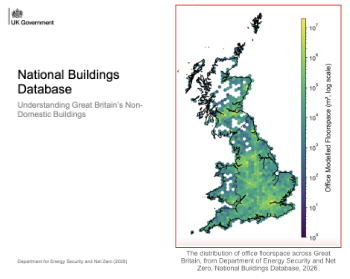
New UK National Buildings Database.
Building Safety Wiki Interviews

Chief executive of the British Woodworking Federation.
Planning condition discharge in England and Wales

A brief explanation from a building compliance expert, with further links.
Overheating guidance and tools for building designers

Guidance for dealing with element of building fabric control that have increasing importance.
Shading for housing, a design guide

From the Good Homes Alliance and British Blind and Shutter Association.
UK Standard Skills Classification (SSC)

A shared framework for describing skills needs.
Social media ban consultation comes to close

CIOB urges UK Government to consider social media’s role in careers guidance in ban debate.