





Control of Vibration at Work Regulations
Key takeaways
The Control of Vibration at Work Regulations 2005 require employers to manage health risks from both hand-arm and whole-body vibration. Daily exposure action and limit values define when interventions are needed. Employers must carry out risk assessments, implement controls, provide training and health surveillance, and engage with workers in managing these risks.
Background
The Control of Vibration at Work Regulations 2005, a UK Statutory Instrument under the Health and Safety at Work etc. Act 1974 (SI 2005/1093), came into force on 6 July 2005 to protect employees from health hazards associated with vibration at work. These regulations address two key forms of vibration: hand-arm vibration, arising from the use of hand-held or hand-guided tools, and whole-body vibration, typically transmitted through seats or by standing on vibrating machinery
Central to the regulations are defined exposure action values (EAVs) and exposure limit values (ELVs). Employers must act to reduce exposure once the action value is reached and must ensure the limit value is not exceeded.
Employers are required to undertake a suitable and sufficient risk assessment to identify employees at risk, consider the magnitude and duration of exposure, and evaluate the vulnerability of certain individuals. Based on this assessment, the employer must implement appropriate control measures following a hierarchy of control. This may include substituting equipment, using low-vibration tools, changing work processes, introducing rest breaks or job rotation, and keeping equipment well-maintained
Where the risk assessment shows a risk to health, the regulations mandate health surveillance to detect early signs of disorders like hand-arm vibration syndrome (HAVS) or vibration-related back issues. Should health effects arise, employers must review controls, provide advice, and consider assigning alternative work. Employers must also inform and train employees about the risks, control measures, exposure values, findings from assessments, and how to spot and report symptoms. Worker consultation is also required, ensuring that those affected are involved in the risk management process.
Failing to comply with these regulations can lead to enforcement action by the Health and Safety Executive, including prosecution. Cases have emerged where organisations have been fined for neglecting to manage vibration risks appropriately.
[edit] Related articles on Designing Buildings
Featured articles and news

We're expanding our collaborative mission by launching DB Intelligence, an exclusive market research advisory panel. Built environment professionals can now get paid to share their expertise on industry trends, products and services.
Panel members receive direct financial incentives for participating in research projects like short surveys, 1-2-1 interviews and focus groups. Register today to shape the future of the construction sector.
Building Control Independent Panel final report
A precis of a key report led by Dame Hackitt with full recommendations and link to the government response.
Guide to ISO 19650 for Architecture Firms (2026)
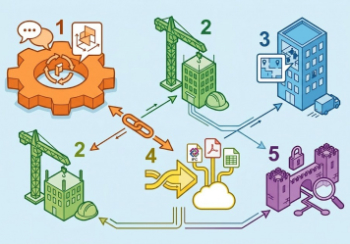
A user gives their low down.

A UK training and membership provider for mould remediation professionals.
Building Safety recap April, 2026
A short and longer run-through of the month, with links to further information and sources.

CIAT May 2026 briefing.

Independent NSI and BAFE study exploring how organisations are changing the way they buy fire safety services.
From medieval scribes to modern word art.

ECA welcomes crackdown on late payment and push for clean energy, whilst CIOB seek fixed cladding removal timeframes.
Cyber Security in the Built Environment
Protecting projects, data, and digital assets: A CIOB Academy TIS.
Managing competence in the built environment

ITFG publishes new industry guide on how to meet the ICC principles.
The UK's campaign to reduce noise pollution: Mythbusting, articles and topic guides.