





Collaborative Reporting for Safer Structures UK

Contents |
[edit] Introduction
Collaborative Reporting for Safer Structures UK (CROSS-UK) is a collaborative body that compiles and publishes free safety information for built environment professionals. Formerly known as the Confidential Reporting on Structural Safety, CROSS was founded in 2005 as a system for the collation of data on matters of concern relating to structural safety.
CROSS operates internationally; following in the footsteps of CROSS-UK, the IStructE launched in Australia with CROSS-AUS in 2018 and then in 2019 the network grew to the US with CROSS-US formed by the Structural Engineering Institute (SEI) of the American Society of Civil Engineers (ASCE).
The UK government 'Construction Products Reform Green Paper 2025' published 26 February 2025, defines Collaborative Reporting for Safer Structures UK (CROSS-UK) as 'A confidential reporting system which allows professionals working in the built environment to report on fire and structural safety issues. These are then published anonymously to share lessons learned, create positive change, and improve safety.'
On 10 July, 2025 the Health and Safety Executive (HSE), acting in its role as the Building Safety Regulator (BSR), formally appointed CROSS-UK (Collaborative Reporting for Safer Structures) as the official Voluntary Occurrence Reporting System (VORS) for structural and fire safety until at least 2028, following a competitive tender process. Operating independently of both the regulator and government, CROSS-UK has been running the system on an interim basis since April 2023 and is trusted across the industry for its ability to support cultural change, risk recognition, and improved public safety through anonymous reporting, expert review, and shared learning. CROSS-UK provides a secure, confidential channel for professionals to report safety concerns and near-misses—strengthening building safety in th post-Grenfell regulatory framework under the 2022 Building Safety Act
[edit] Background
The establishment of the CROSS safety reporting system was based on work by the Standing Committee on Structural Safety (SCOSS). In 2012, SCOSS and CROSS were officially aligned under the name Structural-Safety.
In 2018, CROSS was incorporated into the recommendations of the Hackitt report. The system was specifically mentioned under recommendation 1.4c, which states, ‘For all other buildings, the current CROSS scheme should be extended and strengthened to cover all engineering safety concerns and should be subject to formal review and reporting at least annually.’
After discussions between Structural-Safety and the Ministry of Housing, Communities & Local Government (MHCLG), funding for CROSS-UK was increased in 2020 to include fire safety in compliance with the aforementioned recommendations in the report. The CROSS system expanded in 2021 to include structural safety as well as fire safety and all three entities - Structural-Safety, SCOSS and CROSS - are united to operate under a new name, Collaborative Reporting for Safer Structures (CROSS).
[edit] Importance of safety reporting
The new name for the organisation is meant to illustrate the connection and to respond to the overlap - both professional and physical - between structural safety and fire safety. CROSS will continue to provide built environment professionals the opportunity to make confidential reports when they witness either type of safety issue.
The information collected in the reports is confidential, but it is shared with a panel of expert volunteers who review and comment on findings to provide additional insight into incidents. In addition to educating others about the importance of identifying and relaying structural safety issues and building incidents (such as near misses), reports are intended to:
- Promote culture change.
- Share lessons learned.
- Find issues that could foreshadow risk.
- Identify shortfalls or vulnerabilities.
- Improve competency through training.
- Support regulatory activities.
- Inform professional education activities.
- Create proactive attitudes about preventing safety risks.
[edit] Related articles on Designing Buildings Wiki
- Fire prevention on construction sites.
- Hackitt review of the building regulations and fire safety, final report.
- Health and safety.
- Health and safety for building design and construction.
- Independent review of the building regulations and fire safety.
- Ministry of Housing, Communities and Local Government (MHCLG).
- Reporting accidents and injuries on construction sites.
- The design of temporary structures and wind adjacent to tall buildings.
Featured articles and news

We're expanding our collaborative mission by launching DB Intelligence, an exclusive market research advisory panel. Built environment professionals can now get paid to share their expertise on industry trends, products and services.
Panel members receive direct financial incentives for participating in research projects like short surveys, 1-2-1 interviews and focus groups. Register today to shape the future of the construction sector.
Social media ban consultation comes to close

CIOB urges UK Government to consider social media’s role in careers guidance in ban debate.
The latest of eight Skills England apprenticeship units

The addition of battery manufacturing welcomed by ECA with a warning about the risks of fast-tracked apprenticeship units.
Building Control Independent Panel final report

A precis of a key report led by Dame Hackitt with full recommendations and link to the government response.
Guide to ISO 19650 for Architecture Firms (2026)
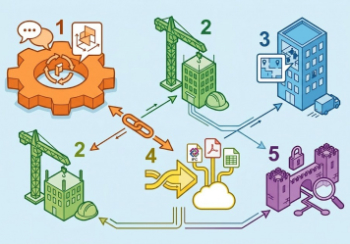
A user gives their low down.

A UK training and membership provider for mould remediation professionals.
Building Safety recap April, 2026
A short and longer run-through of the month, with links to further information and sources.
CIAT May 2026 briefing.
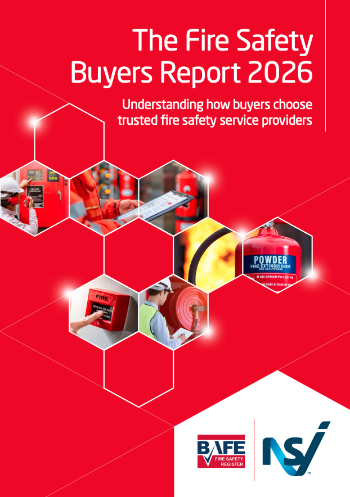
Independent NSI and BAFE study exploring how organisations are changing the way they buy fire safety services.
From medieval scribes to modern word art.
ECA welcomes crackdown on late payment and push for clean energy, whilst CIOB seek fixed cladding removal timeframes.
Cyber Security in the Built Environment
Protecting projects, data, and digital assets: A CIOB Academy TIS.
Managing competence in the built environment
ITFG publishes new industry guide on how to meet the ICC principles.
The UK's campaign to reduce noise pollution: Mythbusting, articles and topic guides.