




Chapels of England: buildings of protestant nonconformity

|
Chapels of England: buildings of protestant nonconformity by Christopher Wakeling, Historic England, 2017, 312 pages, profusely illustrated. |
A generation has passed since the late Christopher Stell published the first volume of the magisterial four-volume series of inventories on the chapels and meeting houses of England for the Royal Commission on Historical Monuments (1986-2002). The emphasis of those pioneering volumes was largely on buildings dating from before 1850 and a cut-off date of 1914 was scrupulously observed.
Despite brief regional introductions, they were essentially inventories with succinct descriptions, illustrated by black-and-white photographs and some charming line drawings by Stell himself. They remain important works of reference, as Wakeling fully acknowledges, but they do not claim to provide a coherent narrative of the development of nonconformist belief as expressed in its architecture. That story has now been told in the readable prose of Christopher Wakeling’s study for the successor body to the Royal Commission, Historic England.
It is a truly magnificent book with chapters arranged chronologically from the reformation down to the present day, providing a detailed analysis of the development in plan-forms, architectural styles and internal arrangements covering the wide variety of nonconformist congregations across the country. The differences in their beliefs and practices across the 20,000 congregations still active today can be confusing for the non-specialist, and a helpful appendix briefly lists the distinctions between the different nonconformist groups from baptists to Wesleyan reformers. Starting with the adaptation for protestant worship of existing Anglican medieval churches in the 16th century, the survey takes us from the oldest surviving puritan chapel at Toxteth of 1618 down to the strikingly modern form of the Salvation Army corps hall in Chelmsford of 2009.
Although the emphasis throughout is on the architectural response to changing circumstances and beliefs, Wakefield provides a perceptive context for the political and social factors which influenced the forms and styles that were adopted. A distinction is made between rural chapels and meeting houses, often designed by local builders within a vernacular tradition, and the grand urban buildings accommodating enormous congregations, and providing educational and social facilities, which were the product of established architects. The relationship with secular architectural styles is skilfully integrated with the description of an impressive number of individual examples. There is an acknowledgment of the importance of international precedents from both Europe and New England. The chronological narrative is interspersed with short essays which helpfully discuss more general aspects of nonconformist worship, including graveyards and memorials, communion, music, seating and baptism.
The book is beautifully produced. It is a pity that no acknowledgment is made to the name of the designer, apart from a tiny reference to page layout by Pauline Hull. If she was responsible for the overall design she deserves due recognition for the stylish presentation. It is lavishly illustrated in colour and the quality of the photography is quite exceptional. The captions are informative and complement the text. Appropriate references to the Historic England Archive are given for each image. Of particular note is the careful juxtaposition of photographs of interiors with the relevant exterior views. They are placed in close relationship with the descriptive text which makes the scholarly analysis easy to follow. The interiors themselves are a revelation of the importance of the preaching of the Word and the part played by music and communion in nonconformist worship.
The contrast in publishing standards between Stell’s monochrome volumes and this delightful book could not be more marked. Historic England deserves high praise for commissioning such a distinguished scholar and presenting his informative analysis in such an attractive form. It deserves a wide readership.
This article originally appeared as ‘20,000 congregations’ in IHBC’s Context 155, published in July 2018. It was written by Malcolm Airs, Kellogg College, Oxford.
--Institute of Historic Building Conservation
Related articles on Designing Buildings Wiki
- After the Fire: London churches in the age of Wren, Hooke, Hawksmoor and Gibbs
- Anchorhold.
- Bridge chapel.
- Britain's Lost Churches.
- Church Heritage Record.
- Conservation.
- Floors of the great medieval churches.
- Heritage at Risk Register.
- Heritage.
- Historic England.
- IHBC articles.
- Taylor Review - Sustainability of English Churches and Cathedrals.
- The Institute of Historic Building Conservation.
- Worcester’s Georgian churches
IHBC NewsBlog
Busaries open for IHBC's Annual School 10-12 June 2027

Apply for funded places for #IHBCBristolBath2027 until 1 February 2027
London's oldest restaurant given to National Trust

Rules will continue to open and income will fund conservation
No right to cross-pavment charging in England's conservation areas

Residents excluded from new permitted development rights
Save the Date for #IHBCBristolBath2027 on 'Climate Change & Significance'
Register now for updates on IHBC's Annual School 10-12 June 2027
Bath could pause UNESCO World Heritage Site status
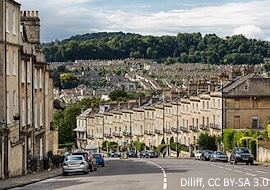
Consultation on scheme to hit housing targets runs until 30 October 2026
Canals offer increasing innovation opportunities
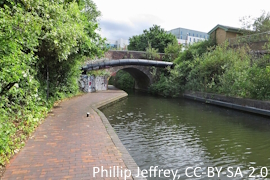
Canal & River Trust sees canals playing role in UK's water security
IHBC sponsors Gardens Trust event 23-4 Sept 2026
.jpeg)
'Learning from the Past, Shaping the Future’ takes place in Milton Keynes
Renovations to Frank Lloyd Wright's Fallingwater complete
.jpg)
World Heritage Preserved project opens house for tours again
Shakespeare Birthplace Trust places Hall's Croft on HAR Register
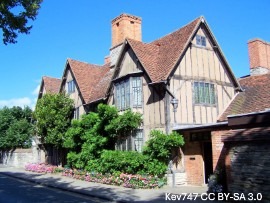
Stratford-upon-Avon home of Shakespeare's daughter is 'At Risk'
Lady Grange’s House repaired on St Kilda
.jpg)
National Trust for Scotland repairs stone cleit with link to famous island resident
Griff Rhys Jones on BBC Radio 4 Today programme
,_Green_Lane,_Derby.jpg)
The Victorian Society’s President unveiled its latest Top Ten Endangered Buildings 2026.
Need a MATE? Book your place now.
IHBC offers free webinars on applying for IHBC accreditation (Full & Associate).
UK Stained Glass Repository finds windows new homes
How are stained glass windows are rescued, stored and repurposed?
APPGEBE report sets high aims for quality
'Government must not sacrifice quality in drive to build 1.5m homes'
New measures protect Historic Shipwrecks from heritage crime

Underwater cultural heritage benefits from new HE guidance
How could the City of London skyline look in 6 years' time?

Visualisation shows approved planning applications as completed buildings
National Trust for Scotland calls for VAT cuts
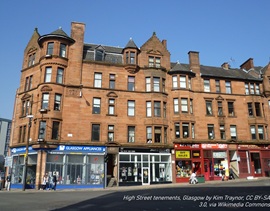
Heritage neglect is encouraged by current policies
IHBC's 'Context' Issue 186 features Industrial Heritage
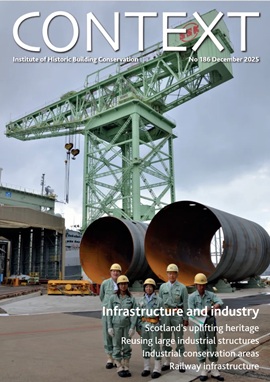
IHBC's members' journal reports on the challenges of conserving infrastructure
Book now for IHBC Annual School 2026

IHBC Annual School is taking place 18-20 June 2026 in Newcastle
RICHeS Research Infrastructure offers ‘Full Access Fund Call’
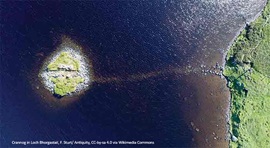
RICHeS offers a ‘Help’ webinar on 11 March
Latest IHBC Issue of Context features Roofing
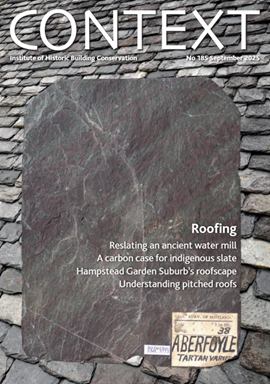
Articles range from slate to pitched roofs, and carbon impact to solar generation to roofscapes
Three reasons not to demolish Edinburgh’s Argyle House

Should 'Edinburgh's ugliest building' be saved?
IHBC’s 2025 Parliamentary Briefing...from Crafts in Crisis to Rubbish Retrofit
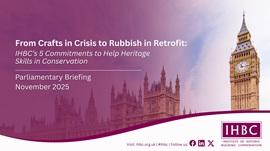
IHBC launches research-led ‘5 Commitments to Help Heritage Skills in Conservation’
How RDSAP 10.2 impacts EPC assessments in traditional buildings

Energy performance certificates (EPCs) tell us how energy efficient our buildings are, but the way these certificates are generated has changed.