





The Crooked House pub
The response to the loss of the Crooked House pub may have been an outpouring of grief for a society still finding a channel for traumatic emotions in a post-pandemic world.

|
| The Crooked House following the fire, at a point when a substantial amount of brickwork remained and the pub was still clearly recognisable. (Photo: Birmingham Mail, 2023). |
In August 2023, the residents of Himley in South Staffordshire awoke to the news of a devastating fire at their local pub, the Crooked House. It was unclear at this stage how much of the building could be saved, but less than 48 hours later the Crooked House, widely considered an icon of the Black Country, was demolished, leaving only a pile of debris. While these events devastated the local community, no one could have predicted the intense emotional response which came from around the world.
Historic buildings, especially pubs, are lost on a regular basis, and may be mourned by those in the local community who remember their bygone days of glory but go unnoticed by the rest of the country. How and why did a remote country pub come to represent wider issues for many people?
For my postgraduate dissertation, I decided to examine the reasons behind the strength and scale of the response to the loss of the Crooked House, analysing the emotional and behavioural responses displayed by the public and media, the role of the Black Country in the response to the loss, and the role that the Crooked House played as a pub. This proved to be a fascinating case study not only into the positive contribution that built heritage makes to our wellness as individuals and as a community, but also into the negative impact on wellness when that heritage is suddenly lost.
The loss of the Crooked House was extensively reported all over the world, often with the emotional charge given to a natural disaster. The loss was frequently compared by local people interviewed in the media to losing a loved one. I decided to compare the experiences and responses reported in the media to those reported in an online survey, in order to remove media bias and discover a more genuine level of reaction.
I circulated an online survey in April 2024 on Facebook to local history and community groups, including ‘Save The Crooked House’, ‘South Staffordshire History Group’ and ‘The Black Country Page’, asking participants to anonymously answer questions about their response to the loss of the Crooked House. I received 238 responses, with 125 responses in the first 48 hours alone.
Participants were asked to recall the last time they felt the same way as they did at the loss of the Crooked House, and what these emotions were in response to. While 50 per cent of participants recalled feeling this way about a building, a substantial 37 per cent were reminded of human events, such as the death of a loved one or public figure, divorce or losing a job.
One possibility for the scale and strength of emotional responses to the loss of the Crooked House is the timing of events, which followed hard on the Covid-19 pandemic and recession. Fiona Brook, lecturer in counselling at Birmingham City University, suggests that in the UK, the process of grieving as a community is perceived as an acceptable form of emotional expression. ‘In the west, and especially in Britain, there is almost a time limit on grief. And this [manner of communal grieving] is almost an acceptable mode of grieving.’
Brook’s hypothesis is that the outpouring of grief at the loss of the Crooked House represents deeper losses, such as those experienced during the cost-of-living crisis, which had yet to be mourned. ‘There is displacement,’ she says. ‘We’re allowed to grieve for this... There’s a cultural shift of small businesses being shut down, and community identity shifting as well.’
Brooks has found in her own practice that people are still coming to terms with the losses of those who died during the Covid-19 pandemic, a time when grieving was even more isolated than usual, with funerals streamed online and mourners anonymous behind their masks. It is possible therefore that the ‘acceptable mode of grieving’ permitted by the loss of the Crooked House also allowed an outpouring of grief for a society still finding a channel for traumatic emotions in a post-pandemic world.
This sense of communal bereavement has arguably been intensified by the venerable age of the Crooked House. As human beings, we seek out ontological security – a state in which one feels secure in one’s existence. To sustain it, we seek out feelings of safety, trust and reassurance by engaging with comfortable and familiar objects, beings and people around us – especially those important to our self-identity. Twenty-three per cent of survey participants were reminded of the loss of the tree at Sycamore Gap on Hadrian’s Wall, which can also be explained within this context. A venerable tree provided a sense of security. When it was suddenly lost, our link between the past, present and future was violently broken.
Survey participants also reacted with anger at the loss of the Crooked House. This anger can be defined as ‘moral outrage’ – the ‘anger provoked by the perception that a moral standard, usually a standard of fairness or justice, has been violated’, which increases the attitude of blame towards the perpetrator.
Fifty-nine responses included an element of blame or suspicion. ‘It would seem to have been done for monetary gain’; ‘I felt as though somebody had taken advantage of a situation just because they had the power or money to. It made me feel bitter towards the person (developer). I felt that they must have purposely caused the damage.’
While the strength of grief in response to the loss of the Crooked House may have been triggered by a lack of avenues to mourn during the pandemic, among other reasons, it is the perceived violation of justice that triggered vocal moral outrage. If the Crooked House had been lost to accidental fire, sadness would have been the main emotional response. But, as with the loss of the sycamore tree, the criminal activity has provoked a strong sense of injustice.
The behaviours of grief were also evident, both in media reporting and in survey responses. Flowers and cards of condolence were left at the site of the pub, in a similar manner to those left at the site of a car accident. Another behavioural response to the loss of the Crooked House was the acquisition of items relating to the building. In response to this, 25,000 bricks were locked in containers while 200 people looked on at what was described in the media as a ‘staged ceremony’. A constant stream of people came to see the ruins, as if keeping vigil. This ritual of visiting the ruins may also be viewed in a more negative light and termed as voyeurism, another common response to a disaster or loss of life.
I concluded that the strength and breadth of emotional responses to the Crooked House seen in the survey validated those reported in the media, both locally and internationally. There has been an intense expression of grief and anger, both through language and behaviour, which has taken root in a post-pandemic climate, where mourning has finally found an acceptable channel for expression.
South Staffordshire District Council has issued an enforcement notice for the owners to rebuild the Crooked House ‘so as to recreate it as similar as possible to the demolished building.’ The response to the loss of the Crooked House has sounded an alarm for the dangers facing historic buildings, especially pubs, but it has also revealed that many believe them to be worth fighting for. Our ties to historic buildings mean that when danger is posed to their physical fabric, it also threatens the emotional wellbeing of those who are connected to them.
This article originally appeared as 'Bricks, mortar and emotions' in the Institute of Historic Building Conservation’s (IHBC’s) Context 183, published in March 2025. It was written by Alexandra Dziegiel, a recent graduate of the conservation of the historic environment MA programme at Birmingham City University, who works at Tamworth Castle in Staffordshire.
--Institute of Historic Building Conservation
Related articles on Designing Buildings Conservation.
- Conservation area.
- Conservation.
- Crooked House, Himley.
- Healing through heritage.
- Heritage.
- Historic environment.
- IHBC articles.
- IHBC Stress Awareness Month; Heritage Staff wellbeing at work survey.
- Institute of Historic Building Conservation.
- Listed buildings.
- Operation Nightingale.
- Mental health.
- The economics of heritage and wellbeing.
- Wellbeing and heritage: making a difference.
- Wellbeing.
IHBC NewsBlog
IHBC sponsors Gardens Trust event 23-4 Sept 2026
.jpeg)
'Learning from the Past, Shaping the Future’ takes place in Milton Keynes
Renovations to Frank Lloyd Wright's Fallingwater complete
.jpg)
World Heritage Preserved project opens house for tours again
Shakespeare Birthplace Trust places Hall's Croft on HAR Register
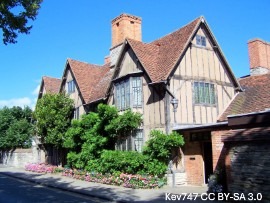
Stratford-upon-Avon home of Shakespeare's daughter is 'At Risk'
Lady Grange’s House repaired on St Kilda
.jpg)
National Trust for Scotland repairs stone cleit with link to famous island resident
Griff Rhys Jones on BBC Radio 4 Today programme
,_Green_Lane,_Derby.jpg)
The Victorian Society’s President unveiled its latest Top Ten Endangered Buildings 2026.
Need a MATE? Book your place now.
IHBC offers free webinars on applying for IHBC accreditation (Full & Associate).
UK Stained Glass Repository finds windows new homes
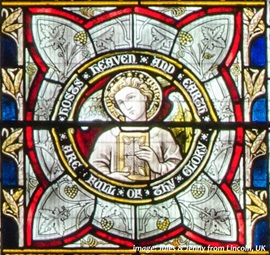
How are stained glass windows are rescued, stored and repurposed?
APPGEBE report sets high aims for quality
'Government must not sacrifice quality in drive to build 1.5m homes'
New measures protect Historic Shipwrecks from heritage crime

Underwater cultural heritage benefits from new HE guidance
How could the City of London skyline look in 6 years' time?

Visualisation shows approved planning applications as completed buildings
National Trust for Scotland calls for VAT cuts
Heritage neglect is encouraged by current policies
IHBC's 'Context' Issue 186 features Industrial Heritage
IHBC's members' journal reports on the challenges of conserving infrastructure
Book now for IHBC Annual School 2026
IHBC Annual School is taking place 18-20 June 2026 in Newcastle
RICHeS Research Infrastructure offers ‘Full Access Fund Call’
RICHeS offers a ‘Help’ webinar on 11 March
Latest IHBC Issue of Context features Roofing
Articles range from slate to pitched roofs, and carbon impact to solar generation to roofscapes
Three reasons not to demolish Edinburgh’s Argyle House

Should 'Edinburgh's ugliest building' be saved?
IHBC’s 2025 Parliamentary Briefing...from Crafts in Crisis to Rubbish Retrofit
IHBC launches research-led ‘5 Commitments to Help Heritage Skills in Conservation’
How RDSAP 10.2 impacts EPC assessments in traditional buildings

Energy performance certificates (EPCs) tell us how energy efficient our buildings are, but the way these certificates are generated has changed.
Comments
Heartbreaking to see a piece of local history disappear; it really mattered to so many people.