





Twisting buildings
In August 2016, the Council on Tall Buildings and Urban Habitat (CTBUH) published a new study, Twisting Tall Buildings, examining the recent proliferation of spiralling towers being developed around the world.
The report defines a building as ‘twisting’ if it progressively rotates its floor plates or its façade as it gains height. It is usual that each plate will be similarly shaped in plan, and turned on a shared axis a consistent number of degrees from the preceding floor.
Not only are these ‘twisters’ often aerodynamic and energy-efficient as a result of their design, they are able to incorporate a wide variety of textures, view angles and ripple effects.
The report identifies 28 twisting towers that are either complete or under construction. This is evidence, the report says, of a growing trend in this new type of structure.
 At 632 m (2,073 ft) tall, the Shanghai Tower is currently (2016) the second tallest building in the world.
The Diamond Tower in Jeddah, scheduled for completion in 2019, will be the world’s second tallest twisting tower, and the only building to twist a full 360-degrees along its height.

F&F Tower, Panama City, holds the record for the ‘tightest’ twist, that is, the greatest average rotation per floor, at 5.943-degrees across each of its 53 floors.


CTBUH is the world’s leading resource for professionals focused on the inception, design, construction, and operation of tall buildings and future cities.
Images and content courtesy of CTBUH.
[edit] Related articles on Designing Buildings Wiki
Featured articles and news
There are plenty of sources with the potential to be redeveloped.
Change of use legislation breaths new life into buildings

A run down on Class MA of the General Permitted Development Order.
Solar generation in the historic environment
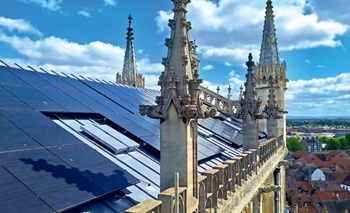
Success requires understanding each site in detail.
Level 6 Design, Construction and Management BSc
CIOB launches first-ever degree programme to develop the next generation of construction leaders.
Open for business as of April, with its 2026 prospectus and new pipeline of housing schemes.
The operational value of workforce health
Keeping projects moving. Incorporating unplanned absence and the importance of health, in operations.
A carbon case for indigenous slate
UK slate can offer clear embodied carbon advantages.
Costs and insolvencies mount for SMEs, despite growth
Construction sector under insolvency and wage bill pressure in part linked to National Insurance, says report.
The place for vitrified clay pipes in modern infrastructure
Why vitrified clay pipes are reclaiming their role in built projects.
Research by construction PR consultancy LMC published.
Roles and responsibilities of domestic clients

ACA Safety in Construction guide for domestic clients.
Fire door compliance in UK commercial buildings

Architect and manufacturer gives their low down.