






Assessing the performance of Phase Change Materials in buildings
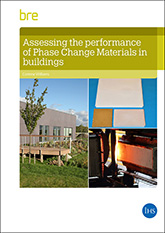
In December 2016, BRE published Assessing the performance of Phase Change Materials in buildings (FB 84), written by Corinne Williams.
Phase Change Materials (PCMs), or latent heat storage materials are an emerging technology in the UK construction industry. They have a large specific latent heat capacity, and can help improve the thermal performance of, and thermal comfort in low thermal mass buildings by lowering the peak temperatures resulting from extreme external temperature changes and preventing overheating.
This publication provides an overview of PCM building products and available methodologies for assessing them. It focusses on PCMs as part of a passive / fabric / thermal mass approach and will be of interest to specifiers, designers, installers, approving authorities, manufacturers, fire safety risk assessors and other interested parties.
The first part provides an introduction to PCM building products, covering; what they are and how they work, their benefits, current technical developments and available products. The second part covers testing and evaluation methodologies for long-term thermal performance, environmental impact, structural performance, health and safety considerations, and performance in fire and quality standards.
Its contents include:
- Acknowledgements
- Executive summary
- Glossary
- Introduction
- Assessment of PCMs and methodologies
- Quality schemes for PCM-specific attributes
- Conclusions and recommendations
- References
- Endnotes
The author Corinne Williams answered some questions about the publication:
| Did you have to test several cocktails during the writing of this publication? |
No! The ice cube example is a simple way to explain how PCMs work. Ice is a commonly used and well-known PCM.
An ice cube absorbs heat from a drink. When the ice cube reaches its melting temperature, it changes phase – from a solid to a liquid – and it absorbs large amounts of energy (at constant temperature) and cools the drink in the process.
| What are PCMs? |
A PCM is a material or substance which when changing its state – for example, from solid to liquid or liquid to solid – is capable of storing or releasing large amounts of energy at a constant temperature (the transition temperature). PCMs are referred to as latent heat storage materials.
| How are PCMs used in construction? |
PCM construction products need to be considered as part of the overall package of temperature control measures in a building and early specialist advice is desirable to ensure they are applied correctly and appropriately.
They can be used to provide thermal mass to buildings with low thermal mass to improve the thermal performance and indoor comfort.
PCMs incorporated into different construction products are available. Most of their applications are for inside buildings, such as ceilings and walls. PCM construction products come in various physical forms such as panels, plaster, boards and tiles and are available for different operating (or transition) temperatures.
PCMs in construction products simply absorb latent heat energy from the indoor environment when they change from solid to liquid when the indoor air temperature reaches the transition temperature, during the day. This process needs to reverse when the temperature drops during the night so the cycle can restart the next day.
| Where are PCMs being used? |
There are a number of demonstration and exemplar buildings where PCMs have been installed, including:
- The east wing of Somerset House, London, using clay boards containing PCM.
- The visitor centre at the BRE Innovation Park, Ravenscraig, Lanarkshire, incorporating a PCM ceiling panel system.
- The BASF Research House at the University of Nottingham, using PCM wall boards.
You can purchase the title at BRE Bookshop.
This article was originally published here on 15 Dec 2016 by BRE Buzz. It was written by Sheila Swan.
--BRE Buzz
[edit] Related articles on Designing Buildings Wiki
Featured articles
Check out some of the best features and news from Designing Buildings as well as key stories from around the web.
Building Safety Newsletter from MHCLG.

An extraordinary record of steel engineering worldwide.
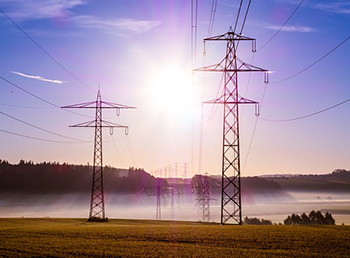
Households living near new pylons to save on bills.

ECA warns growth must not outpace grid capacity or skills.
The role of the client and decision making

CIOB response to built environment professions call for evidence.
Construction's sustainability reporting revolution
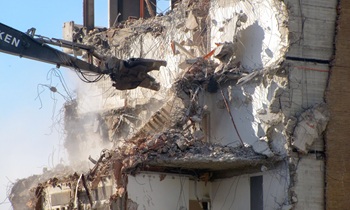
Tracking upfront embodied carbon with digital tools.
ECA welcomes procurement reforms
Public spending must back British jobs and skills.
Campaigning for Edinburgh: the Cockburn Association 1875-2049

The role of the civic voice in protecting character. Book review.

CIOB photography competition is open for entries.
ECA Edmundson apprentice of the year award
Finalists announced.
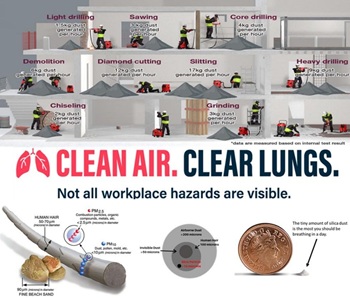
Major new study exposes serious knowledge gaps.
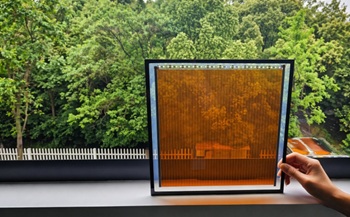
Generating energy from internal light as well as sunshine.