





Urban designer
To help develop this article, click ‘Edit this article’ above.
Contents |
[edit] Introduction
Urban design is concerned with the arrangement and design of the buildings, transport systems, services, public spaces and amenities that make up the urban environment. It is the process that shapes and gives character to groups of buildings, neighbourhoods and cities. It considers the connection between people and places, movement, nature and the built environment.
Urban design is a process that many different design professionals contribute to, including architects, engineers, town planners and so on. Recognition of the role as a specific profession in its own right has only really emerged in the last 25 years or so.
[edit] Typical duties
Urban designers will often work within large, multi-disciplinary consultancies or architectural firms. Some developers, government departments and local authorities may also employ urban designers.
The typical duties of an urban designer might include:
- Working on ‘visions’ for places, including the preparation of ‘vision statements’.
- Designing built spaces from an individual street or square to neighbourhoods or even whole towns.
- Providing advice on the design of developments or regeneration schemes.
- Undertaking research into people and places to help inform decision making.
- Developing built environment guidance and policies.
- Undertaking community consultation.
- Preparing technical drawings and designs.
- Preparing urban design strategies.
- Preparing design and access statements.
To perform these duties, urban designers require a wide range of knowledge, including an understanding of:
- The planning system.
- Principles of urbanism.
- Development economics.
- Movement and transport.
- Conservation.
- Landscape design.
- Site planning.
- Masterplanning.
- Stakeholder management.
- Consultation processes.
- Project management.
- Regeneration strategies.
[edit] Urban design as a profession
It is possible to study urban design on courses at a number of universities around the UK and whilst there is not a professional body for urban designers, it is possible to become a recognised practitioner through the Urban Design Group. It is also possible to study a subject related to the built-environment at undergraduate level (such as town planning, architecture or geography) and then complete a postgraduate urban deign course.
Further information on urban design can be found at the Urban Design Group and RUDI (Resource for Urban Design Information).
[edit] Find out more
[edit] Related articles on Designing Buildings Wiki.
- Consultation process.
- Design and access statement.
- Masterplanning.
- Compact sustainable city.
- Consultation process.
- Engineering smart cities.
- Inclusive design.
- Neighbourhood planning.
- Placemaking.
- Smart cities.
- Smart cities design timeframe.
[edit] External references
Featured articles
Check out some of the best features and news from Designing Buildings as well as key stories from around the web.
New and updated CLC building safety guidance.
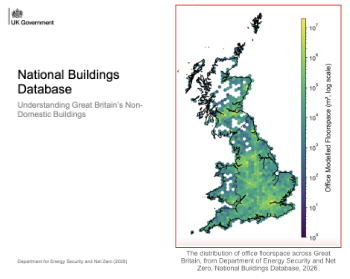
New UK National Buildings Database.
Building Safety Wiki Interviews

Chief executive of the British Woodworking Federation.
Planning condition discharge in England and Wales

A brief explanation from a building compliance expert, with further links.
Overheating guidance and tools for building designers

Guidance for dealing with element of building fabric control that have increasing importance.
Shading for housing, a design guide

From the Good Homes Alliance and British Blind and Shutter Association.
UK Standard Skills Classification (SSC)

A shared framework for describing skills needs.
Social media ban consultation comes to close

CIOB urges UK Government to consider social media’s role in careers guidance in ban debate.
The latest of eight Skills England apprenticeship units

The addition of battery manufacturing welcomed by ECA with a warning about the risks of fast-tracked apprenticeship units.
Building Control Independent Panel final report
A precis of a key report led by Dame Hackitt with full recommendations and link to the government response.
Building Safety recap April, 2026
A short and longer run-through of the month, with links to further information and sources.