





The meaning of breach in the construction industry

The term ‘breach’ can have several different meanings in the context of the built environment context.
In a legal sense, it refers to a failure to observe a legal responsibility, an agreement, regulation, code of conduct, and so on.
A breach of confidence is a failure to observe an agreement, often relating to private information that has been conveyed from one party to another.
A breach of a duty of care is a form of common law negligence.
If the one of the parties to a contract fails to perform as required, this may constitute a breach of contract. Such a breach may entitle the innocent party to make a claim for damages for the losses it has suffered.
A breach of contract can be a:
- Material breach: A breach which is serious, and the innocent party may also consider that it is discharged from any further obligations under the contract.
- Non-material breach: Also known as a default, this is a breach which is less serious. The innocent party may make a claim for damages, but may not consider it is discharged from any further obligations under the contract.
- Anticipatory breach: Also known as an anticipatory repudiation, this occurs when one of the parties to the contract declares to the other that they do not intend to perform their obligations under the contract.
For more information, see Repudiatory breach in construction contracts and Breach of contract.
The term irremediable breach refers to a situation in which there is a defect in the works for which the cost of rectification is unreasonable relative to the nature of the defect. Under these circumstances a deduction may be made from the amount payable relative to the amount by with the value of the works has been reduced by the defect.
For more information, see Irremediable breach.
The term may also be used in the context of a ‘security breach’ or ‘data breach’, which may relate to unauthorised access to a building or site, or a form of cyber-attack or data hacking. For more information see: Security breach.
It can also be used in the context of a default in a structure, such as a river breaching its bank, or floodwater breaching a wall.
[edit] Related articles on Designing Buildings
- Breach of contract.
- Causes of construction disputes.
- Cyber security and engineering.
- Defects.
- Derogation from grant.
- Determination.
- Irremediable breach.
- Leasehold covenants.
- Loss and expense.
- Material breach.
- Non-material breach.
- Repudiatory breach in construction contracts.
- Security breach.
- Termination.
Featured articles and news

We're expanding our collaborative mission by launching DB Intelligence, an exclusive market research advisory panel. Built environment professionals can now get paid to share their expertise on industry trends, products and services.
Panel members receive direct financial incentives for participating in research projects like short surveys, 1-2-1 interviews and focus groups. Register today to shape the future of the construction sector.
Building Control Independent Panel final report
A precis of a key report led by Dame Hackitt with full recommendations and link to the government response.
Guide to ISO 19650 for Architecture Firms (2026)
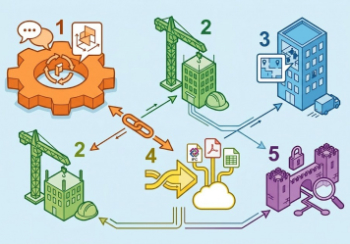
A user gives their low down.

A UK training and membership provider for mould remediation professionals.
Building Safety recap April, 2026

A short and longer run-through of the month, with links to further information and sources.

CIAT May 2026 briefing.

Independent NSI and BAFE study exploring how organisations are changing the way they buy fire safety services.

From medieval scribes to modern word art.

ECA welcomes crackdown on late payment and push for clean energy, whilst CIOB seek fixed cladding removal timeframes.
Cyber Security in the Built Environment

Protecting projects, data, and digital assets: A CIOB Academy TIS.
Managing competence in the built environment

ITFG publishes new industry guide on how to meet the ICC principles.
The UK's campaign to reduce noise pollution: Mythbusting, articles and topic guides.