





Six pins and half a dozen needles

On 1 August 2017, British artist Alex Chinneck unveiled his first permanent public installation – a giant rip in the brick façade of a London building.
Titled ‘Six Pins and half a Dozen Needles’ the surrealist installation is located on the site of Assembly London, Hammersmith, a former publishing house. Reaching a height of 20 m, and weighing 10 tonnes, the installation is designed to appear as though the building’s red brick façade has cracked in half. Chinneck intended the split to resemble a page ripped from a book.

The product of 14 months’ work collaborating with structural engineers, steelworkers and brick-makers, the piece consists of 4,000 bricks and more than 1,000 stainless steel components. It is formed on a steel framework that is bolted and welded to the building. The ‘rip’ is achieved by using the stainless steel components together with hundreds of unique bricks which were individually cut by hand and water.
The installation process took 18 hours, with each section having to be lifted 75 m to clear the neighbouring buildings on the site.
Alex Chinneck said:
“The work was conceived to engage people in a fun and uplifting way. Although we use real brick, it was designed with a cartoon-like quality to give the sculpture an endearing artifice and playful personality. I set out to create accessible artworks and I sincerely hope this becomes a popular landmark for London and positive experience for Londoners.”

Chinneck is no stranger to the surreal spectacle that merges architecture with sculpture, with previous works including a melting house constructed from wax bricks, and a house façade that appeared to have slumped into the street in Margate.
Alex Chinneck’s ‘Six pins and half a dozen needles’ is a permanent installation and can be viewed at Assembly London, 77 Fulham Palace Road, London, W6 8JA.
Content and images courtesy of Alex Chinneck.
Images © Charles Emerson
[edit] Find out more
[edit] Related articles on Designing Buildings Wiki
Featured articles and news
Change of use legislation breaths new life into buildings

A run down on Class MA of the General Permitted Development Order.
Solar generation in the historic environment
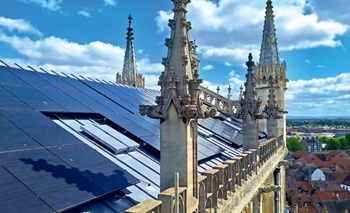
Success requires understanding each site in detail.
Level 6 Design, Construction and Management BSc

CIOB launches first-ever degree programme to develop the next generation of construction leaders.

Open for business as of April, with its 2026 prospectus and new pipeline of housing schemes.
The operational value of workforce health

Keeping projects moving. Incorporating unplanned absence and the importance of health, in operations.
A carbon case for indigenous slate

UK slate can offer clear embodied carbon advantages.
Costs and insolvencies mount for SMEs, despite growth

Construction sector under insolvency and wage bill pressure in part linked to National Insurance, says report.
The place for vitrified clay pipes in modern infrastructure

Why vitrified clay pipes are reclaiming their role in built projects.

Research by construction PR consultancy LMC published.
Roles and responsibilities of domestic clients
ACA Safety in Construction guide for domestic clients.
Fire door compliance in UK commercial buildings

Architect and manufacturer gives their low down.
Plumbing and heating for sustainability in new properties

Technical Engineer runs through changes in regulations, innovations in materials, and product systems.
Awareness of the Carbon Border Adjustment Mechanism
What CBAM is and what to do about it.
The new towns and strategic environmental assessments
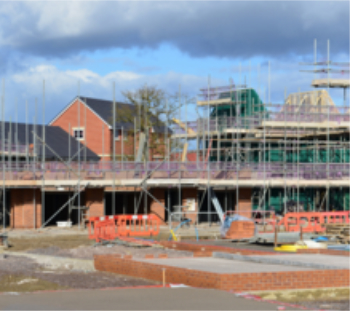
12 locations of the New Towns Taskforce reduced to 7 within the new towns draft programme and open consultation.
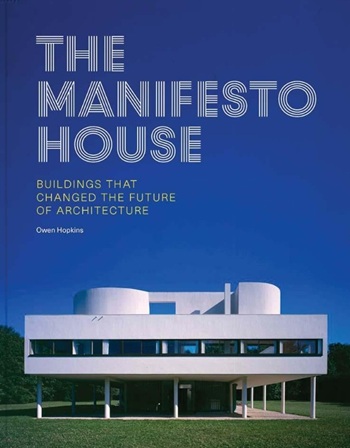
Buildings that changed the future of architecture. Book review.
The Sustainability Pathfinder© Handbook
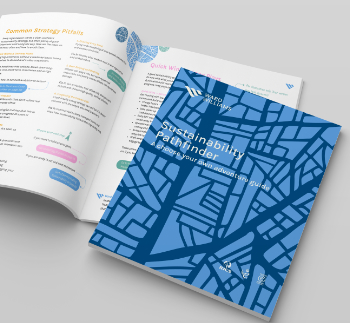
Built environment agency launches free Pathfinder© tool to help businesses progress sustainability strategies.
Government outcome to the late payment consultation, ECA reacts.