





Simplified Building Energy Model SBEM
The National Calculation Method (NCM) describes the procedure, for buildings other than dwellings, for demonstrating compliance with the carbon emission requirements of regulation 17C of the Building Regulations and calculating 'operational ratings' and 'asset ratings' in the production of Energy Performance Certificates (EPC's).
The NCM provides the underlying method and the standard data sets necessary to calculate the annual energy use of a proposed building and comparing it with the energy use of a 'notional' building of a similar type, under similar circumstances. This is done by calculating the Target Emission Rate (TER - the CO2 emission rate for the notional building) and comparing this with the Building Emission Rate (BER) for the proposed building. The BER must not be higher than the TER.
The calculations can be performed using approved simulation software (Approved Dynamic Simulation Models (DSMs)) or by using the Simplified Building Energy Model (SBEM), a computer programme developed by BRE and available to download from the NCM website. Unlike some of the DSM's, SBEM is a 'simplified' compliance tool, rather than a design tool.
The Simplified Building Energy Model was originally based on the Dutch 'Energy Performance of Non-Residential Buildings' (NEN 2916:1998). It has been available to demonstrate compliance with Part L of the Building Regulations since 2006, and for Energy Performance Certificates since 2008.
It calculates monthly energy use and carbon dioxide emissions, given a description of the building which is entered through its user interface iSBEM, based on:
- Building type.
- Building geometry.
- Construction.
- Use.
- Heating, ventilation and air-conditioning (HVAC).
- Lighting equipment.
A design stage SBEM assessment should be completed before the construction starts, and then an as-built SBEM when construction is completed, which includes the results of an air permeability tests and demonstrates the building has been constructed in accordance with the design. This is referred to as a Building Regulation UK Part L report (BRUKL).
2013 revisions to Part L of Building Regulations, which took effect on 6 April 2014 have been implemented in a new version of SBEM, cSBEM. SBEM may still be used on projects for which transitional arrangements apply, see 2013 changes to the approved documents for part L of the building regulations for more information.
[edit] Related articles on Designing Buildings
- 2013 changes to the approved documents for part L of the building regulations.
- Approved building energy calculation software.
- Air tightness.
- Approved documents.
- Building energy simulation software.
- Building Regulations.
- Dynamic Simulation Model.
- Emission rates.
- Energy Performance Certificates.
- Energy Performance of Buildings Directive.
- ISBEM
- National Calculation Method.
- Standard Assessment Procedure.
[edit] External references
- National Calculation Method.
- National Calculation Methodology (NCM) modelling guide (for buildings other than dwellings in England and Wales) 2010 Edition.
- cSBEM.
Featured articles
Check out some of the best features and news from Designing Buildings as well as key stories from around the web.
New and updated CLC building safety guidance.
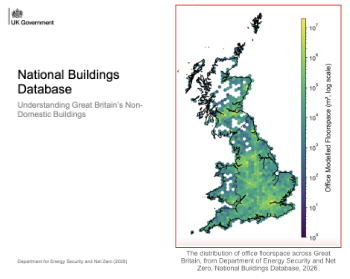
New UK National Buildings Database.
Building Safety Wiki Interviews

Chief executive of the British Woodworking Federation.
Planning condition discharge in England and Wales

A brief explanation from a building compliance expert, with further links.
Overheating guidance and tools for building designers

Guidance for dealing with element of building fabric control that have increasing importance.
Shading for housing, a design guide

From the Good Homes Alliance and British Blind and Shutter Association.
UK Standard Skills Classification (SSC)
A shared framework for describing skills needs.
Social media ban consultation comes to close

CIOB urges UK Government to consider social media’s role in careers guidance in ban debate.
The latest of eight Skills England apprenticeship units

The addition of battery manufacturing welcomed by ECA with a warning about the risks of fast-tracked apprenticeship units.
Building Control Independent Panel final report
A precis of a key report led by Dame Hackitt with full recommendations and link to the government response.
Building Safety recap April, 2026
A short and longer run-through of the month, with links to further information and sources.