





Screw pile foundations
Contents |
[edit] Introduction
Screw pile foundations are a type of pile foundation with a helix near the pile toe so that the piles can be screwed into the ground. The process and concept is similar to screwing into wood.
A screw pile may have more than one helix (also called a screw), depending on the usage and the ground conditions. Generally, more helices are specified if a higher load is required or softer ground in encountered.
[edit] Screw pile foundation installation
Installing screw pile foundations takes considerably less time and machinery and usually costs less than installing a standard concrete foundation. Depending on the size of the piles, a range of different size of plant can be used for the installation, including hand-held machines. In many instances, only one machine is required for a steel, screw pile foundation installation. Screwed piling is installed with a hydraulic torque drive.
[edit] Screw pile usage
Screw pile foundations are the preferred choice for a number of industries. While they were originally developed for the nautical industry, they are now used in rail, road, telecommunications, and civil engineering. Screw piles can bear large tensile and compression loads, so they are often used for masts, signs, and retaining structures.
[edit] Screw pile benefits
Benefits can include:
- Ease of installation (using fewer machines and taking less time).
- Faster installation.
- Lower carbon footprint.
- No need to remove soil from the site.
- Ability to install in close proximity to existing structures.
- Ease of removal when no longer needed.
[edit] Related articles on Designing Buildings Wiki
- Bored piles.
- Caisson.
- Capping beam.
- Cofferdam.
- Continuous flight auger piles.
- Driven piles.
- End-bearing piles.
- Footings.
- Foundations.
- Geothermal pile foundations.
- Groundworks.
- Ground anchor.
- Grouting in civil engineering.
- Micropiles.
- Pad foundation.
- Pile cap.
- Pile foundations.
- Raft foundation.
- Secant pile wall.
- Sheet piles.
- Socket piles.
- Tension piles.
- Types of pile foundation.
- Vibro-compaction.
- Vibro-replacement.
[edit] External references
Featured articles and news
New Scottish and Welsh governments

CIOB stresses importance of construction after new parliament elections.
The sad story of Derby Hippodrome
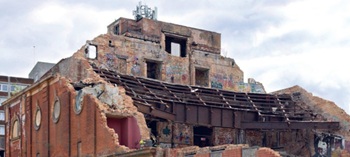
An historic building left to decay.

ECA, JIB and JTL back Fabian Society call to invest in skills for a stronger built environment workforce.

Women's Contributions to the Built Environment.
Calls for the delayed Circular Economy Strategy

Over 50 leading businesses, trade associations and professional bodies, including CIAT, and UKGBC sign open letter.
The future workforce: culture change and skill

Under the spotlight at UK Construction Week London.

A landmark moment for postmodern heritage.
A safe energy transition – ECA launches a new Charter

Practical policy actions to speed up low carbon adoption while maintaining installation safety and competency.
Frank Duffy: Researcher and Practitioner

Reflections on achievements and relevance to the wider research and practice communities.
The 2026 Compliance Landscape: Fire doors

Why 'Business as Usual' is a Liability.
Cutting construction carbon footprint by caring for soil

Is construction neglecting one of the planet’s most powerful carbon stores and one of our greatest natural climate allies.
ARCHITECTURE: How's it progressing?
Archiblogger posing questions of a historical and contextual nature.
The roofscape of Hampstead Garden Suburb

Residents, architects and roofers need to understand detailing.
Homes, landlords. tenants and the new housing standards

What will it all mean?