






Radiant Heating and Fuel
To help develop this aritcle, click 'Edit this article' above.
Considered by some to be the most natural form of heating, radiant heating provides heat directly onto objects and surfaces in a direct line of sight from the heater. Through the emission of infrared radiation, radiation heaters warm up the environment in a similar way to how the sun warms up the Earth. Molecules resonate due to the released energy and warm up objects and surfaces to a comfortable temperature. The energy of the infrared radiation is only converted into heat after coming into contact with objects, meaning it is very efficient.
With several configurations available, tube radiant heating is ideal for spot heating. Industrial or commercial settings in which specific areas require heating and not the entire room. Single and double linear U Tube radiant heaters are efficient for spot heating in areas such as large warehouses for optimum coverage with the use of minimal units.
By deflecting the infrared radiation downwards, radiant plaque heaters can be easily controlled. The heaters warm up objects, including their surfaces and floors.
Natural gas and propane are commonly utilised as fuel solutions for radiant heaters..
Contents |
[edit] Natural Gas
Composed primarily of methane, natural gas contains an atom of carbon and four atoms of hydrogen. It is typically formed by the pressure put on layers of plants and animal material that has decayed over millions of years, and can be found in underground rock formations or in hydrocarbon reservoirs.
Natural gas goes through a treatment that removes impurities before it is used as a fuel, Elements such as ethane, helium, carbon dioxide, and nitrogen are removed in order to create a gas for commercial use. It has been defined as a portion of petroleum, existing and remaining in a gas phase at normal temperature and pressure conditions. Considered a relatively clean energy source, some of the gases that compose it completely dissipate as they do not contain any energetic capacity, such as carbon dioxide and nitrogen.
[edit] Propane
With a composition of an alkane containing three carbons, propane is obtained as a by-product from petroleum treatment processes and the processing of natural gas. With a low boiling point of -42°C, propane vaporises very quickly. Its chemical formula is C3H8, and propane has a density of 2.0098 kg/m3.
Propane is a liquefied petroleum gas, completely odourless and colourless. At normal temperature and pressure it exists in a gas form, but it can be easily compressed into a liquid. It is heavier than air, gathering at low points near the ground before dissipating.
[edit] Advantages of radiant heating
Radiant heating allows for a 30% to 50% reduction in energy consumption compared to some other forms of heating. As it functions by heating the nearest objects and transferring onto people, objects, and other surfaces, it does not disturb the air, ensuring the absence of drafts or static electricity.
Both installation and maintenance processes are relatively easy, incurring low costs. The high quality of the air indoors is beneficial, particularly if you have allergies; the air doesn’t circulate, keeping allergens from spreading and becoming airborne. With its efficient heating, the air has considerably less change in temperature, providing the right ambiance for many properties.
--Heritage Heating and Cooling 08:31, 15 Dec 2016 (BST)
[edit] Find out more
[edit] Related articles on Designing Buildings Wiki
Featured articles
Check out some of the best features and news from Designing Buildings as well as key stories from around the web.
Bridging the gap between clients and contractors

Concerns remain around contractor quality, capability, and delivery.
Construction Management, 10 June.
Heat pumps beat boilers in new home tests.
Building Safety Act implementation in Wales

CIAT to host industry panel on 26 June.

New and updated CLC building safety guidance.
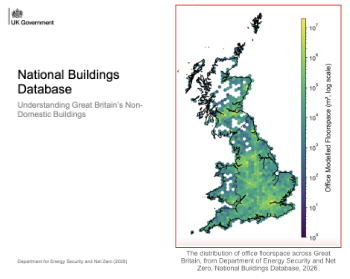
New UK National Buildings Database.
Building Safety Wiki Interviews

Chief executive of the British Woodworking Federation.
Planning condition discharge in England and Wales

A brief explanation from a building compliance expert, with further links.
Overheating guidance and tools for building designers

Guidance for dealing with element of building fabric control that have increasing importance.
Shading for housing, a design guide

From the Good Homes Alliance and British Blind and Shutter Association.
UK Standard Skills Classification (SSC)

A shared framework for describing skills needs.
Social media ban consultation comes to close

CIOB urges UK Government to consider social media’s role in careers guidance in ban debate.