





Pine leaves
Contents |
Introduction
With just over 100 different types of wood – not including sub-species – used as timber, the decision about which species or even which type of wood to use can seem daunting. From coniferous softwoods to the different genus of hardwoods, understanding the properties of each is an important step in identifying the right wood to use for a particular job.
Pine is one of the most popular woods around the world, and with around 126 current species, there’s a lot to know about this wood in particular.
Foliage identification
There are a variety of sub-species of pine, all with different identification factors with regards to their leaves and cones. There are four different types of pine leaf from different stages through the lifecycle of the tree. There are also three separate subgenera of pine, each with different leaf characteristics.
Young Leaves
The foliage of a pine tree begins life as a cotyledon, which is the primary leaf form in the embryo of a new leaf in a phanerogam – any plant which produces seeds for reproduction. These are produced in a pattern of spirals – or a whorl – of around 4-24.
Juvenile leaves form on seedlings and young pine. These can measure around 2-6 cm long and form in a variety of greens and blues in a spiral pattern around the shoots.
Smaller and brown, the scale leaves aren’t photosynthetic and are arranged in a similar pattern to those of the juvenile leaves.
Adult Leaves
The needles, which are the best-known method of identifying pine trees, are the adult leaves which are know to last for up to 40 years on the tree, dependent on the pine species. These grow in clusters from a dwarf shoot which protrudes from the scale leaf, and are often arranged in 2-5 needles.
These photosynthetic needles are also easily replaced. Should any damage occur to the shoot, the needle clusters below the damage will create another bud to replace those leaves which will be lost.
Cones
Cones on a pine tree are usually both male and female, but there are some species which mostly contain cones of one sex. Male cones are produced in the springtime, and are the smaller of the two cone sexes, measuring on average 1-5 cm in length. They drop from the tree once their pollen has been dispersed.
After pollination, the female cones take up to 3 years to mature. When they reach maturity, they can grow up to 60 cm in length, and contain two seeds on each of the spirally placed scales. The seeds are dispersed when the cone opens, or when birds aid the process by opening the cones themselves.
See also: Pine wood.
--G&S Specialist Timber 09:09, 17 Jan 2017 (BST)
Related articles on Designing Buildings Wiki
- 11 things you didn't know about wood.
- Ancient Woodland.
- Bamboo.
- Cedar.
- Chip carving.
- Confederation of Timber Industries.
- Cross-laminated timber.
- Definition of tree for planning purposes.
- Engineered bamboo.
- European Union Timber Regulation.
- Forests.
- Forest ownership.
- Forest Stewardship Council.
- Lime wood.
- Pine wood.
- Plywood.
- Programme for the Endorsement of Forest Certification.
- Softwood.
- The Scientific Properties of Wood.
- Timber.
- Timber preservation.
- Tree preservation order.
- Tree rights.
Featured articles
Check out some of the best features and news from Designing Buildings as well as key stories from around the web.
New and updated CLC building safety guidance.
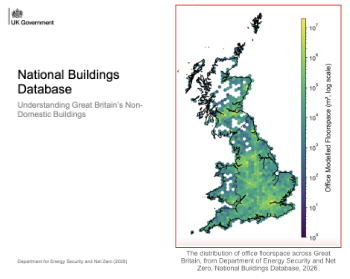
New UK National Buildings Database.
Building Safety Wiki Interviews

Chief executive of the British Woodworking Federation.
Planning condition discharge in England and Wales

A brief explanation from a building compliance expert, with further links.
Overheating guidance and tools for building designers

Guidance for dealing with element of building fabric control that have increasing importance.
Shading for housing, a design guide

From the Good Homes Alliance and British Blind and Shutter Association.
UK Standard Skills Classification (SSC)

A shared framework for describing skills needs.
Social media ban consultation comes to close

CIOB urges UK Government to consider social media’s role in careers guidance in ban debate.
The latest of eight Skills England apprenticeship units

The addition of battery manufacturing welcomed by ECA with a warning about the risks of fast-tracked apprenticeship units.
Building Control Independent Panel final report
A precis of a key report led by Dame Hackitt with full recommendations and link to the government response.
Building Safety recap April, 2026
A short and longer run-through of the month, with links to further information and sources.