






Pendulum arbitration
Trial in a court of law is an inefficient way of deciding complex construction disputes. Although in theory more flexible, a conventional hearing in an arbitration is hardly any better, and some would say even worse.
In many cases, it is possible to resolve disputes by some sort of intermediate process, either on a non-binding basis like mediation or review board, or on a 'pay now, argue later' basis, such as adjudication. But sometimes, the dynamic between the parties is such that a binding and final determination is required.
Is there an alternative? Well there is actually - pendulum arbitration. Or as the Americans sometimes call it, ‘baseball arbitration’. Or sometimes ‘flip-flop arbitration’. Or even, less obviously, ‘last best offer arbitration'. It is not new, but it is much faster and cheaper than conventional arbitration, and just as binding.
Here is how it works. There is a hearing, at which the parties put their respective cases. For reasons that will become apparent, this hearing can be much shorter than the sort of hearing that would normally be necessary. It can be run on a chess clock basis. Then, at the end of the hearing, each side delivers a draft award to the arbitrator in a sealed envelope. The arbitrator then has to make their award in the form of one of those drafts, without any amendment.
Why is it so effective? It is not hard to see. The more ambitious a party’s draft award, the less likely it is to be chosen by the arbitrator. And so parties are driven to put in relatively reasonable drafts. And if you know as a party’s lawyer that you are just about to put in a relatively reasonable draft, that affects your case preparation and advocacy: there is no point advocating for an extreme position which you are then promptly going to abandon in the draft award. And so, for the purpose of advocacy all of those barely arguable points which are unlikely to succeed, but which tend to get trotted out in full-scale litigation or arbitration on the ‘no stone unturned’ principle, do not get trotted out.
From the arbitrator’s point of view, the whole thing is delightfully simple. A conventional arbitration requires the arbitrator to build their award from the ground up, taking account of, and evaluating every argument and every entitlement. In pendulum arbitration, all they have to do is decide which of the two drafts more closely reflects their view of the justice of the matter. The moment they have done that, they can pretty much stop work: all they have to do is to sign whichever of the drafts they prefer. It means that the time between the conclusion of the hearing and the delivery of the award can be very much shorter than in a conventional case.
The procedure is not used nearly as much as it might be. Some might regard the whole procedure is rather radical. But it is not unheard of, and in NSW Racing v Tab the courts endorsed the process. And whatever one’s view about it, it has the undeniable merit of making the arbitration much more commercially acceptable in terms of the time and cost of the legal process.
Further, there is a particular place for the process in cases where the parties have attempted mediation but have been unable finally to close the gap between them. In these circumstances, one option (often a good one) is for the parties to agree to appoint the mediator as an arbitrator on a pendulum arbitration basis, and on the basis that the draft awards are constrained by the parameters of where the parties had got to in the mediation process.
The attraction of the process to the parties in those circumstances can be compelling. Obviously, each party would prefer not to budge from its best offer in the mediation, but the prospect of resolving the matter within the parameters of the negotiating positions is likely to be far preferable to the risk of going to conventional trial, its hugely greater legal cost and with the risk of a much less attractive result.
So, which is better for the parties: the bottomless pit of legal expense or a pendulum arbitration? There is lot to be said for the pendulum.
A longer version of this article can be seen at The Pit or the Pendulum 30/11/2015 by Robert Fenwick Elliott.
--Robert Fenwick Elliott 11:40, 14 Jan 2016 (BST)
[edit] Find out more
[edit] Related articles on Designing Buildings Wiki
- Adjudication.
- Alternative dispute resolution.
- Arbitration.
- Arbitration Act.
- Arbitration panel.
- Arbitration v Adjudication.
- Breach of contract.
- Causes of construction disputes.
- Conciliation.
- Construction Industry Model Arbitration Rules CIMAR.
- Contract claims.
- Dispute resolution boards.
- How does arbitration work?
- How to become an arbitrator.
- Mediation.
- Provisional relief.
- The role of the mediator.
Featured articles and news
Costs and insolvencies mount for SMEs, despite growth

Construction sector under insolvency and wage bill pressure in part linked to National Insurance, says report.
The place for vitrified clay pipes in modern infrastructure
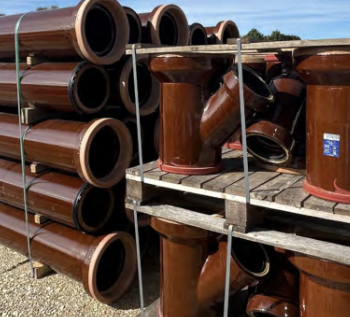
Why vitrified clay pipes are reclaiming their role in built projects.

Research by construction PR consultancy LMC published.
Roles and responsibilities of domestic clients

ACA Safety in Construction guide for domestic clients.
Fire door compliance in UK commercial buildings

Architect and manufacturer gives their low down.
Plumbing and heating for sustainability in new properties

Technical Engineer runs through changes in regulations, innovations in materials, and product systems.
Awareness of the Carbon Border Adjustment Mechanism
What CBAM is and what to do about it.
The new towns and strategic environmental assessments
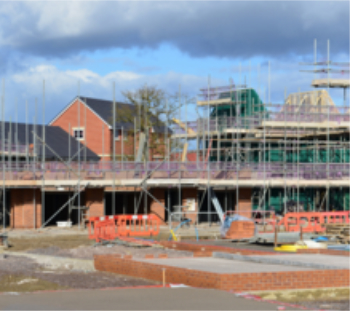
12 locations of the New Towns Taskforce reduced to 7 within the new towns draft programme and open consultation.

Buildings that changed the future of architecture. Book review.
The Sustainability Pathfinder© Handbook
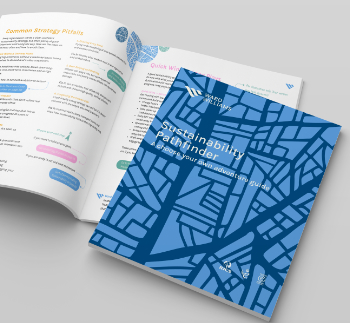
Built environment agency launches free Pathfinder© tool to help businesses progress sustainability strategies.

Government outcome to the late payment consultation, ECA reacts.
IHBC 2025 Gus Astley Student Award winners

Work on the role of hewing in UK historic conservation a win for Jack Parker of Oxford Brookes University.
Future Homes Building Standards and plug-in solar
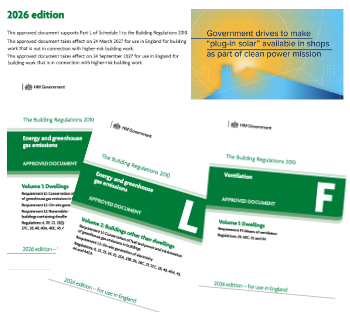
Parts F and L amendments, the availability of solar panels and industry responses.
How later living housing can help solve the housing crisis

Unlocking homes, unlocking lives.
Preparing safety case reports for HRBs under the BSA
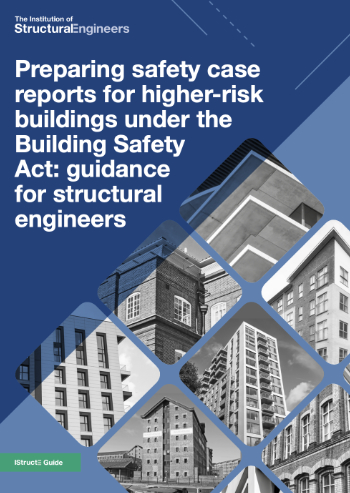
A new practical guide to preparing structural inputs for safety cases and safety case reports published by IStructE.
Male construction workers and prostate cancer

CIOB and Prostate Cancer UK encourage awareness of prostate cancer risks, and what to do about it.