





Pandemic migration

Pandemics such as COVID-19 can be more contagious in large cities for several reasons. As well as socioeconomic factors associated with quality of life, basic proximity factors can play a role in the spread of transmissible illnesses.
In urban settings, networks of buildings, crowded pavements and public transportation create conditions in which people often move in closer proximity to each other. During the COVID-19 pandemic of 2020, many people were encouraged to work from home. The temporary shift to technology-based remote working opened up the possibility of a portion of the workforce permanently relocating away from urban settings.
This form of pandemic migration is being explored as a beneficial approach to dealing with the spread of highly-infectious illnesses.
The results of an October 2020 study conducted by Massimiliano Zanin and David Papo indicate that pandemic migration away from cities to less densely populated areas may help to reduce the spread of illnesses like COVID-19. In the study, Zanin and Papo simulated a forced migration that moved healthy people out of dense cities at the onset of a pandemic. The results showed that while movement from big cities to small towns might be slightly less safe for the people in small towns, overall, for a global pandemic situation, this reduction in the density of highly populated areas is better for the majority of people.
FInd out more at: https://aip.scitation.org/doi/10.1063/5.0028091
[edit] Related articles on Designing Buildings Wiki
- Adapting your technology to the new working normal.
- Beyond the pandemic.
- Coronavirus and the construction industry.
- Defining the office.
- Hub and spoke model.
- Post pandemic places report.
- PwC CEO Panel survey.
- Wood and healthy office spaces.
[edit] External resources
- Massimiliano Zanin and David Papo, Travel restrictions during pandemics: A useful strategy?
Featured articles and news
Costs and insolvencies mount for SMEs, despite growth

Construction sector under insolvency and wage bill pressure in part linked to National Insurance, says report.
The place for vitrified clay pipes in modern infrastructure

Why vitrified clay pipes are reclaiming their role in built projects.

Research by construction PR consultancy LMC published.
Roles and responsibilities of domestic clients

ACA Safety in Construction guide for domestic clients.
Fire door compliance in UK commercial buildings

Architect and manufacturer gives their low down.
Plumbing and heating for sustainability in new properties

Technical Engineer runs through changes in regulations, innovations in materials, and product systems.
Awareness of the Carbon Border Adjustment Mechanism
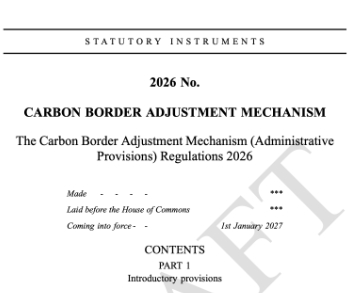
What CBAM is and what to do about it.
The new towns and strategic environmental assessments

12 locations of the New Towns Taskforce reduced to 7 within the new towns draft programme and open consultation.
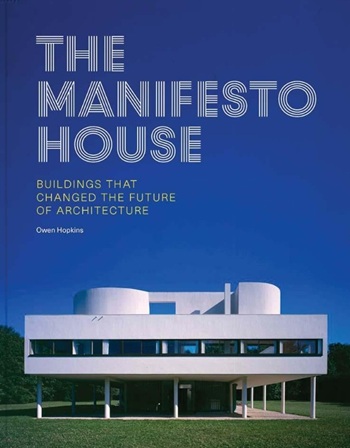
Buildings that changed the future of architecture. Book review.
The Sustainability Pathfinder© Handbook
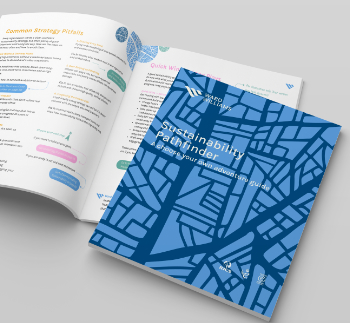
Built environment agency launches free Pathfinder© tool to help businesses progress sustainability strategies.

Government outcome to the late payment consultation, ECA reacts.
IHBC 2025 Gus Astley Student Award winners

Work on the role of hewing in UK historic conservation a win for Jack Parker of Oxford Brookes University.
Future Homes Building Standards and plug-in solar
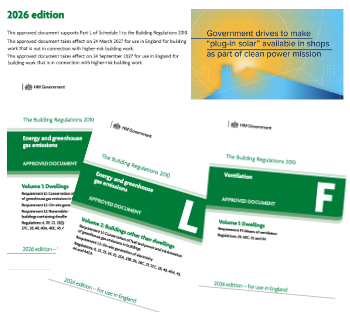
Parts F and L amendments, the availability of solar panels and industry responses.
How later living housing can help solve the housing crisis

Unlocking homes, unlocking lives.
Preparing safety case reports for HRBs under the BSA
A new practical guide to preparing structural inputs for safety cases and safety case reports published by IStructE.
Male construction workers and prostate cancer

CIOB and Prostate Cancer UK encourage awareness of prostate cancer risks, and what to do about it.