





On site

The term ‘on site’ (or on-site) typically refers to work which is carried out on the construction site itself. This is as opposed to ‘off-site’ which is generally associated with prefabrication or pre-assembly techniques. For more information see: Offsite construction.
Generally, on-site construction techniques tend to be more labour and time intensive, and they may have lower quality due to the complexities of working in an uncontrolled environment, subject to weather and other changeable conditions, space and access restrictions and so on. However, they can be more flexible in response to changes that may arise on site.
See also: In situ.
Workers on a project may be described as ‘on site’ or ‘off site’.
On site may also refer to the storage of materials. This is as opposed to off site materials, where the client has paid for materials, but they have yet to be delivered to site. The client may do this to ‘reserve’ the items, protecting the programme, but this does put the client at risk, for example if the contractor becomes insolvent and the items are then not delivered, even though payment has been made. For more information see: Off site materials.
On site may also refer to the generation of heat and / or power. Localised, point generation of heat and power provides an independent, responsive, sustainable method of supply. On-site generation can include renewable energy technologies, such as photovoltaics, anaerobic digestion, wind turbines, water turbines, combined heat and power (CHP) and so on. For more information see: On site generation of heat and power.
The feed-in tariff scheme allows consumers who generate their own electricity from a renewable or low-carbon source to qualify for a payment for each unit of electricity generated. Consumers can also qualify for an ‘export tariff’ by selling surplus electricity back to their supplier. For more information see: Feed-in tariff.
The renewable heat incentive (RHI) is similar to the feed in tariff scheme, but is designed to incentivise heat generation. For more information see: Renewable heat incentive.
[edit] Related articles on Designing Buildings Wiki
Featured articles
Check out some of the best features and news from Designing Buildings as well as key stories from around the web.
Building Safety Act implementation in Wales

CIAT to host industry panel on 26 June.
New and updated CLC building safety guidance.
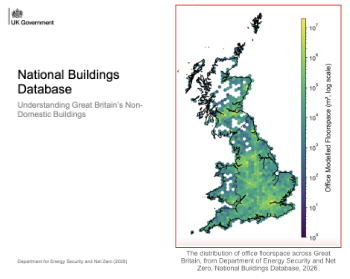
New UK National Buildings Database.
Building Safety Wiki Interviews

Chief executive of the British Woodworking Federation.
Planning condition discharge in England and Wales

A brief explanation from a building compliance expert, with further links.
Overheating guidance and tools for building designers

Guidance for dealing with element of building fabric control that have increasing importance.
Shading for housing, a design guide

From the Good Homes Alliance and British Blind and Shutter Association.
UK Standard Skills Classification (SSC)

A shared framework for describing skills needs.
Social media ban consultation comes to close

CIOB urges UK Government to consider social media’s role in careers guidance in ban debate.
The latest of eight Skills England apprenticeship units

The addition of battery manufacturing welcomed by ECA with a warning about the risks of fast-tracked apprenticeship units.
Building Control Independent Panel final report
A precis of a key report led by Dame Hackitt with full recommendations and link to the government response.