






Illegal cartels in construction industry
[edit] CMA provisionally finds illegal cartels in construction industry
The Competition and Markets Authority (CMA) has provisionally found that 10 construction firms illegally colluded to rig bids for demolition and asbestos removal contracts.
Following an investigation launched in 2019, the Competition and Markets Authority (CMA) has provisionally concluded that the firms colluded on prices through illegal cartel agreements when submitting bids in competitive tenders for contracts. These bids were rigged with the deliberate intention of deceiving the customer that they were competitive when that was not the case.
The bids were rigged by one or more construction firms which agreed to submit bids that were deliberately priced to lose the tender. This practice, known as 'cover bidding', can result in customers paying higher prices or receiving lower quality services.
The CMA is proposing to impose fines on the businesses concerned if it reaches a final decision confirming that they have broken the law.
In addition, the CMA has provisionally found that seven of the firms, on at least one occasion each, were involved in arrangements by which the designated 'losers' of the contracts were set to be compensated by the winner. The value of this compensation varied but was higher than £500,000 in one instance. Some firms produced false invoices in an attempt to hide this part of the illegal behaviour.
The CMA has provisionally found that the collusion affected 19 contracts for demoltion work in London and the Midlands, including contracts for the development of Bow Street's Magistrates Court and Police station, the Metropolitan Police training centre, Selfridges, Oxford University, shopping centres in Reading and Taplow, and offices on the Southbank, London. Not all of the firms involved in colluding in each of these contracts, and not every contractor who submitted a bid for these contracts was involved in the illegal collusion.
Eight of the firms have admitted their involvement in at least one instance of bid rigging between January 2013 and June 2o18: Brown and Mason, Cantillon, Clifford Devlin, DSM, J F Hunt, Keltbray, McGee, and Scudder.
Two other firms, Erith and Squibb, have not admitted their involvement in any bid rigging and it should not be assumed that they have broken the law.
Michael Grenfell, the CMA’s Executive Director for Enforcement, said: "The construction sector is hugely important to Britain’s economic well-being. Bid rigging can result in worse deals, which can leave businesses – and sometimes taxpayers – out of pocket.
"This is unacceptable, and the CMA won’t hesitate to come down hard on these activities and impose appropriate fines."
The CMA’s findings are provisional, and it should not be assumed that any company has broken the law at this stage. The final total of any fines to be paid will also be determined at the end of the investigation.
The CMA’s “Cheating or Competing” campaign has advice for businesses to help them spot, report and deter illegal anti-competitive practices such as market sharing, fixing prices and bid-rigging.
More information on this case is available on the Supply of construction services case page.
Article appears on the CIAT news and blog site entitled "CMA provisionally finds illegal cartels in construction industry" dated June 24 2022.
--CIAT
[edit] Related articles on Designing Buildings
Featured articles
Check out some of the best features and news from Designing Buildings as well as key stories from around the web.
Grenfell investigation files passed to CPS

Angela Rayner apologises on behalf of the British state.

Electrical contractors need to understand the practical implications.

The real barrier to getting more value from digital technology.

Your guide to The Construction Reset at UKCW Birmingham.

Accommodating the Victorian and Edwardian working woman. Book review.
Rethinking passive fire protection in design

PFP demands the same level of design rigour as structure or services.
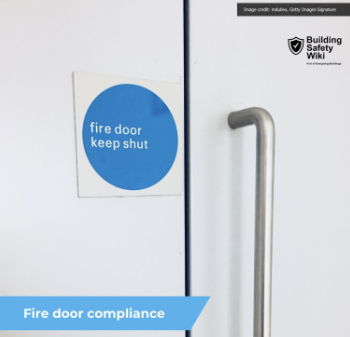
38% of Gen Zs feel safe when a fire door is wedged open.
Stunning images from around the world

Shortlist for CIOB’s Art of Building photography competition.

Guidance for conversion of traditional pre-1919 stone buildings.
Industrial heritage in the Ruhr
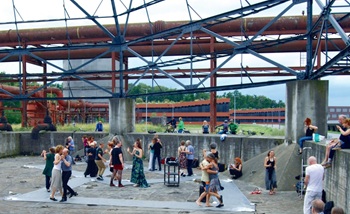
A marked difference to the fate of industrial landscapes in the UK.

Communities will be able to build their own clean energy.
Why diversity and inclusion matters for SMEs

CIOB’s D&I Charter shows how practical changes can support long-term growth.