





How to paint walls in eight steps
This article needs more work - to help develop this article, click 'Edit this article' above.
Contents |
[edit] Introduction
First prepare the materials you need according to the product description and the different proportions of the preparation. Then gather the tools. Commonly used tools for wall painting include colour separation paper, kraft paper, wall painting rollers, brushes, putty knives, sandpaper, dust sheets and so on.
To protect yourself from paint splashes wear overalls, gloves and goggles. If painting inside ensure that the room is well ventilated. Follow health and safety advice on the paint tin and if using a ladder.
Steps and methods of operation include:
[edit] 1. Basic treatment
Clean up the peeling and loose parts of the wall, and repair it with an appropriate filler. Where there are cracks, kraft paper tape and white latex may be used to stick to the cracks.
Non-load-bearing may need to be pasted. Try to choose better wall cloth and white latex or grid cloth. The grid cloth will have a better anti-cracking effect.
[edit] 2. The interface agent can be brushed
When brushing the interface agent, it must be brushed evenly. It is possible to enhance the adhesion to the base layer, avoid the hollowing and shelling of the plaster layer. This replaces the manual chiseling process and can save time and effort.
[edit] 3. Wall levelling
Uneven walls should be levelled with plaster so that the error of the wall does not exceed 3 mm. If the angles are not straight, plaster should be applied and a ruler should be used to make sure it is straight.
[edit] 4. Apply the putty
Putty with higher particle fineness and harder texture is better. Putty should be batched three times.
The first pass is generally thicker because it involves levelling. The second and third passes are thinner, mainly for lightening so that the wall looks smoother and flatter.
After three batches, the thickness of the putty should not exceed 3 mm, otherwise it will be easy to crack.
[edit] 5. Polish
This is a very critical step in the process. Try to use finer sandpaper. If the sandpaper is too thick, it will leave deep marks. After polishing, be sure to clean the wall thoroughly to avoid too much dust, which will have an impact on the adhesion of the paint.
[edit] 6. Apply primer
The primer must be evenly painted to ensure that every part of the wall is primed. If the has a large amount of paint, it is best to add a little more water to the primer to ensure that the entire surface is covered.
[edit] 7. Look for blemishes
After the putty is polished, there will be some blemishes. Under normal circumstances, it may be difficult to see clearly. It will be obvious only after brushing the paint once. At this time, it is necessary to check for repairs. See if the polish is even and the primer is applied across the entire surface.
[edit] 8. Work carefully
Do not add too much water to the top paint and when painting, pay attention to the corners of the walls, the indirect stubble part of each roll, and the direction of the paint flow.
Allow sufficient time before applying a second coat.
[edit] 9. Cleaning Up and Disposal
Wipe off as much paint as possible from the brush or roller against the edge of the tin. If using a water based paint wash the brush in water. If using a solvent based paint wash the brush in a solvent based cleaner. Solvent based cleaner can saved in a bottle for re-use.
Do not poor waste paint down the drain. It can clog up the drain, is bad for the environment and is illegal.
Give unused paint to family, friends or community paint recycling schemes.
Liquid paint should not be thrown out with general waste. Take the lid off the tin and leave it to go solid. Adding sawdust or sand can speed up this process.
[edit] Related articles on Designing Buildings
Featured articles
Check out some of the best features and news from Designing Buildings as well as key stories from around the web.
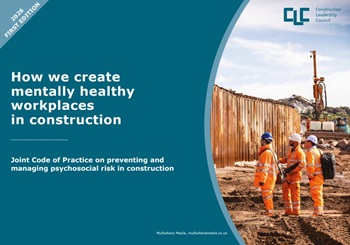
CLC publishes Mental Health Joint Code of Practice.
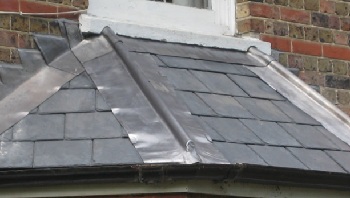
A quick introduction to its uses and risks.
Construction Management, 17 June

Government rolls out digital planning tool to all local authorities.

Your views needed - a strategy for the professions, trades and occupations.

Confronting competency, codes, capacity and costs.
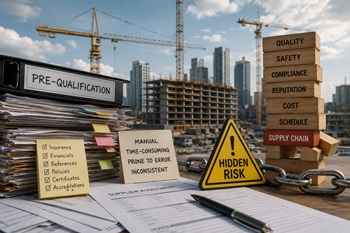
The hidden risk in modern construction supply chains.
Construction Management, 10 June

24 months to 14: CITB launches accelerated apprenticeships.
Bridging the gap between clients and contractors

Concerns remain around contractor quality, capability, and delivery.
Construction Management, 10 June.

Heat pumps beat boilers in new home tests.
Building Safety Act implementation in Wales

CIAT to host industry panel on 26 June.
New and updated CLC building safety guidance.