





Engineering drawing
An engineering drawing is a type of technical drawing used to define the requirements for engineering products or components. Typically, the purpose of an engineering drawing is to clearly and accurately capture all geometric features of a product or component so that a manufacturer or engineer can produce the required item. It may also describe the process of making the item, may be used to convey engineering ideas during the design process, or may provide a record of an existing item.
Rather than being an illustration, an engineering drawing is intended to describe the size and shape of an item and may provide information regarding acceptable variations, load limits, materials and any other information that can help give a complete understanding of an item.
Drawings can be created in Oblique and Isometric as well as 1st and 3rd projection.
It is usual for engineering drawings to include a series of projections showing different angles of the item, as well as sections, ‘exploded’ views and so on. Projections may create two dimensional or three dimensional representations of the item. See Projections for more information.
Increasingly, engineering drawings are prepared using computers that can also create files used to instruct machines how to manufacture the item. See computer aided design, computer aided manufacture and building information modelling for more information.
[edit] Related articles on Designing Buildings Wiki
Featured articles
Check out some of the best features and news from Designing Buildings as well as key stories from around the web.
Construction Management, 10 June

24 months to 14: CITB launches accelerated apprenticeships.
Bridging the gap between clients and contractors

Concerns remain around contractor quality, capability, and delivery.
Construction Management, 10 June.
Heat pumps beat boilers in new home tests.
Building Safety Act implementation in Wales

CIAT to host industry panel on 26 June.

New and updated CLC building safety guidance.
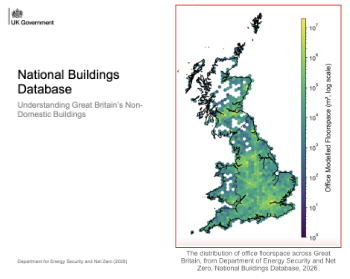
New UK National Buildings Database.
Building Safety Wiki Interviews

Chief executive of the British Woodworking Federation.
Planning condition discharge in England and Wales

A brief explanation from a building compliance expert, with further links.
Overheating guidance and tools for building designers

Guidance for dealing with element of building fabric control that have increasing importance.
Shading for housing, a design guide

From the Good Homes Alliance and British Blind and Shutter Association.
UK Standard Skills Classification (SSC)

A shared framework for describing skills needs.
Comments