





Construction dissertation guide part 2 - Literature review
This is part of a series of Construction Dissertation Guides for students. Click here for the whole series.

Contents |
[edit] What is a literature review?
A literature review is a critical summary and analysis of the existing material that has been written on your chosen subject.
The literature review is very important as it provides the foundations upon which the research will be built. Depending on the particular requirements of the dissertation it may constitute a significant proportion of the end content.
The purpose of the literature review is to is to give direction and focus to the research methodology, to demonstrate a fully-rounded understanding of the subject, and to enable the research to be approached in an independently-minded way.
It review should highlight and discuss contradictions and similarities between different writers’ viewpoints and identify any gaps in the existing body of knowledge.It should establish previous research that has been conducted and the issues they address, and make connections between the source texts, and where you position yourself and your research among those sources. (Ridley, D. (Dr), 2008 : p2)
[edit] Sources of information
To begin the literature review you need to identify and classify relevant sources of information, which will either be primary, secondary or reference guides.
[edit] Primary sources
These are sources that publish original research and so are often the rigorous:
- Academic research journals.
- Refereed conferences, which often have published papers attached to them.
- Existing dissertations, theses and research projects, which can help to point in the direction of other sources of information.
- Reports and research papers.
- Government publications. The government is a valuable source of statistics and data, and official reports.
- Legislation, contracts, codes of practice and standards.
[edit] Secondary sources
- Textbooks. Be aware that books may not be as up-to-date as more recently published reports or journals.
- Trade journals and news sources. These can have valuable interpretations of subjects but may have a vested interest in their reporting. This is not to discount the information but it should be borne in mind when referencing it in the review.
[edit] Reference guides
These provide easy and quick answers to basic questions.
- Dictionaries and glossaries.
- Search engines and encyclopaedias.
Very often, the bibliographies and references in this material will help identify other sources of information.
Occasionally, vital information will only be available from a source published in a different language, and in this case translation may be necessary.
[edit] Taking notes and critical appraisal
Take informed and accurate notes when reviewing the literature, focusing on the issues and arguments addressed, and not getting side-tracked away from the subject of the dissertation. Remember that you are looking less at what different writers are saying and more at what you need from the source itself:
- What do you already know?
- What do you need from the source?
- What makes the source different, or more authoritative/reliable, than other providers of the same knowledge?
- How does it complement or contradict other information?
- What are the common issues raised?
- Are there any gaps in the existing body of knowledge?
Use the note-taking process as a means of categorising the various parts and stages of your argument, don’t succumb to the trap of capturing unnecessary levels of detail. The more concise your notes, the easier they will be to organise and arrange into a coherent discussion.
It can help to organise notes from different sources in a standardised way. Try creating and filling them in a summary form that adheres to these headings:
- Reference details (author/s, publication year/date accessed, title of article/chapter, volume and issue no., place of publication, publisher, page nos., source).
- Main issues being discussed.
- Main arguments being put forward.
- Research methodology.
- Main conclusions.
It is very important to record reference details accurately and in full as you go along for each piece of information. It can be almost impossible to re-find the source of a piece of important information later.
[edit] Organisation of literature review
It is wise to create a research file (physical or digital) that can be maintained as the literature review progresses. This will make categorisation of relevant material easier and later incorporation and analysis less time-consuming.
Divide the file into relevant sections and sub-sections and insert the information accordingly together with the standard form.
By maintaining the file, you will be able to draw links and make comparisons between sources without having to revisit the information in detail again. The divisions may naturally develop into chapters of the final dissertation. But be aware that the dissertation is not just a summary of existing work, it should be different to and add to the body of knowledge.
Continue to the next stage: Research strategy.
Featured articles and news
Costs and insolvencies mount for SMEs, despite growth

Construction sector under insolvency and wage bill pressure in part linked to National Insurance, says report.
The place for vitrified clay pipes in modern infrastructure
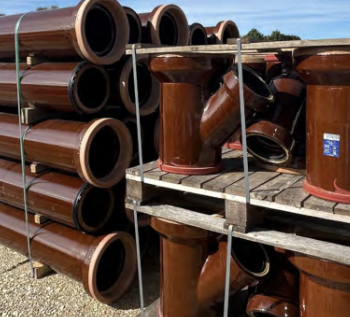
Why vitrified clay pipes are reclaiming their role in built projects.

Research by construction PR consultancy LMC published.
Roles and responsibilities of domestic clients

ACA Safety in Construction guide for domestic clients.
Fire door compliance in UK commercial buildings

Architect and manufacturer gives their low down.
Plumbing and heating for sustainability in new properties

Technical Engineer runs through changes in regulations, innovations in materials, and product systems.
Awareness of the Carbon Border Adjustment Mechanism
What CBAM is and what to do about it.
The new towns and strategic environmental assessments
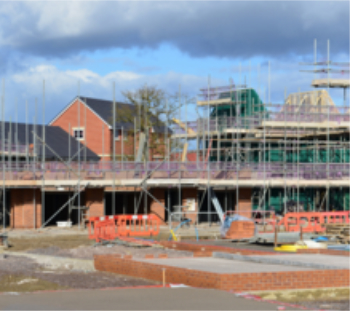
12 locations of the New Towns Taskforce reduced to 7 within the new towns draft programme and open consultation.
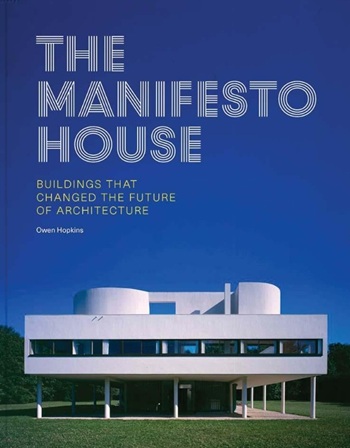
Buildings that changed the future of architecture. Book review.
The Sustainability Pathfinder© Handbook
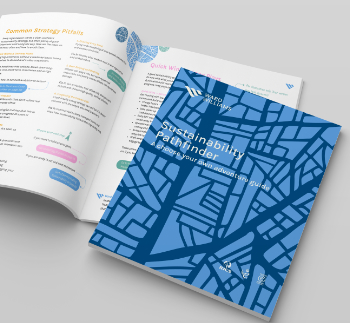
Built environment agency launches free Pathfinder© tool to help businesses progress sustainability strategies.

Government outcome to the late payment consultation, ECA reacts.
IHBC 2025 Gus Astley Student Award winners

Work on the role of hewing in UK historic conservation a win for Jack Parker of Oxford Brookes University.
Future Homes Building Standards and plug-in solar
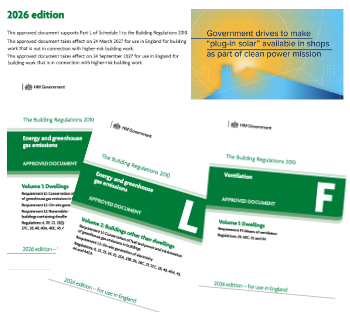
Parts F and L amendments, the availability of solar panels and industry responses.
How later living housing can help solve the housing crisis

Unlocking homes, unlocking lives.
Preparing safety case reports for HRBs under the BSA
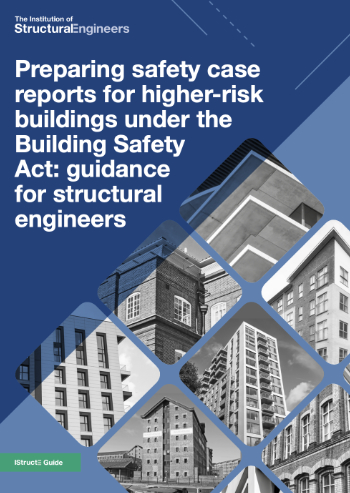
A new practical guide to preparing structural inputs for safety cases and safety case reports published by IStructE.
Male construction workers and prostate cancer

CIOB and Prostate Cancer UK encourage awareness of prostate cancer risks, and what to do about it.