





Construction (Head Protection) Regulations
[edit] Key takeaways
These regulations mandated employers to provide and ensure the wearing of suitable head protection on construction sites. The primary duty was to assess the risk of head injury and act unless no foreseeable risk existed. Site controllers had to implement written rules, and Sikhs who wear turbans were exempt. The regulations were revoked in 2013, with their requirements now covered under broader PPE legislation.
[edit] Background
The Construction (Head Protection) Regulations 1989 were introduced to safeguard workers on construction and engineering sites from head injuries. The rules required that employers or self-employed persons provide suitable head protection—typically safety helmets—whenever there was a foreseeable risk to the head. Those in control of a site were responsible for establishing written rules to enforce helmet use and ensuring compliance by everyone on site. Notably, there was an exemption for Sikhs wearing turbans, acknowledging religious requirements while upholding broader site safety obligations.
These regulations came into force on 30 March 1990 but were repealed on 6 April 2013. The Health and Safety (Miscellaneous Repeals, Revocations and Amendments) Regulations 2013 removed the 1989 rules, as their requirements had become redundant—covered instead by the more general Personal Protective Equipment at Work Regulations 1992 (as amended) and other construction regulations.
Under the 1989 regulations, the safety helmet had to be maintained, replaced as necessary, and worn correctly according to the site rules. The employer or site manager had to actively enforce these provisions. The turban-wearing Sikh exemption applied only to head protection; individuals still had to comply with other PPE requirements.
Today, although the 1989 Regulations are no longer in effect, the obligation to provide and ensure the wearing of suitable head protection persists under the 1992 PPE Regulations, which place a duty on employers to supply appropriate protective equipment and ensure its use when risks remain after other mitigations.
[edit] Related articles on Designing Buildings
Featured articles and news

We're expanding our collaborative mission by launching DB Intelligence, an exclusive market research advisory panel. Built environment professionals can now get paid to share their expertise on industry trends, products and services.
Panel members receive direct financial incentives for participating in research projects like short surveys, 1-2-1 interviews and focus groups. Register today to shape the future of the construction sector.
Building Control Independent Panel final report
A precis of a key report led by Dame Hackitt with full recommendations and link to the government response.
Guide to ISO 19650 for Architecture Firms (2026)
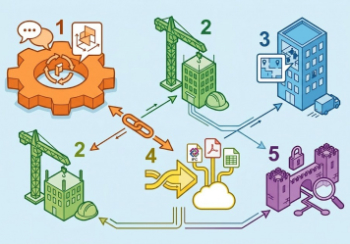
A user gives their low down.

A UK training and membership provider for mould remediation professionals.
Building Safety recap April, 2026
A short and longer run-through of the month, with links to further information and sources.
CIAT May 2026 briefing.

Independent NSI and BAFE study exploring how organisations are changing the way they buy fire safety services.
From medieval scribes to modern word art.

ECA welcomes crackdown on late payment and push for clean energy, whilst CIOB seek fixed cladding removal timeframes.
Cyber Security in the Built Environment
Protecting projects, data, and digital assets: A CIOB Academy TIS.
Managing competence in the built environment
ITFG publishes new industry guide on how to meet the ICC principles.
The UK's campaign to reduce noise pollution: Mythbusting, articles and topic guides.