





Co-heating test
There is significant evidence to suggest that buildings do not perform as well when they are completed as was anticipated when they were being designed. The difference between anticipated and actual performance is known as the performance gap.
The co-heating test is used to measure the amount of heat lost through the thermal envelope of completed buildings. It provides an assessment of the as-built performance of whole buildings, that is, their heat loss coefficient (HLC). It is calculated by comparing the heat input into a building against the disparity between temperatures inside and outside the building.
The test measures the heat that is lost through the elements of the building fabric such as walls, floor, roof, doors, windows, and so on. Comparing this to the heat loss that was expected during the design process (such as heat loss calculated for the Standard Assessment Procedure (SAP)) can identify problems and help improve the design of buildings in the future.
The test is carried out after the completion of a new-build or refurbishment project, but before it is occupied. It involves heating the building to a constant internal temperature, usually 25°C, over a period of time, typically 1 to 3 weeks. This constant temperature is achieved by using fan-assisted convector heaters with further fan assistance to ensure good air mixing so that there is an even temperature throughout the building. An integral and differential controller linked to temperature sensors is used to maintain the temperature to ±0.2°C.
During the test the building should remain unoccupied and any equipment that may use or generate energy should be switched off. Plotting the daily heat input against the daily difference in temperature between interior and exterior, indicates the heat loss coefficient as a static value in W/K.
For optimum testing, with an internal temperature of 25°C, there should be a temperature difference of at least 10°C between the interior and exterior, which is why tests tend to be carried out over winter months between October and April. This also helps mitigate against the impact of solar gain which requires a correction to be applied.
Co-heating testing may be beneficial where buildings are representative of standard types to be replicated on a larger scale with improvements made in response to the test's findings, or where different construction or contracting methods need to be compared.
The testing may not be suitable where buildings have not been able to dry out for several months before testing, where buildings are apartments or multi-use, or where buildings are bespoke designs that are not going to be replicated.
There has been some criticism of the test as it requires that buildings are undisturbed and unoccupied for a long period of time, and because of the potential impact of external weather conditions and in particular solar radiation on the results.
[edit] Related articles on Designing Buildings Wiki
- Building heating systems.
- Building performance evaluation.
- Building performance metrics.
- Cold bridge.
- Heat transfer.
- Performance gap.
- Radiant heating.
- Standard assessment procedure.
- Thermal comfort.
- U value.
[edit] External references
- BPE Guide - Co-heating tests
- Open Energy Monitor - Measuring thermal performance
Featured articles and news

We're expanding our collaborative mission by launching DB Intelligence, an exclusive market research advisory panel. Built environment professionals can now get paid to share their expertise on industry trends, products and services.
Panel members receive direct financial incentives for participating in research projects like short surveys, 1-2-1 interviews and focus groups. Register today to shape the future of the construction sector.
Planning condition discharge in England and Wales

A brief exoplanation from a building compliance expert, with further links.
Overheating guidance and tools for building designers

Guidance for dealing with element of building fabric control that have increasing importance.
Shading for housing, a design guide

From the Good Homes Alliance and British Blind and Shutter Association.
UK Standard Skills Classification (SSC)

A shared framework for describing skills needs.
Social media ban consultation comes to close

CIOB urges UK Government to consider social media’s role in careers guidance in ban debate.
The latest of eight Skills England apprenticeship units

The addition of battery manufacturing welcomed by ECA with a warning about the risks of fast-tracked apprenticeship units.
Building Control Independent Panel final report
A precis of a key report led by Dame Hackitt with full recommendations and link to the government response.
Building Safety recap April, 2026
A short and longer run-through of the month, with links to further information and sources.

CIAT May 2026 briefing.

From medieval scribes to modern word art.
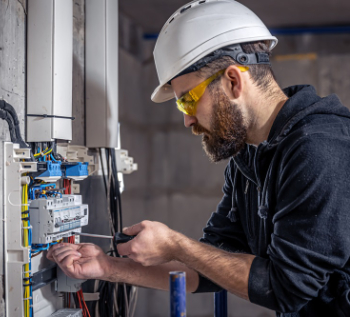
ECA welcomes crackdown on late payment and push for clean energy, whilst CIOB seek fixed cladding removal timeframes.
Cyber Security in the Built Environment
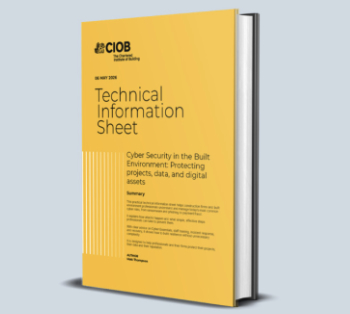
Protecting projects, data, and digital assets: A CIOB Academy TIS.
Managing competence in the built environment

ITFG publishes new industry guide on how to meet the ICC principles.
The UK's campaign to reduce noise pollution: Mythbusting, articles and topic guides.