





Chartered institute

A chartered institute, or a chartered body, is an organisation or institution which has been granted a Royal Charter. A Royal Charter is an instrument of incorporation which confers independent ‘legal personality’, reflecting the prestigious high status of that organisation. The terms of each Charter differ according to the specific organisation.
The authority for the granting of a Charter is derived from Royal Prerogative, i.e. by the Sovereign, on the advice of the Privy Council.
Pre-19th century, the Charter of Incorporation was the optimal means of creating separate legal personalities, and these were conferred on many different universities, schools, municipalities, joint stock companies, and so on. As benevolent institutions and charities became more prominent, and as legislation was passed that incorporated commercial enterprises, the granting of Royal Charters became more common.
In the construction industry, the most prominent chartered institutes include:
- Chartered Association of Building Engineers (CABE).
- Chartered Institute of Architectural Technologists (CIAT).
- Chartered Institute of Building (CIOB).
- Chartered Institute of Ecology and Environmental Management (CIEEM).
- Chartered Institute of Housing (CIH)
- Chartered Institute of Marketing Construction Industry Group (CIMCIG).
- Chartered Institute of Plumbing and Heating Engineering (CIPHE).
- Chartered Institute of Procurement and Supply (CIPS).
- Chartered Institution of Building Services Engineers (CIBSE).
- Chartered Institution of Civil Engineering Surveyors (ICES)
- Chartered Institution of Highways & Transportation (CIHT).
- Chartered Quality Institute (CQI).
- Chartered Society of Designers.
- Institution of Mechanical Engineers (IMechE)
- Institution of Civil Engineers (ICE)
- Institution of Structural Engineers (IStructE)
- Royal Institute of British Architects (RIBA)
- Royal Institution of Chartered Surveyors (RICS)
- Royal Town Planning Institute (RTPI)
Chartered institutes have the authority to provide individuals who meet certain educational and skills-related criteria to use a Chartered title. This recognises professional competence and conformity with an established set of career standards.
In the construction industry, the most prominent chartered professional statuses include:
- Chartered Architect (RIBA/RIAS/FRIAS)
- Chartered Architectural Technologist (MCIAT)
- Chartered Builder (MCIOB/FCIOB)
- Chartered Building Engineer (CBuildE)
- Chartered Building Services Engineer (MCIBSE)
- Chartered Civil Engineer (MICE)
- Chartered Construction Manager (MCIOB/FCIOB)
- Chartered Electrical Engineer (MIET/FIET)
- Chartered Engineer (CEng)
- Chartered Landscape Architect (FLI/CMLI)
- Chartered Mechanical Engineer (MIMechE/FIMechE)
- Chartered Structural Engineer (AIStructE/MIStructE/FIStructE)
- Chartered Surveyor (MRICS/FRICS)
- Chartered Town Planner (MRTPI)
[edit] Related articles on Designing Buildings
- Architectural practice.
- Best practice.
- Chartered builders and chartered construction managers receive official recognition in Northern Ireland public procurement.
- Chartered surveyor.
- Continuing professional development.
- Construction professional.
- Institute.
- Practice.
- Professional.
- Professional body.
- Professional practice.
- Trade body.
- Types of construction organisation.
- What is a Chartered Practice?
Featured articles
Check out some of the best features and news from Designing Buildings as well as key stories from around the web.
Bridging the gap between clients and contractors

Concerns remain around contractor quality, capability, and delivery.
Construction Management, 10 June.
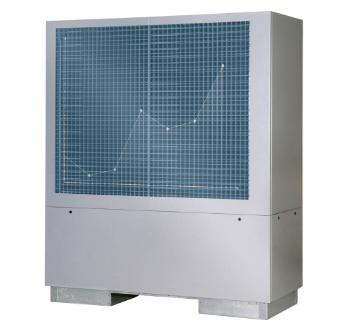
Heat pumps beat boilers in new home tests.
Building Safety Act implementation in Wales
CIAT to host industry panel on 26 June.
New and updated CLC building safety guidance.
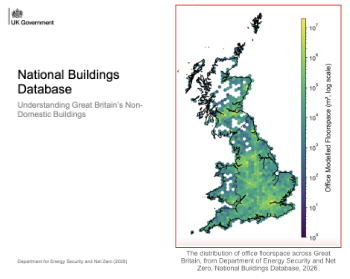
New UK National Buildings Database.
Building Safety Wiki Interviews

Chief executive of the British Woodworking Federation.
Planning condition discharge in England and Wales

A brief explanation from a building compliance expert, with further links.
Overheating guidance and tools for building designers

Guidance for dealing with element of building fabric control that have increasing importance.
Shading for housing, a design guide

From the Good Homes Alliance and British Blind and Shutter Association.
UK Standard Skills Classification (SSC)

A shared framework for describing skills needs.
Social media ban consultation comes to close

CIOB urges UK Government to consider social media’s role in careers guidance in ban debate.