





Business rates
Business rates are a local tax paid by the occupiers of non-domestic property in England and Wales. Business rates are calculated and collected by local authorities. They are put into a central pool and then redistributed back to local authorities to help to pay for local services.
Business rates are charged on most non-domestic properties, like: shops, offices, pubs, warehouses, factories, holiday rental homes or guest houses and so on. They are likely to be required if a building or part of a building is used for non-domestic purposes, even if it is a house. The way they are handled in different parts of the UK may differ, see here for property is in Scotland and here for property is in Northern Ireland, and certain properties may be exempt from business rates, for example farm buildings or places used for the welfare of disabled people.
Business rates depend on essentially three points:
- The rateable value of a property, which is set by the Valuation Office Agency (VOA).
- The multiplier set by central government.
- Rate relief schemes applied by the local authority.(This differs for England and for Wales)
A bill will usually be sent in February or March each year, for the following tax year. It is possible here to estimate your business rates bill.
In the Autumn Budget 2024 under the newly elected Labour government it announced its intention to introduce two lower multipliers for Retail, Hospitality and Leisure (RHL) properties with rateable values (RVs) below £500,000. On 11 September 2025 it published its policy paper on Business rates: forward look. This outlined that the above changes and the routine business rates revaluation which occurs every three years, by the Valuation Office Agency (VOA) Due in 2026. Some expect that there will be another major overhaul of the system in the 2026 review.
On 1 April 2017 a new business rates appeal process system was introduced in England known as the check, challenge and appeal (CCA). See Check, challenge, appeal for more information. In 2020 under the Conservative Government there was a Check, challenge, appeal: interim review of reforms to the business rates appeals system and various amendments have occurred since its introduction in 2017, theses changes include:
- Formalised Process: The CCA system replaced the older proposal/appeal system, creating three distinct stages: Check (information gathering), Challenge(formal proposal), and Appeal (to the Valuation Tribunal).
- Incomplete Challenges: In earlier years, incomplete challenges might have been grouped with resolved ones; they are now presented separately in statistics for clarity.
- New Rating Lists: The system now applies to the 2017 list and the subsequent 2023 list, with data and processes evolving to cover these new lists.
- Procedural Refinements: Ongoing statistical reporting and reviews have led to clearer definitions and operational adjustments within the existing framework, but not a radical overhaul.
- Future Reforms: The system is expected to see further significant changes with the 2026 Rating List, moving beyond the current CCA structure.
[edit] Related articles on Designing Buildings
- Business rates and 'reasonable repair'.
- Capital gains tax.
- Check, challenge, appeal.
- Income tax.
- Industrial buildings allowance (IBA)
- Local property tax.
- PAYE.
- Rate relief schemes.
- Rateable value.
- Rates.
- Staircase tax.
- Stamp duty.
- Tax relief.
- VAT.
- VAT reverse charge.
[edit] External references
Featured articles
Check out some of the best features and news from Designing Buildings as well as key stories from around the web.
Bridging the gap between clients and contractors

Concerns remain around contractor quality, capability, and delivery.
Construction Management, 10 June.
Heat pumps beat boilers in new home tests.
Building Safety Act implementation in Wales
CIAT to host industry panel on 26 June.
New and updated CLC building safety guidance.
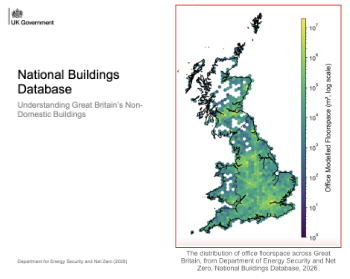
New UK National Buildings Database.
Building Safety Wiki Interviews

Chief executive of the British Woodworking Federation.
Planning condition discharge in England and Wales

A brief explanation from a building compliance expert, with further links.
Overheating guidance and tools for building designers

Guidance for dealing with element of building fabric control that have increasing importance.
Shading for housing, a design guide

From the Good Homes Alliance and British Blind and Shutter Association.
UK Standard Skills Classification (SSC)

A shared framework for describing skills needs.
Social media ban consultation comes to close

CIOB urges UK Government to consider social media’s role in careers guidance in ban debate.