





Approved document 7
The building regulations establish standards to be achieved in the construction of buildings. Approved documents provide guidance for how the building regulations can be satisfied in common situations.
Approved Document 7: materials and workmanship, supports regulation 7 of the building regulations, requiring the carrying out building work using the proper materials and in a workmanlike manner.
The latest edition, updated to reflect changes in the Construction Products Regulations, was published on 3 January 2013 and came into force on 1 July 2013. It applies to building works in England.
Regulation 7 requires that building work is carried out:
- With adequate and proper materials which:
- Are appropriate for the circumstances in which they are used,
- Are adequately mixed or prepared, and
- Are applied, used or fixed so as adequately to perform the functions for which they are designed; and
- In a workmanlike manner.
The approved document's contents include:
- Summary.
- Continuing control.
- Interaction with other legislation.
- Regulation 7 of the Building Regulations.
- Performance and limitations.
- Performance.
- Limitations.
- Ways of establishing the fitness of materials.
- Short-lived materials.
- Materials susceptible to changes in their properties.
- Section 2: Workmanship.
- Ways of establishing the adequacy of workmanship.
Following the Grenfell Tower Fire, a decision was taken to ban combustible materials in the cladding for buildings over 18m in height. The following change to approved document 7 came into force on 21 December 2018.
| The Building Regulations restrict the use of combustible materials in the external walls of certain buildings over 18m in height. Refer to regulation 7(2) of the Building Regulations and to Approved Document B: volume 2, part B4 for details. |
[edit] Find out more
[edit] Related articles on Designing Buildings Wiki
Featured articles
Check out some of the best features and news from Designing Buildings as well as key stories from around the web.

Your views needed - a strategy for the professions, trades and occupations.

Confronting competency, codes, capacity and costs.

The hidden risk in modern construction supply chains.
Construction Management, 10 June

24 months to 14: CITB launches accelerated apprenticeships.
Bridging the gap between clients and contractors

Concerns remain around contractor quality, capability, and delivery.
Construction Management, 10 June.

Heat pumps beat boilers in new home tests.
Building Safety Act implementation in Wales

CIAT to host industry panel on 26 June.
New and updated CLC building safety guidance.
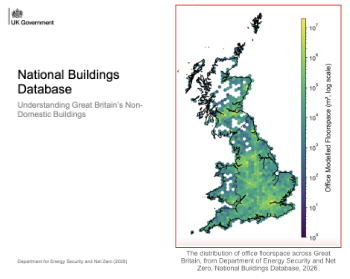
New UK National Buildings Database.
Building Safety Wiki Interviews

Chief executive of the British Woodworking Federation.
Planning condition discharge in England and Wales

A brief explanation from a building compliance expert, with further links.