





Applying for new postal addresses
The glossary of statistical terms, published by the Organisation for Economic Co-operation and Development (OECD), defines an address as: ‘A number or similar designation that is assigned to a housing unit, business or any other structure. Addresses mainly serve postal delivery, but are also important for administrative purposes, for example in civil registration systems and in census taking.’
New developments or the conversion of existing premises may result in the need for new postal addresses.
It is important to apply for a postal address as early as possible, ideally, as soon as planning permission has been granted. Utility companies may be reluctant to connect services to properties that do not have official postal addresses, and it may be important to secure addresses for marketing and sales purposes. Obtaining a new postal address may involve naming new roads. This can take time to agree and can cause problems with sales if the process is not begun early enough.
Local authorities have statutory responsibility for naming streets and numbering properties. Applications are generally made to the Local Land and Property Gazetteer (LLPG) team or the Street Naming and Numbering (SNN) team.
A postal address may be applied for by individuals or developers by completing an application form (or sometimes by writing a letter or emailing the local authority) and may need to be accompanied by a drawing showing the extent of the premises, and relevant planning permissions. A fee is chargeable for applications.
The local authority will check there are no similar addresses within the same post code or in a neighbouring area and will consult with the Highways department.
If the application is approved, an approval notice will be sent to the applicant confirming the addresses, with a drawing show any agreed new streets and property numbers. Details will also be issued by the local authority to the emergency services, statutory authorities and the Royal Mail, who are responsible for allocating postcodes.
New addresses are allocated in accordance with British Standard 7666 and are compiled and recorded by the National Land and Property Gazetteer (NLPG).
[edit] Related articles on Designing Buildings
Featured articles
Check out some of the best features and news from Designing Buildings as well as key stories from around the web.
Construction Management, 10 June

24 months to 14: CITB launches accelerated apprenticeships.
Bridging the gap between clients and contractors

Concerns remain around contractor quality, capability, and delivery.
Construction Management, 10 June.

Heat pumps beat boilers in new home tests.
Building Safety Act implementation in Wales

CIAT to host industry panel on 26 June.

New and updated CLC building safety guidance.
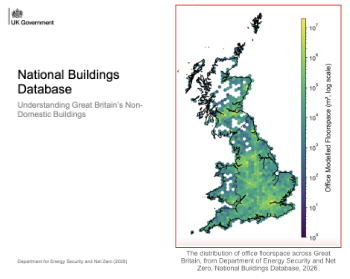
New UK National Buildings Database.
Building Safety Wiki Interviews

Chief executive of the British Woodworking Federation.
Planning condition discharge in England and Wales

A brief explanation from a building compliance expert, with further links.
Overheating guidance and tools for building designers

Guidance for dealing with element of building fabric control that have increasing importance.
Shading for housing, a design guide

From the Good Homes Alliance and British Blind and Shutter Association.
UK Standard Skills Classification (SSC)

A shared framework for describing skills needs.