





Kyoto Protocol

The Kyoto Protocol to the United Nations Framework Convention on Climate Change (UNFCCC) is an international agreement which commits participants to internationally binding greenhouse gas (GHG) emission reduction targets. It also assists countries in adapting to climate change through the Adaptation Fund by facilitating the development and deployment of technologies to increase resilience.
The Kyoto Protocol followed the UN conference on Sustainable Development held in Stockholm in 1972 and the world summit on sustainable development in Rio in 1992. It was adopted in Kyoto, Japan, on 11 December 1997. The detailed rules for the implementation of the Protocol the 'Marrakesh Accords' were adopted at the Conference of Parties in Marrakesh in 2001 and the Protocol entered into force on 16 February 2005. Nearly all nations have now ratified the treaty, however, the United States has not.
Under the principle of 'common but differentiated responsibilities', the Protocol places a greater burden on developed nations in recognition of the fact that historically they have been principally responsible for emissions in the atmosphere.
Countries must meet their targets primarily through national measures, however there are three additional, market-based mechanisms available:
- International Emissions Trading.
- Clean Development Mechanism (CDM).
- Joint implementation (JI).
These mechanisms are verified by the UN Climate Change Secretariat, based in Bonn.
The first commitment period (2008/2012) covered emissions of the six main greenhouse gases:
- Carbon dioxide (CO2).
- Methane (CH4).
- Nitrous oxide (N2O).
- Hydrofluorocarbons (HFCs).
- Perfluorocarbons (PFCs).
- Sulphur hexafluoride (SF6).
In the UK, the first commitment period target was to reduce emissions by 12.5% compared to 1990 levels. By 2012 emissions were estimated to be 26.7% below 1990 levels, but 24.9% below 1990 levels if emissions trading was taken into account (ref DECC UK Greenhouse gas emissions: Performance against emissions reduction targets 2012 provisional figures, 5 July 2013)
The second commitment period, from 2013 to 2020, sets an EU-wide target to reduce emissions to 20% below 1990 levels. The UK component of this has yet to be agreed, however, the UK’s Climate Change Act sets a legally binding commitment to cut emissions of greenhouse gasses by at least 34% by 2020 and by 80% by 2050 compared with 1990 levels.
The Doha Amendment to the Kyoto Protocol was adopted on 8 December 2012. The amendment included:
- New commitments in relation to the second commitment period from 1 January 2013 to 31 December 2020.
- A revised list of greenhouse gases to include nitrogen triflouride (NF3)
- Amendments to several articles of the Protocol.
[edit] Related articles on Designing Buildings
- Brundtland report.
- Carbon plan.
- Civil engineers must report climate-change risk.
- Climate Change Act.
- Climate Change Levy.
- Climate change science.
- Chlorofluorocarbons CFCs.
- COP21 Paris 2015.
- CRC Energy Efficiency Scheme.
- Energy Act.
- Energy related products regulations.
- Greenhouse gases.
- Hydrochlorofluorocarbons HCFCs.
- Key messages from the UN climate change conference.
- National Adaptation Programme.
- Montreal Protocol.
- Sustainability.
- The Low Carbon Transition Plan: National strategy for climate and energy.
[edit] External links
Featured articles
Check out some of the best features and news from Designing Buildings as well as key stories from around the web.
Undervaluing our industrial past

Heritage value changes as taste for building styles changes.
Changing expectations around competence and compliance

New information sheet from CIAT.
Grenfell investigation files passed to CPS

Angela Rayner apologises on behalf of the British state.

Electrical contractors need to understand the practical implications.

The real barrier to getting more value from digital technology.

Your guide to The Construction Reset at UKCW Birmingham.

Accommodating the Victorian and Edwardian working woman. Book review.
Rethinking passive fire protection in design

PFP demands the same level of design rigour as structure or services.

38% of Gen Zs feel safe when a fire door is wedged open.
Stunning images from around the world

Shortlist for CIOB’s Art of Building photography competition.

Guidance for conversion of traditional pre-1919 stone buildings.
Industrial heritage in the Ruhr
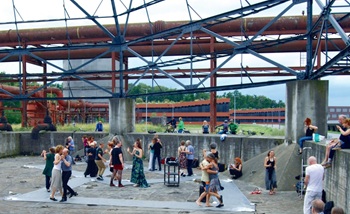
A marked difference to the fate of industrial landscapes in the UK.
Comments
[edit] To make a comment about this article, click 'Add a comment' above. Separate your comments from any existing comments by inserting a horizontal line.