





Building emission rate BER
The Building Regulations set out requirements for specific aspects of building design and construction. Regulation 26 of the building regulations states that “Where a building is erected, it shall not exceed the target CO2 emission rate for the building…”,
The target CO2 emission rate (TER) sets a minimum allowable standard for the energy performance of a building and is defined by the annual CO2 emissions of a notional building of the same size and shape to the proposed building. TER is expressed in annual kg of CO2 per m2.
The actual building emission rate (BER) for the proposed building (other than dwellings) is calculated based on its actual specification and is expressed in terms of its annual CO2 emissions of the proposed building expressed in kg/m2. The emission rate for self-contained dwellings and individual flats (excluding common areas) is determined using a different calculation, the dwelling emission rate (DER)
The BER for the proposed building must not exceed the TER.
Before construction begins, a design stage calculation must be issued to the Building Control Body (BCB), setting out the TER, and BER for the proposed building, along with details of its proposed specification.
Within 5 days of the completion of the construction, a report must be issued to the Building Control Body (BCB), setting out the TER, and BER of the completed building, along with any changes that have been made to the specification, and an energy performance certificate (EPC). These ‘as-built’ calculations require that an air-permeability test is carried out to ensure that the building envelope has been constructed to a suitably high level of workmanship so that air (and with it, heat) will not ‘leak’ through the building fabric. In addition, the BCB is likely to require a commissioning notice.
For buildings other than dwellings, the TER and BER can be calculated and the EPC produced by following the National Calculation Method (NCM). This can be done by using approved simulation software (Approved Dynamic Simulation Models (DSMs)) or by using the Simplified Building Energy Model (SBEM), a ‘simplified’ compliance tool developed by BRE, which has a user interface called iSBEM.
[edit] Find out more
[edit] Related articles on Designing Buildings Wiki
- Air permeability testing.
- Approved documents.
- Building regulations.
- Dwelling emission rate.
- National Calculation Method.
- Simplified Building Energy Model.
- Standard Assessment Procedure.
- Target emission rate.
[edit] External references
- Planning portal: Approved document L.
Featured articles
Check out some of the best features and news from Designing Buildings as well as key stories from around the web.

Accommodating the Victorian and Edwardian working woman. Book review.
Rethinking passive fire protection in design

PFP demands the same level of design rigour as structure or services.

38% of Gen Zs feel safe when a fire door is wedged open.
Stunning images from around the world

Shortlist for CIOB’s Art of Building photography competition.
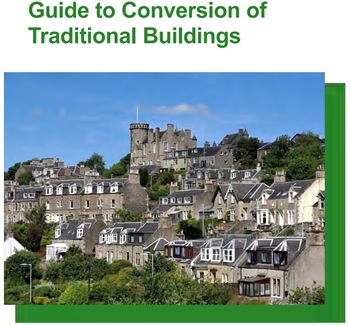
Guidance for conversion of traditional pre-1919 stone buildings.
Industrial heritage in the Ruhr
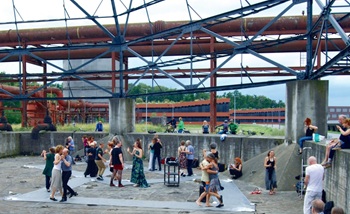
A marked difference to the fate of industrial landscapes in the UK.
Communities will be able to build their own clean energy.
Why diversity and inclusion matters for SMEs

CIOB’s D&I Charter shows how practical changes can support long-term growth.
Cut electricity bills to power growth

Coalition sends joint letter to the Chancellor.

Gasholders: a history in pictures. Book review.
Recognition, influence and growth

SocEnv identifies three strategic pillars in new strategy to 2045.
Discover the future of roofing, cladding and insulation.
Comments