






Working platforms for tracked plant: good practice guide to the design, installation, maintenance and repair of ground-supported working platforms
BRE (Building Research Establishment) is an independent, research-based consultancy, testing and training organisation, operating in the built environment and associated industries.
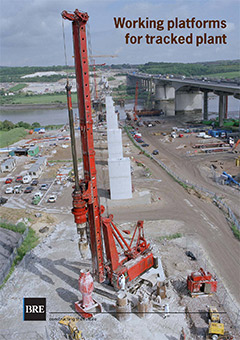
On 1 June 2004, BRE published Working platforms for tracked plant: good practice guide to the design, installation, maintenance and repair of ground-supported working platforms (BR 470), written by Hilary Skinner.
For the purposes of this publication, the expression ‘working platform’ is restricted to ground-supported working platforms for tracked plant, constructed of granular material, including not only itself, but also the associated ramps and access.
Ground-supported working platforms are critical for plant stability. Safety is a vital issue, and most perform well, but rigs overturn more frequently than they should. The Federation of Piling Specialists instigated the preparation of this guide to help improve practices related to the use of piling and associated specialist plant and to promote safety in design, specification, installation, operation, maintenance and repair of working platforms without unnecessary or excessive expenditure.
The 52-page guide highlights important issues in site assessment, design, installation and maintenance of working platforms. Design calculations are given, together with worked examples for different subgrade properties.
The contents are:
- Foreword.
- Site conditions.
- Design.
- Installation.
- Operation, maintenance and repair.
- Photographs.
- Appendix A: Design calculations.
- Appendix B: Determination of characteristic values of soil and geosynthetic parameters.
- Notation and abbreviations.
- References.
[edit] Related articles on Designing Buildings Wiki
- BRE articles on Designing Buildings Wiki
- Building Research Establishment.
- Construction plant.
- Lift table.
- Lifting device.
- Lifting platform.
- Piling mat.
- Scaffolding.
- Scissor lift.
- Types of crane.
- Work at height.
- Working at height - our duty to prevent harm and protect each other.
- Work at height regulations.
- Working platform.
Featured articles and news
Costs and insolvencies mount for SMEs, despite growth

Construction sector under insolvency and wage bill pressure in part linked to National Insurance, says report.
The place for vitrified clay pipes in modern infrastructure
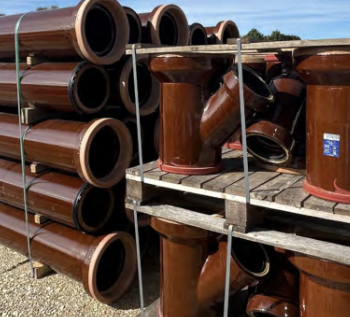
Why vitrified clay pipes are reclaiming their role in built projects.

Research by construction PR consultancy LMC published.
Roles and responsibilities of domestic clients

ACA Safety in Construction guide for domestic clients.
Fire door compliance in UK commercial buildings

Architect and manufacturer gives their low down.
Plumbing and heating for sustainability in new properties

Technical Engineer runs through changes in regulations, innovations in materials, and product systems.
Awareness of the Carbon Border Adjustment Mechanism
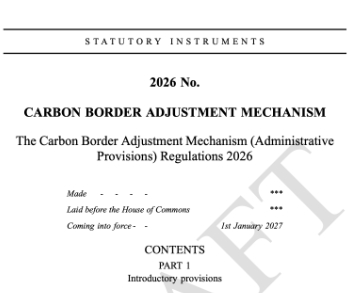
What CBAM is and what to do about it.
The new towns and strategic environmental assessments
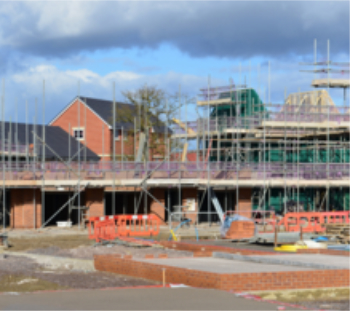
12 locations of the New Towns Taskforce reduced to 7 within the new towns draft programme and open consultation.

Buildings that changed the future of architecture. Book review.
The Sustainability Pathfinder© Handbook
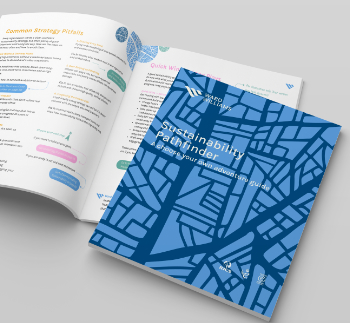
Built environment agency launches free Pathfinder© tool to help businesses progress sustainability strategies.

Government outcome to the late payment consultation, ECA reacts.
IHBC 2025 Gus Astley Student Award winners

Work on the role of hewing in UK historic conservation a win for Jack Parker of Oxford Brookes University.
Future Homes Building Standards and plug-in solar
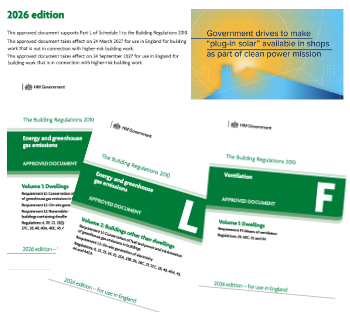
Parts F and L amendments, the availability of solar panels and industry responses.
How later living housing can help solve the housing crisis

Unlocking homes, unlocking lives.
Preparing safety case reports for HRBs under the BSA
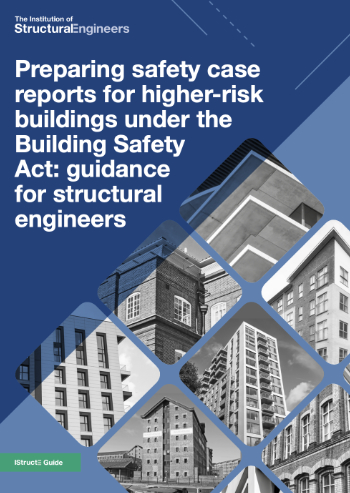
A new practical guide to preparing structural inputs for safety cases and safety case reports published by IStructE.
Male construction workers and prostate cancer

CIOB and Prostate Cancer UK encourage awareness of prostate cancer risks, and what to do about it.
Comments